
Inner Redemption, Outer Exile: Andersen's Crimson and Sapphire – Which Truth Defined Your Childhood?
When I was a child, reading Andersen, I always felt an ineffable melancholy at the end. The Little Mermaid turned into sea foam, the Tin Soldier melted into a heart shape; this beauty of loss formed my initial understanding of fairy tales. Only as an adult did I realize that Andersen never wrote simply happy endings, but rather stories about the passage of time and moments captured for eternity.
When discussing a deck of playing cards paying homage to Hans Christian Andersen, the biggest fear is falling into a superficial roster of characters. Thankfully, Room One's answer is an hourglass.
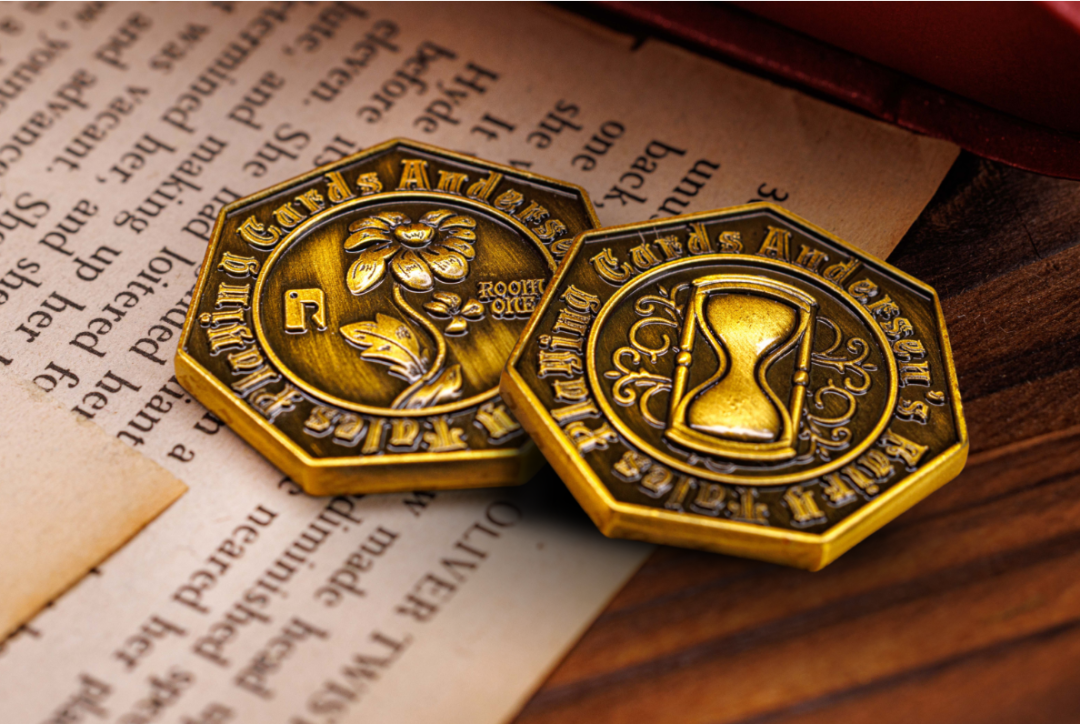
This Andersen's Fairy Tales deck doesn't attempt to tell a complete story on each card. Instead, it condenses the entire fairy tale universe into a vessel of time, where amidst flowing sands and fleeting moments, the eternal truths of love, loss, courage, and hope are enshrined.
The Duality of the Soul: From Introspective Garnet to Societal Sapphire
Typically, dual-color designs merely present a visual red-blue opposition, but the designers of this deck clearly had deeper considerations.
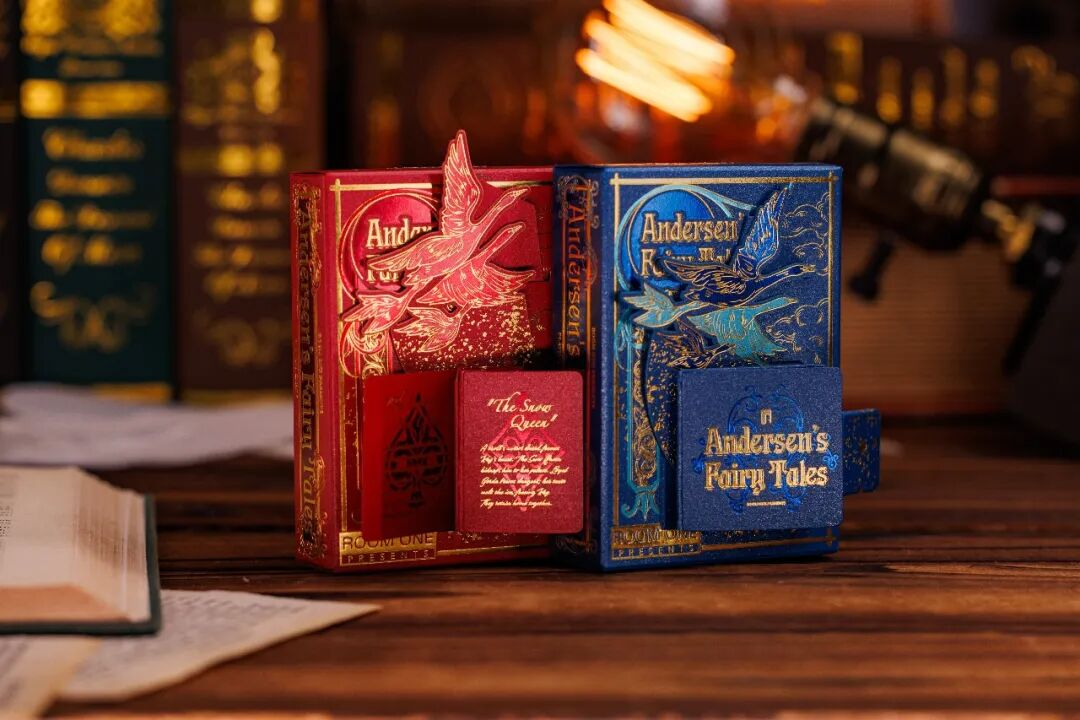
Garnet is imbued with an introspective philosophical meaning. It features stories such as The Snow Queen, The Shepherdess and the Chimney Sweep, and The Phoenix. Most of these characters experience inner struggles, disillusionment, and rebirth, symbolizing metaphysical spiritual exploration.
For instance, in The Shepherdess and the Chimney Sweep, she once climbed out of the chimney to gaze upon the vast starry sky, but retreated back to the corner of the table due to fear of the unknown external world — an inward return.
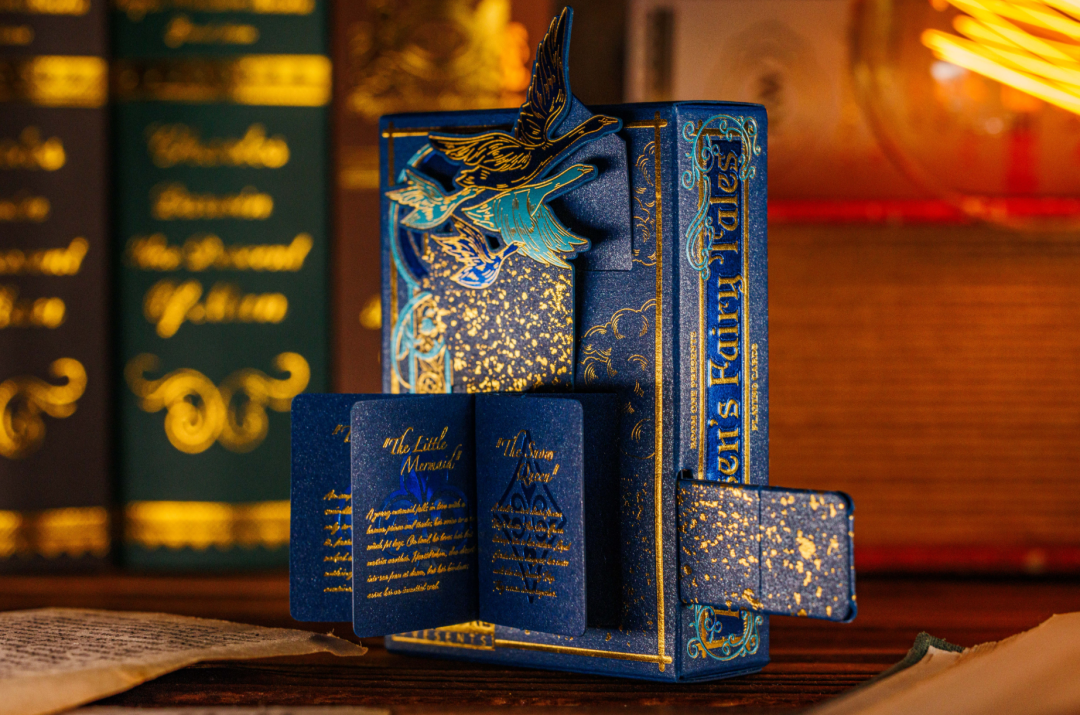
Sapphire, on the other hand, represents outward societal observation. Here, one finds the absurdity of The Emperor's New Clothes, the poignant questioning of poverty and wealth in The Little Match Girl, and The Ugly Duckling's yearning for belonging in the world. It acts as a mirror, reflecting society and its transformations.
For example, in The Steadfast Tin Soldier, the Tin Soldier is forced into the torrent of a sewer and the darkness of a fish's belly, yet he consistently faces the world's turbulence — an outward banishment.
This correspondence between color and theme transforms each card selection into a choice: to delve into internal dreams, or confront external realities?
Stylistic Shift: From Pop Iconography to Picture Book Sanctuary
Looking back at Room One's previous works, most adhered to a Pop Art graphic style: utilizing clear, closed line art to distill figures, combined with flat blocks of color and textures, to reshape characters into highly recognizable visual icons. It was a style "with people as its soul," modern and sharp.
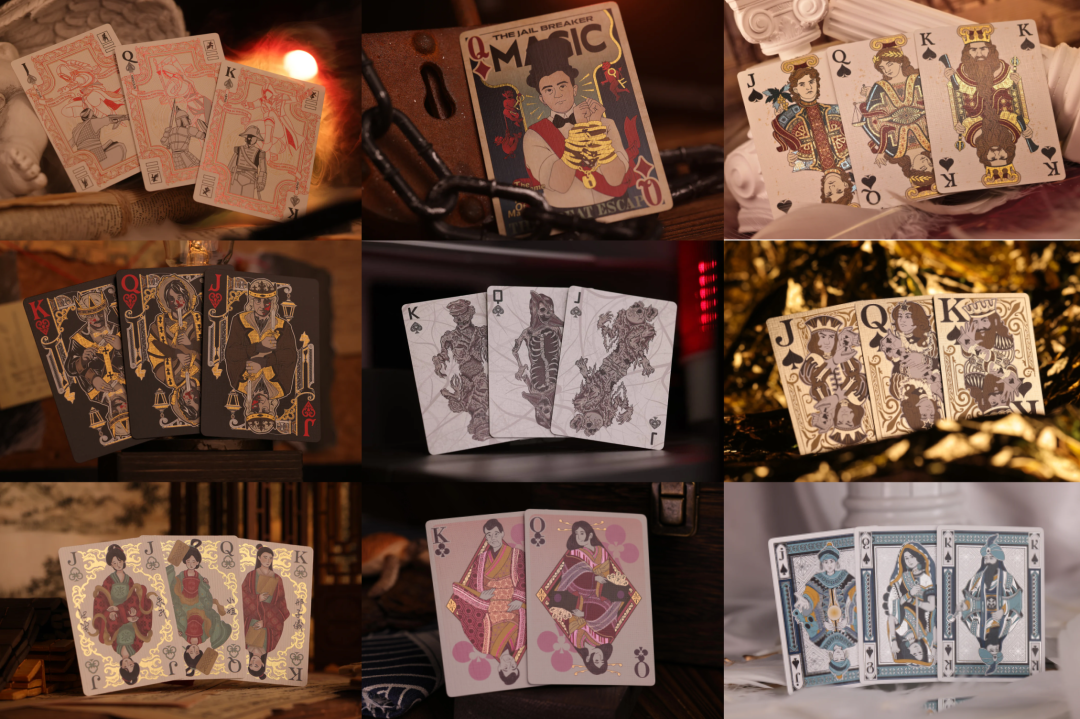
With Andersen, however, I witnessed a magnificent pivot towards Art Nouveau.
Firstly, the softening of lines. Previously stark outlines are replaced by Mucha-esque flowing curves, transforming from mere boundaries into intertwining vines and ornamentation, merging seamlessly with the background.
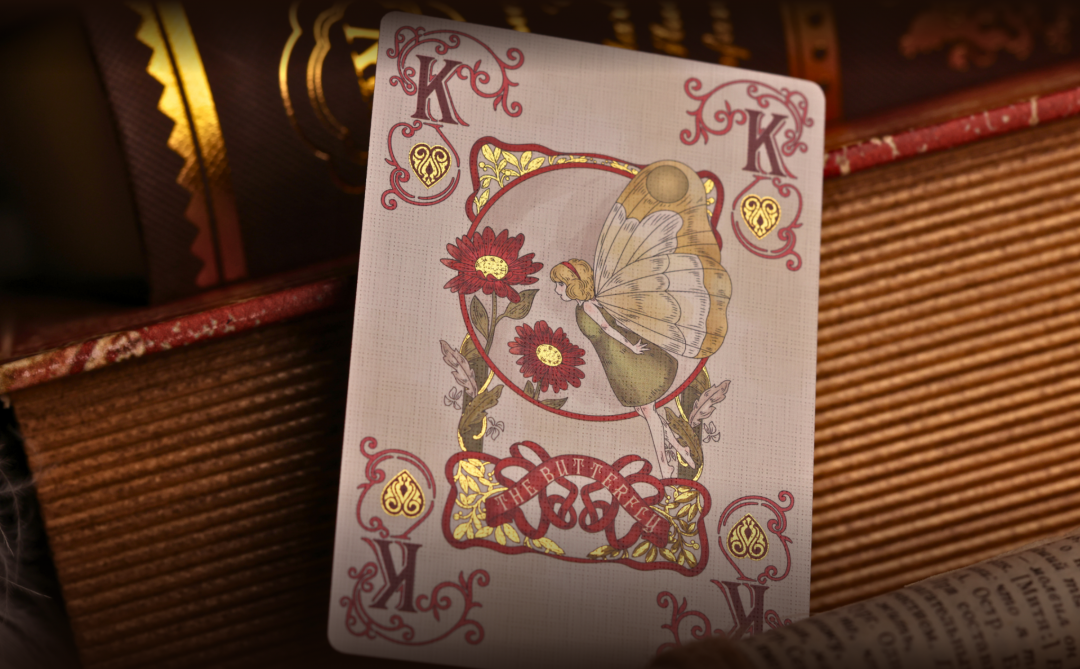
Secondly, the gentle warmth of the colors. Layers of low-saturation color blocks simulate the texture of classical watercolor paper, while the restrained pairing of gold and plain hues allows the artwork to retain a fairy-tale lightness while acquiring a profound sense of age.
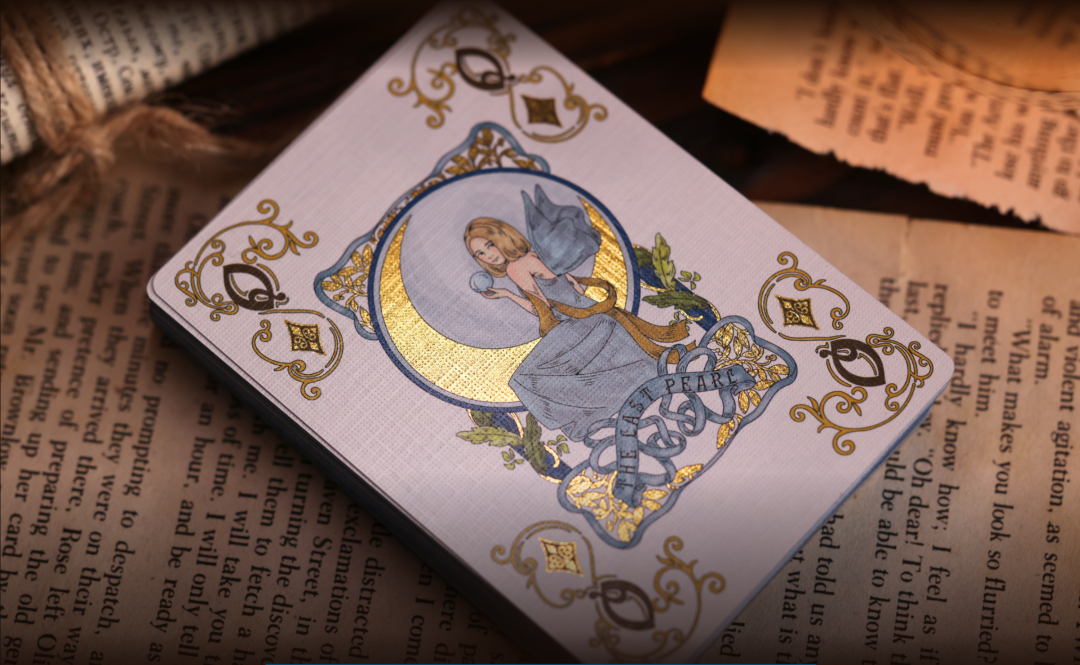
Finally, the ceremonial feel of the composition. This is perhaps the greatest change — all portraits are framed within precise circular windows. Characters are no longer towering Pop Art symbols but recede to become integral parts of the scene.
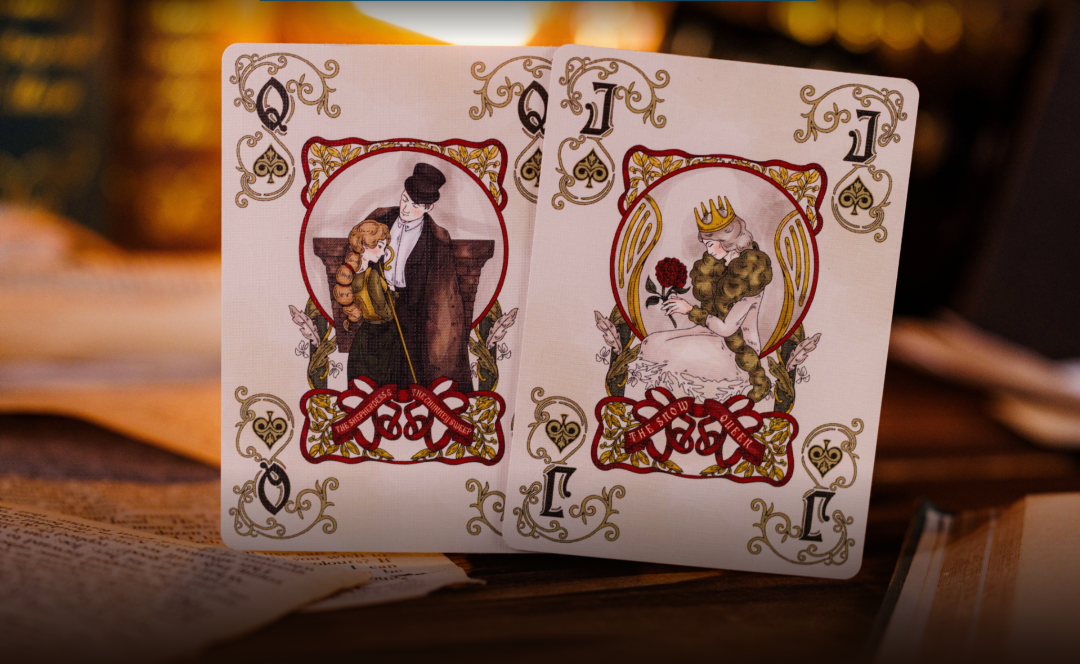
If previous works deconstructed portraits with modern design thinking, this new series constructs a complete world system. This shift, "with setting as its soul," makes each card a window into the fairy tale world.
Mismatched Containers: The Gallery Versus The Book
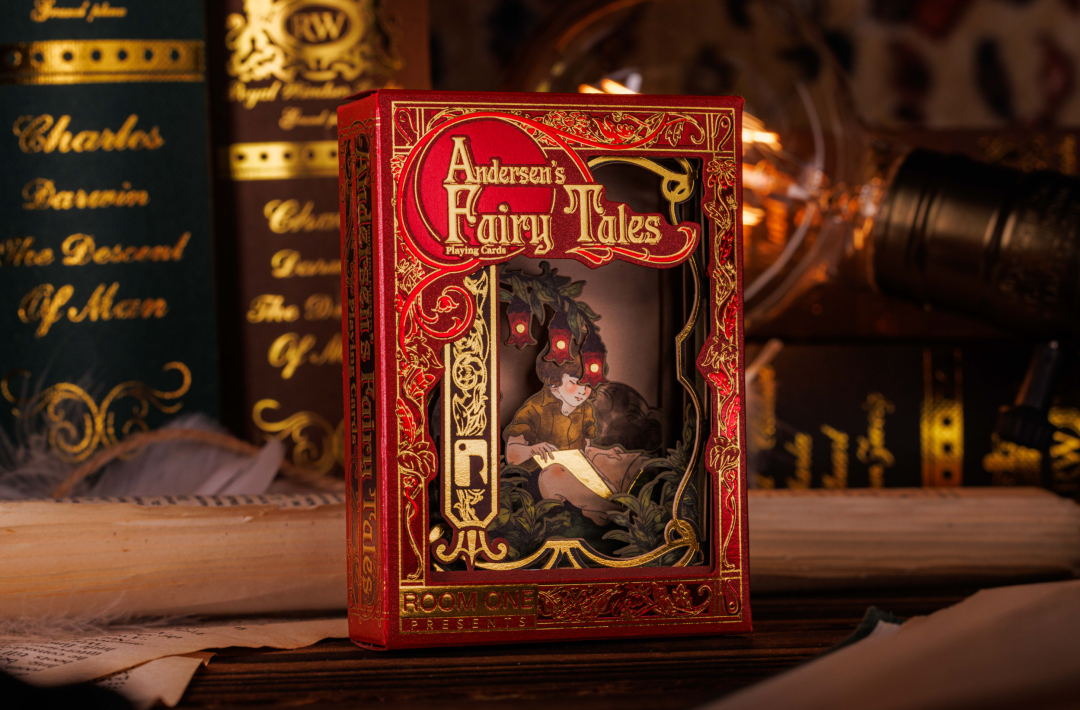
Before even touching the stories, the tuck box unfurls the fairy tale ambiance.
The Standard Edition tuck box adopts a storybook style, recreating the gentle feel of pulling an old book from a shelf, focusing purely on watercolor illustration. Frankly, this time, the Standard Edition's tuck box, with its unique design language, possesses even more charm than the Limited Edition.
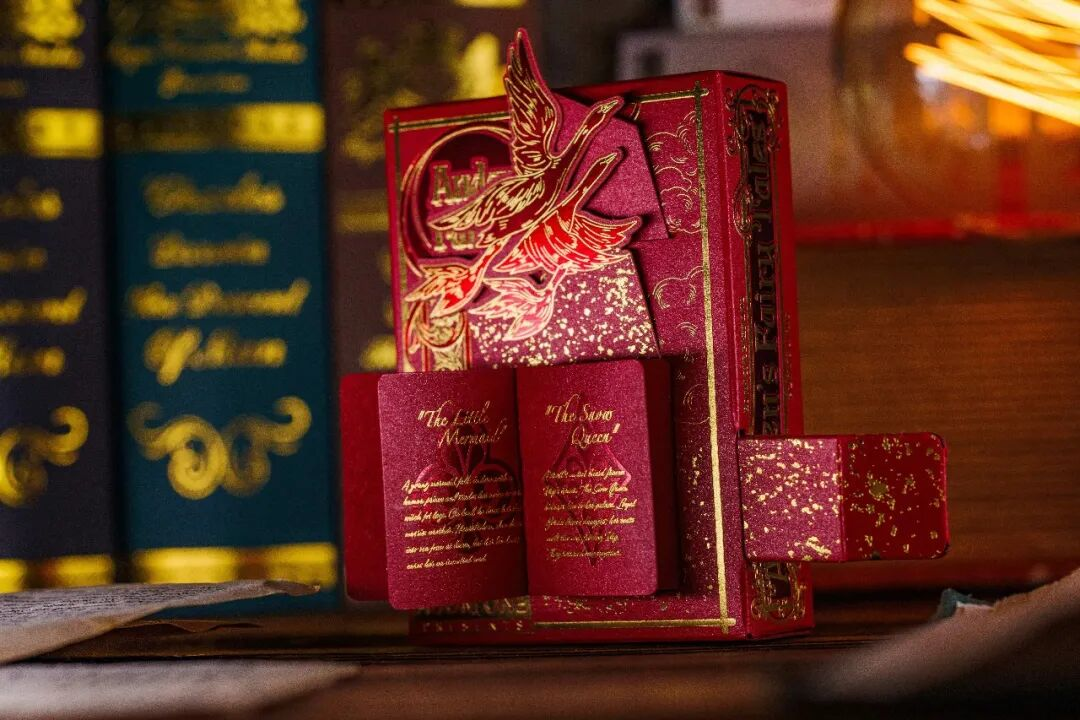
For the Signature Edition, Room One still utilizes its signature 3D accordion tuck box. While this multi-layered paper art structure is opulent, for veteran collectors who have followed Room One, it has become a somewhat repetitive standard design.
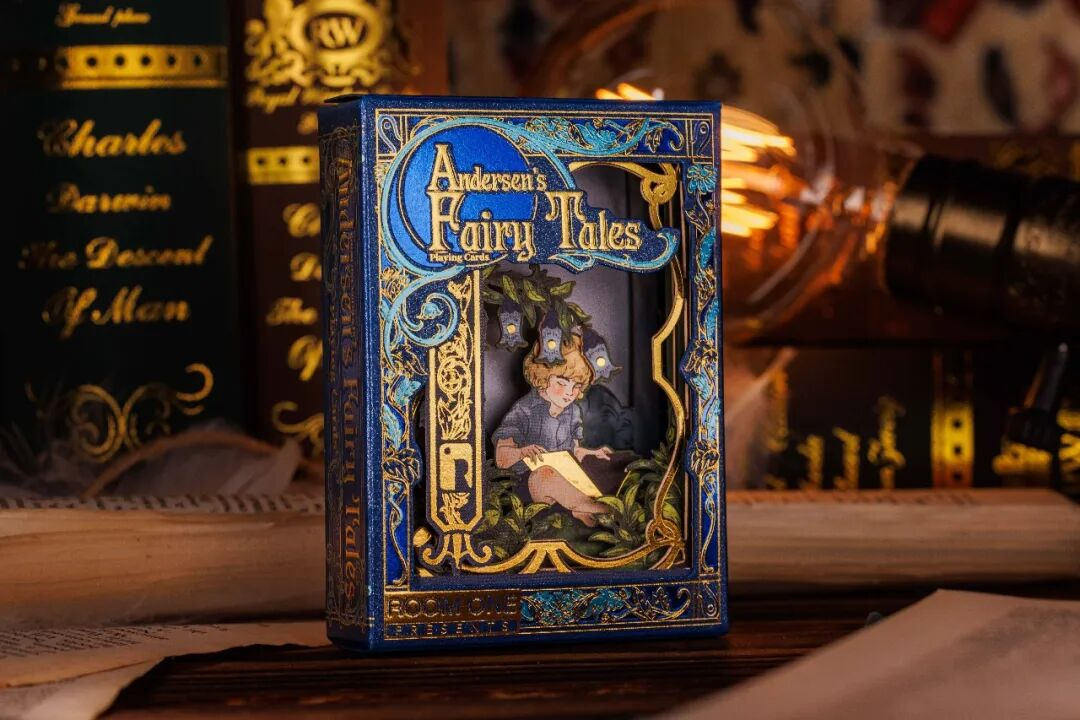
This creates a subtle sense of mismatch: the Signature cards we truly want to collect, with their exquisite hot foil stamping, are locked into an accordion tuck box that feels a bit aesthetically fatiguing; meanwhile, the storybook tuck box, more innovative in design and better suited to the fairy tale theme this time, is only paired with the standard, non-embellished deck.
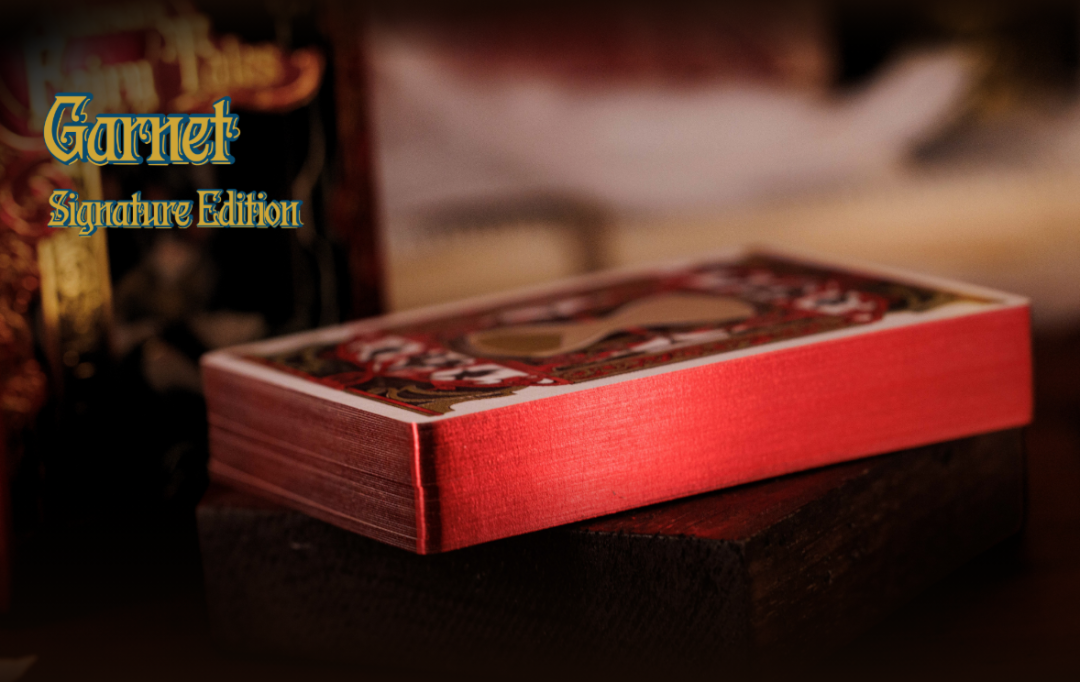
If the storybook itself is the best vessel for this design, why can't it carry the top-tier craftsmanship? This might be a commercial strategy — splitting the best craftsmanship and the best container into different editions, ensuring each version has its irreplaceable selling point, compelling perfectionist collectors to acquire them all.
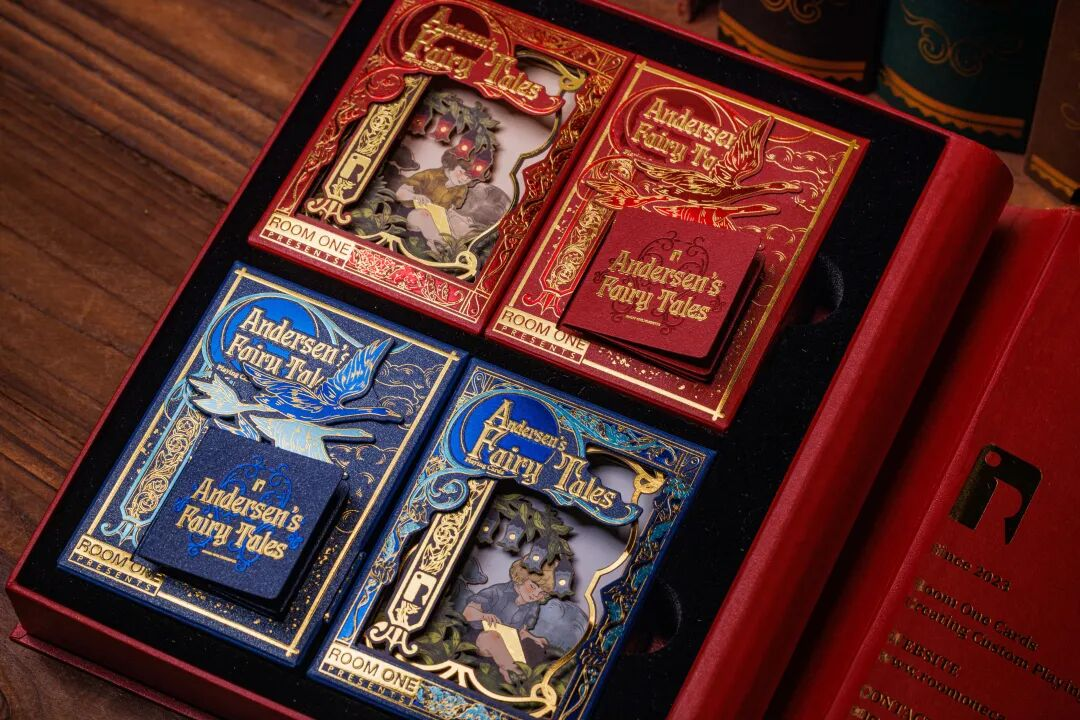
Room One's collectible system is halfway through its second season. Perhaps Room One should reconsider: it's time for the accordion structure to either become a standard offering or undergo a complete iteration, creating truly exclusive limited-edition containers for each unique series that are both display-worthy and storage-friendly.
Details: Hot Foil, Animation, and Craftsmanship
In this age of visual storytelling, good looks are fundamental, but enduring appeal is the true skill.
The details of this deck withstand scrutiny. The pips are not simple flat patterns but are all redesigned, incorporating subtle fairy tale imageries.
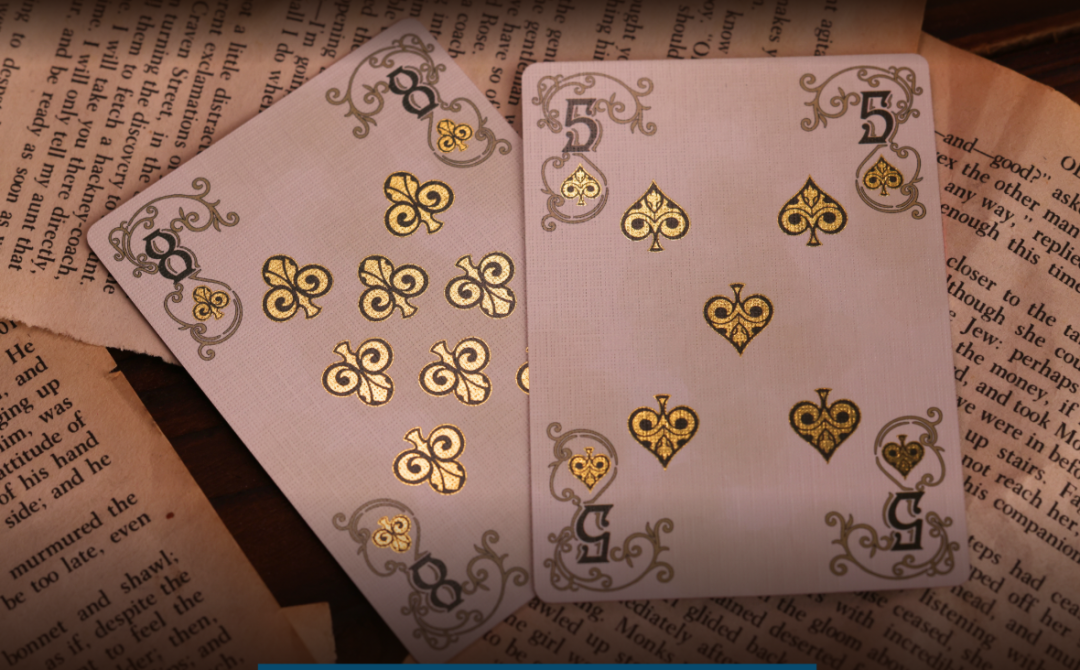
The Signature Edition card faces feature hot foil stamping. The designers judiciously applied metallic luster only to elements that inherently ought to sparkle within the artwork — the moon in the night sky, the stamen of flowers, or the brass bands on an old chest. This accented treatment both preserves the transparent, airy feel of watercolor painting and imbues these tiny details with a tangible physical texture under light.
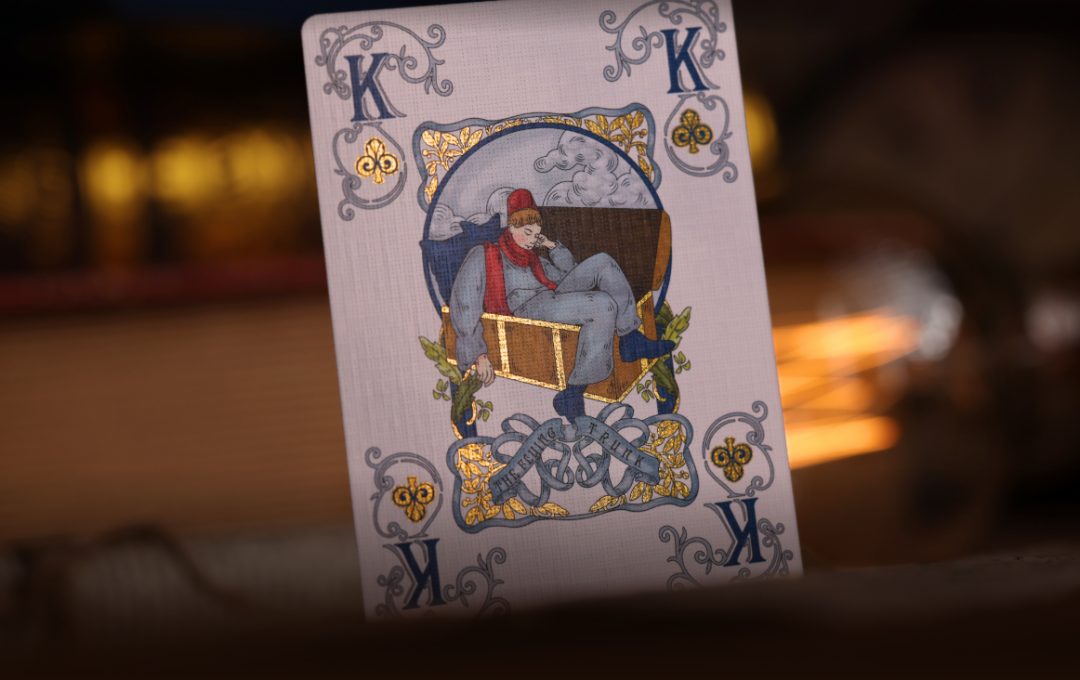
Compared to flash card designs that fill the entire card face with metallic sheen, this localized restraint and negative space demonstrate a more sophisticated aesthetic taste.
The card back design utilizes the flipbook principle, depicting an intricate hourglass pattern. When fanning the cards, the static images create a continuous visual effect of sand flowing. This is a brilliant metaphor: the act of shuffling itself is the passage of time, and the cards in hand are the eternal stories left behind by time.
A Tarot Moment: Another Resonance
Beyond traditional playing cards, Room One has also boldly ventured into its first-ever Tarot deck.
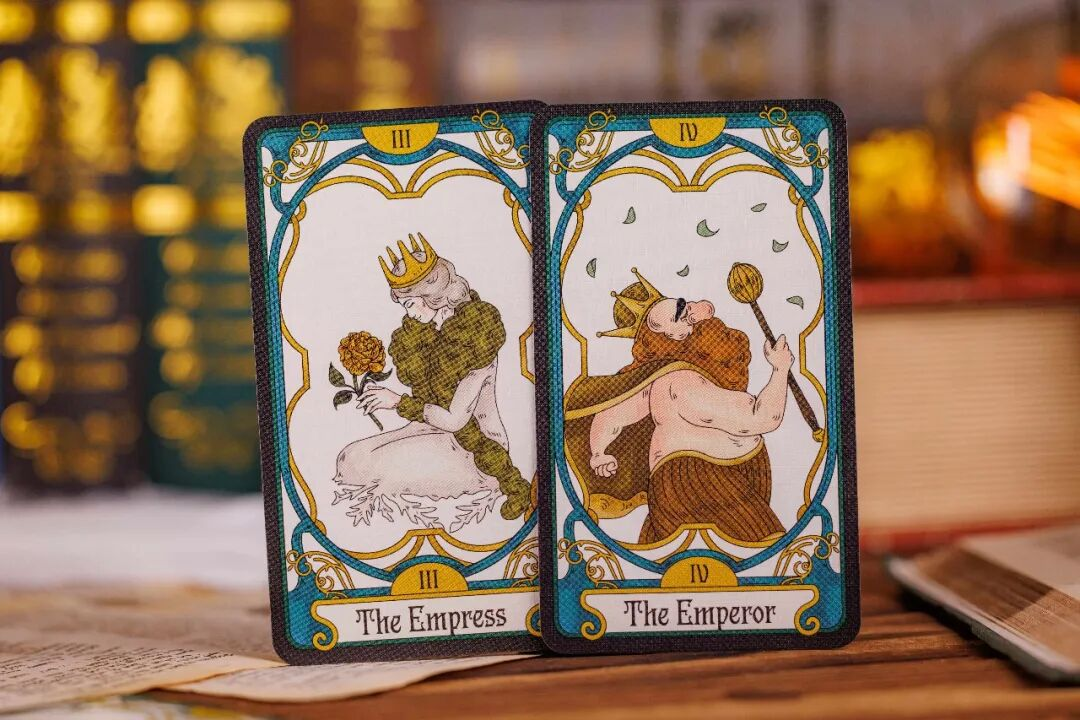
All 78 cards feature entirely new custom illustrations. Here, the esoteric system of Tarot finds a wondrous resonance with the allegorical depth of Andersen's fairy tales.
For example, using The Last Pearl to interpret the confusion and subconscious of the Moon card, or The Emperor's New Clothes to explain the worldly power and vanity of the Emperor card — this intertextuality offers Tarot enthusiasts a fresh perspective for interpretation.
Collector's Guide
For collectors wishing to complete this series, the project offers several tiered options:
- The Complete Set: Includes a total of 4 decks — both colorways of the Standard Edition and Signature Edition — offering the best way to experience the full Andersen world ($82 USD / approx. 568 RMB).
- Half Brick Set: A wooden gift box with superior display aesthetics, perfect for showcasing ($110 USD / approx. 762 RMB).
- The Ultimate Set: Encompasses both of the above, the ultimate answer for those who want it all ($178 USD / approx. 1232 RMB).
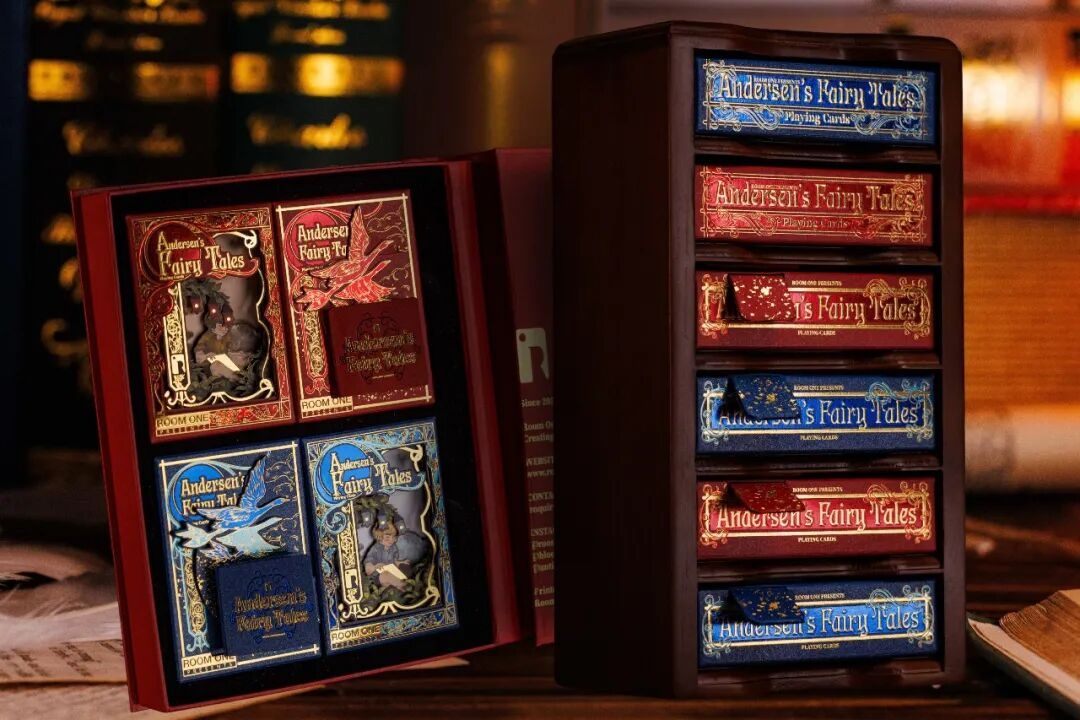
Of course, if you simply wish to experience that flowing hourglass, acquiring a single Garnet or Sapphire deck is also an excellent choice (Standard Edition $16 USD / approx. 110 RMB, Signature Edition $26 USD / approx. 180 RMB).
Additionally, stickers, an octagonal coin, and Uncut Sheets are available for purchase.
Andersen once said, "Life itself is the most wonderful fairy tale." And this deck, perhaps, is the amber of time we hold in our hands.
Which Andersen fairy tale is your favorite? Why?