Florence, Encased in Cotton Paper: An Architectural Deck Like a Hardcover Book
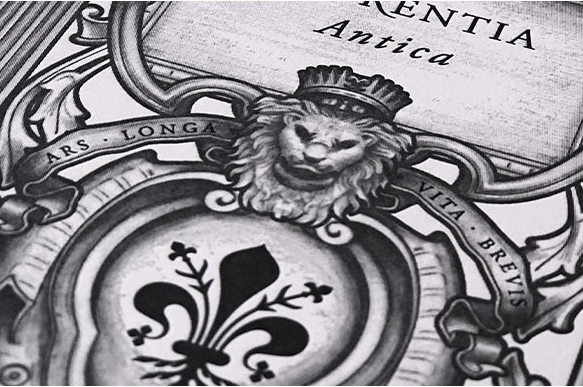
Ars Longa, Vita Brevis. (Art is long, life is short) —Hippocrates
This quote is etched beneath the lion's head crest on the front of the Florentia Antica tuck box.
In 2020, while this deck was still in production, Riccardo Conturbia, founder of Passione Playing Cards, posted a poignant announcement on forums: "I hate to announce this, but Passione won't make it to next year..."
Looking back now, the Latin phrase on the tuck box seems almost prophetic. The brand, which humbly described itself as "never truly popular, belonging only to a small group of enthusiasts," truly vanished as fleetingly as life itself. Yet, in that farewell letter, Riccardo left a resounding promise: "Florentia will be completed and delivered, and only after that will I close the company."
And the one to take up this final torch was the designer, Elettra Deganello.

In his farewell letter, Riccardo wrote emotionally that he regarded Elettra like a daughter, and firmly believed she was on the right path. As a top graduate from the architecture department of the University of Florence, Elettra completely transcended the logic of flat illustration when designing this deck, named after her spiritual hometown.
Her obsession with structure, her understanding of light and shadow, and her meticulousness with blueprints are deeply ingrained in the DNA of this deck. She approached the construction of each image with the mindset of building miniature architecture.
Today, let's re-examine this paper Florence and that final story of commitment and passion.
Architectural Blueprints in Your Hand: When Cotton Paper Indentations Become Cathedral Domes
If you didn't open the box, you'd probably think I bought a miniature, hardcover antique book.
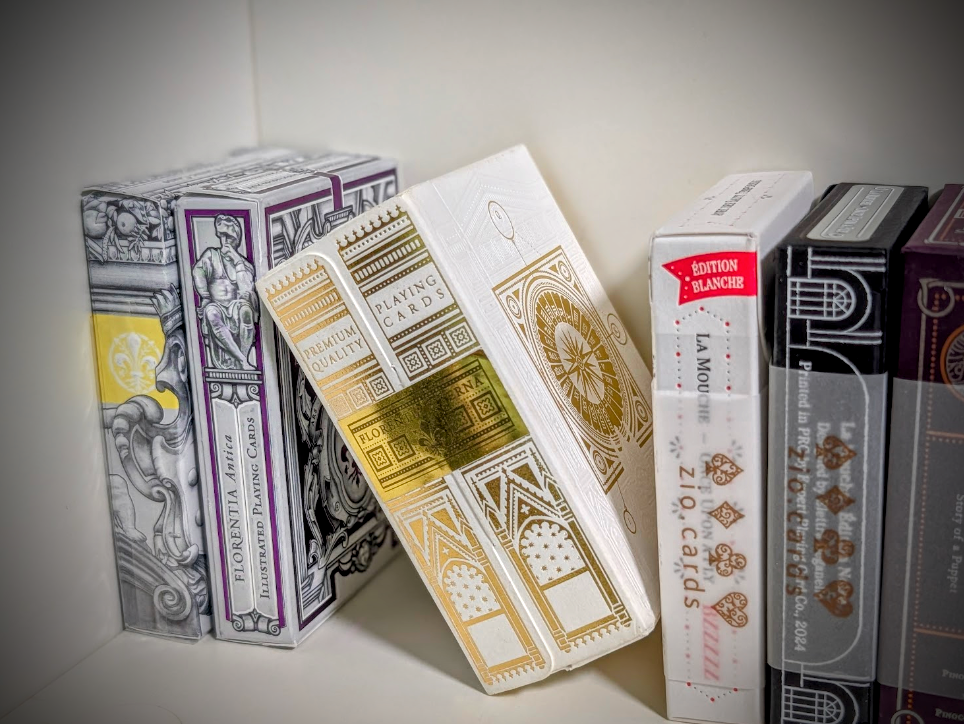
The outer box of the Aeterna (Eternal Edition) is a design I adore. It features Passione's signature book-style double-opening box. It's not a simple slipcase, nor is it one of those gift boxes that merely hold two standard decks. It is a precise, integrated container that directly replaces traditional tuck boxes, housing two decks (Antica and Nova) within a single book-like structure.
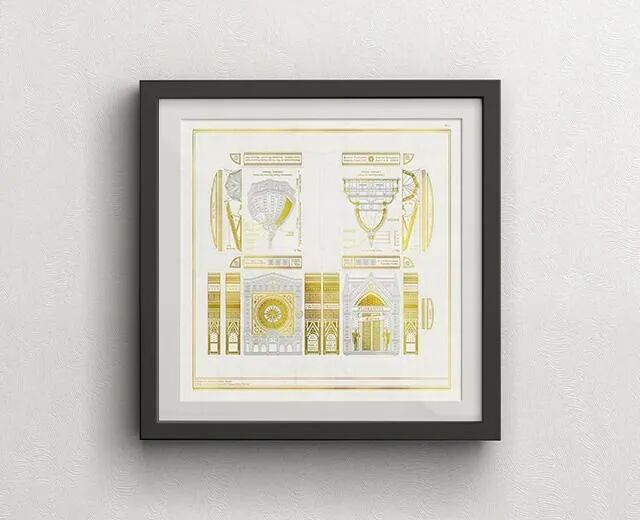
Instead of using conventional glossy coated paper, it stubbornly opts for thick cotton paper. The texture of this paper is unique—rough, warm, and even carrying a hint of the raw pulp's scent. Italy's Archivio Tipografico studio used an old-fashioned letterpress machine to deeply press this cotton paper.
As your fingertips glide across the inside of the box lid, you can feel the indented lines with your eyes closed. Open your eyes, and you'll see a cross-section of the Florence Cathedral's dome.
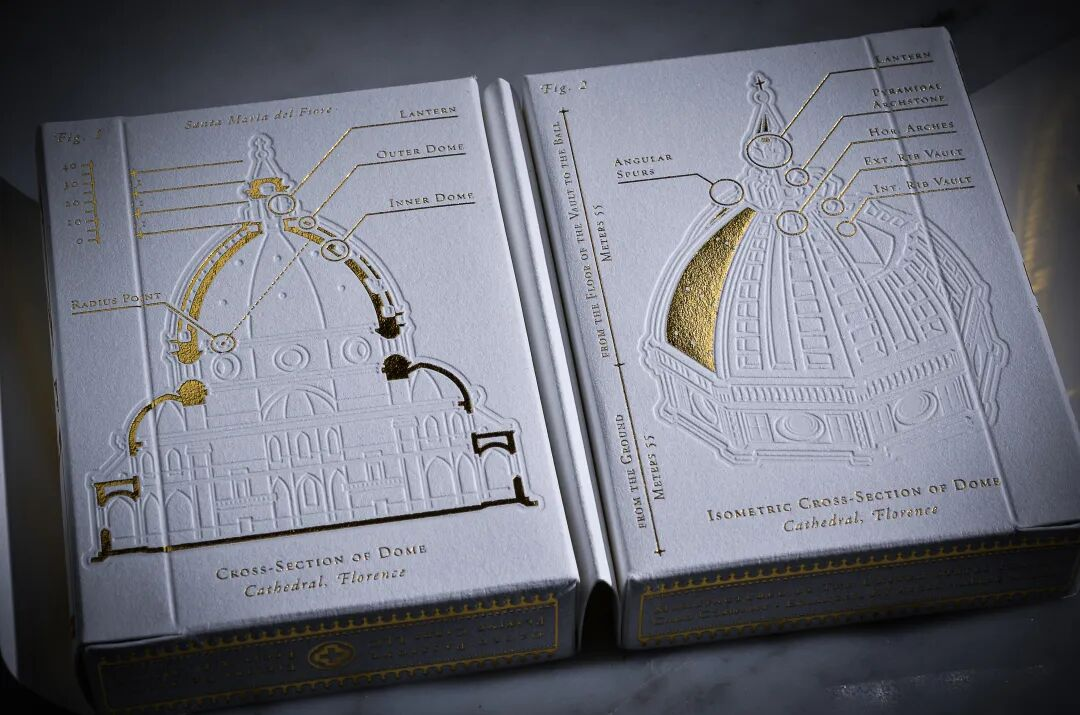
The designer exhibits an almost obsessive rigor here. Every architectural detail is clearly marked in gold lines: Lantern, Outer Dome, Inner Dome, Radius Point. As I gaze at these golden lines deeply embedded in the paper's texture, I always have the illusion that I'm not holding a deck of playing cards, but rather a construction blueprint freshly pilfered from a Renaissance-era job site.
And at the bottom of the box, the designer left a discreet inscription: "E.D. FECIT MMXX."
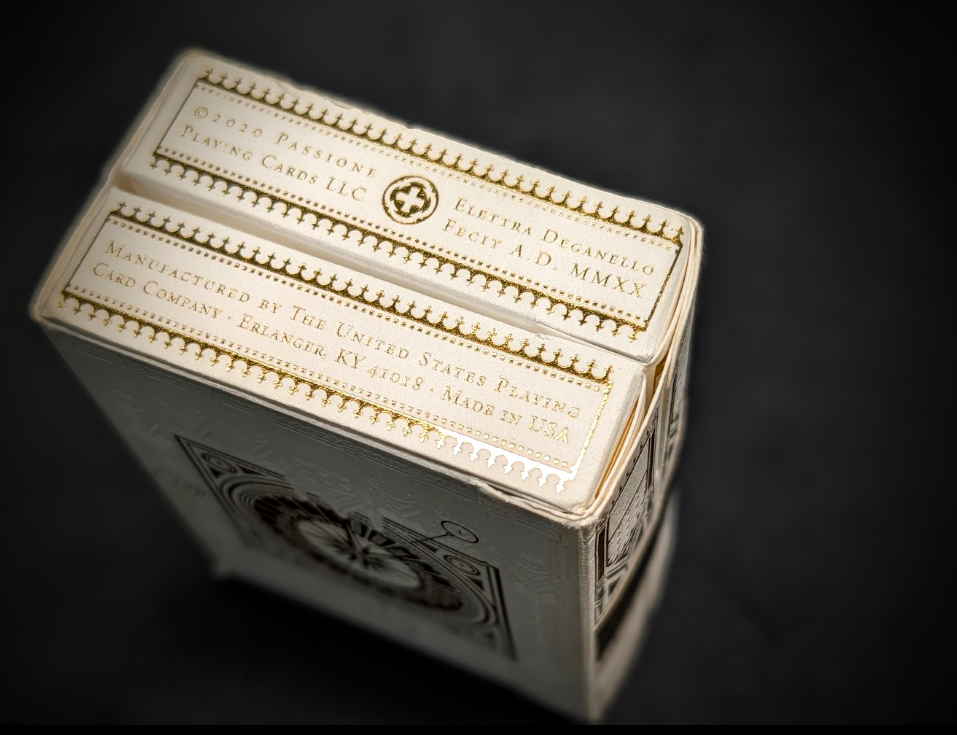
Those unfamiliar with Latin might overlook it, but this is the most traditional way for ancient Roman artisans to sign their work—"Elettra Deganello Made This in 2020." A few simple letters further solidify this sense of historical weight.
Antica: Old Walls Encasing Time: An Eternal Spell in a Latin Palindrome
Florentia features two decks, Antica (Ancient) and Nova (New Star). But I prefer to see them as two walls of the city of Florence: one inscribed with historical epigraphs, the other adorned with modern graffiti.
Antica is that mottled old wall.
Its tuck box material mimics the matte texture of rock, feeling granular, as if directly taken from old city wall bricks. A large area of purple metallic foil stamping is applied, the color of the Medici family and royalty.
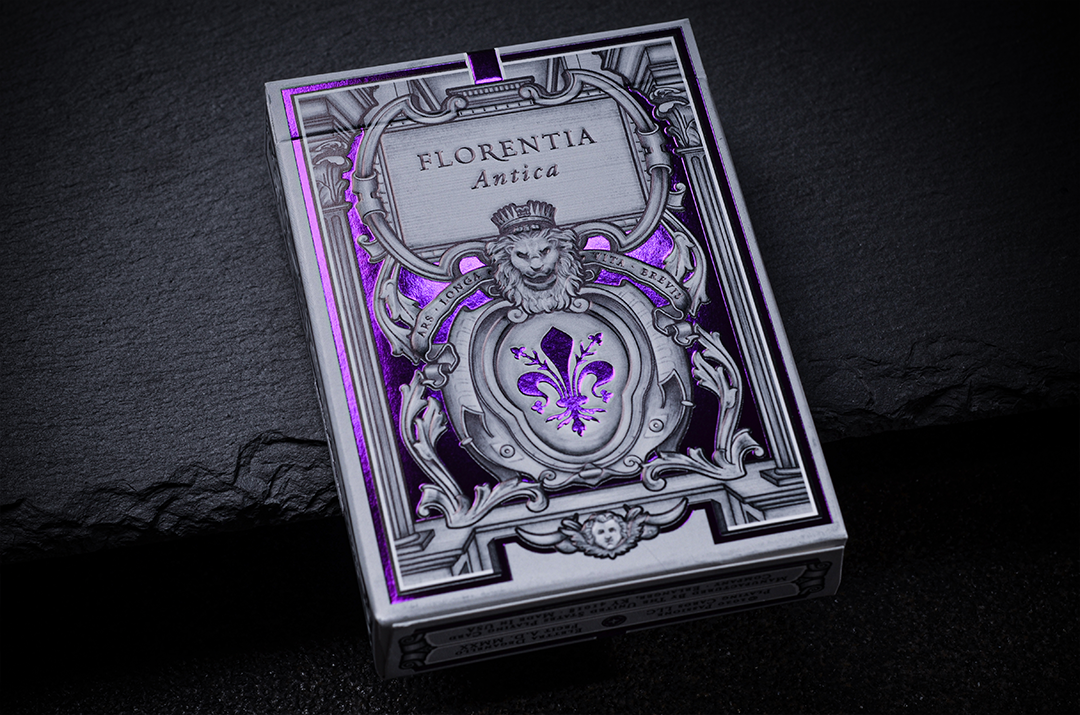
The designer embedded an extremely subtle Easter egg here: the Latin phrase "EN GIRO TORTE SOL CICLOS ET ROTOR IGNE" on the top flap.
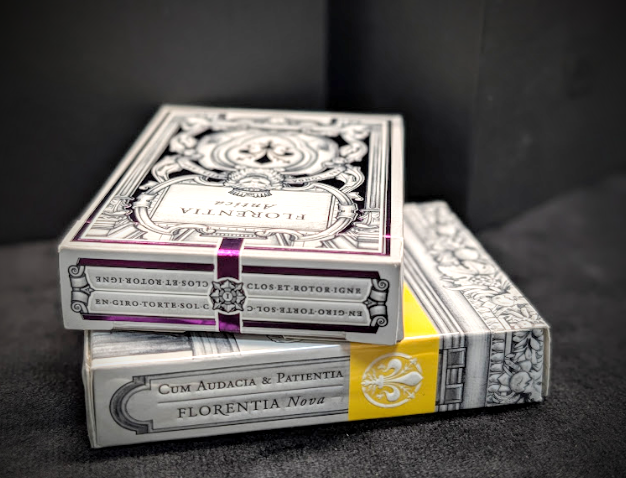
This is a famous palindrome, reading the same forwards and backward, roughly meaning "The sun revolves in circles, and I revolve by fire." This is not merely a word game; it's like a spell of "eternity." Paired with "Cum Gratia & Privilegio" (With Grace & Privilege, a typical Renaissance copyright declaration) on the side, it perfectly replicates the essence of an ancient book.
Spread the Antica cards, and you'll notice a continuous purple vertical line. It acts like a spine, or an architectural axis, perpendicularly piercing the center of each pip card. This design imparts a visual sense of sacred connection between heaven and earth, communicating with the divine.
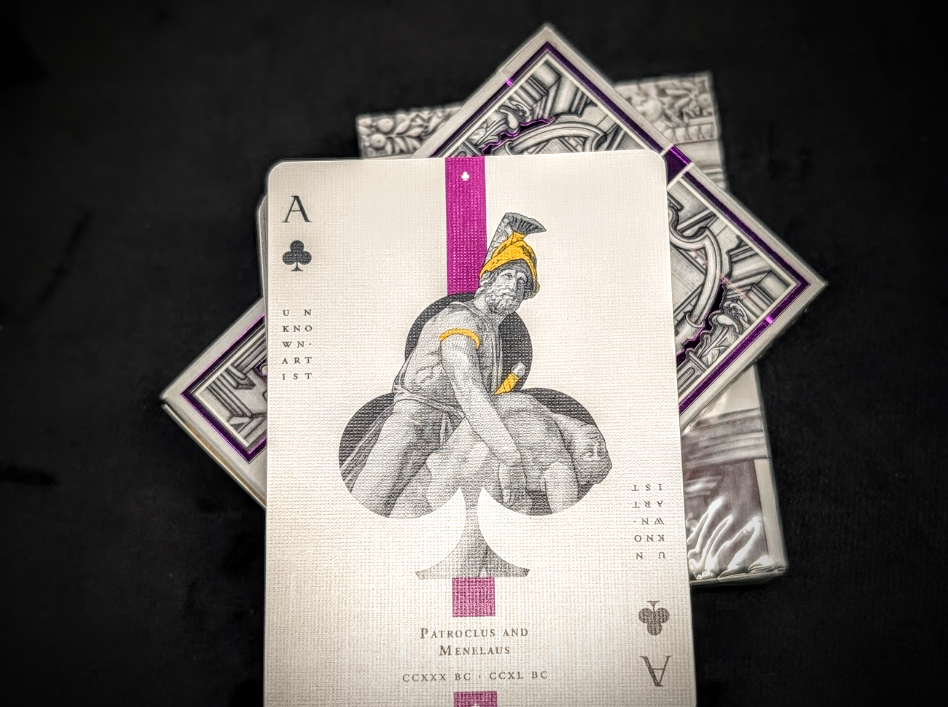
The card face illustrations utilize an extremely restrained black-and-white sketch style, but key areas are accented with metallic gold ink. This presents a matte, delicate texture akin to gold dust.
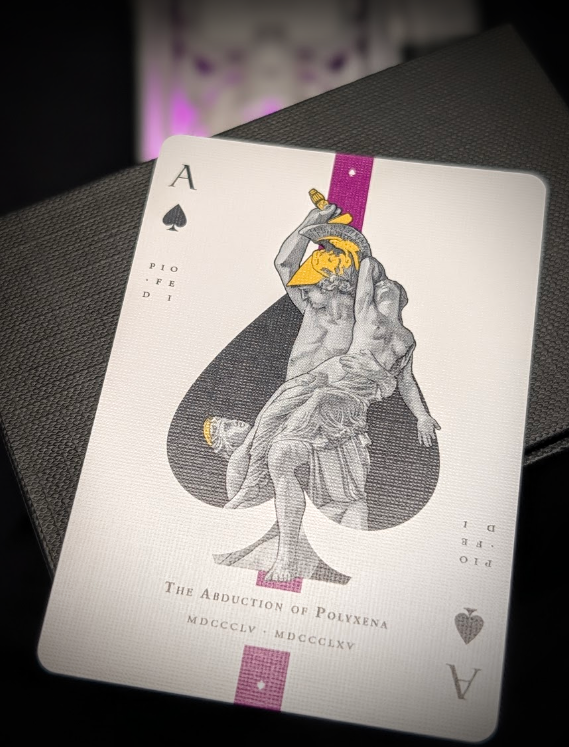
Ace of Spades: Depicts Pio Fedi's sculpture The Rape of Polyxena. Amidst the black-and-white muscular lines, the soldier's helmet is rendered in gold, a localized brightening technique that instantly creates a visual focal point.
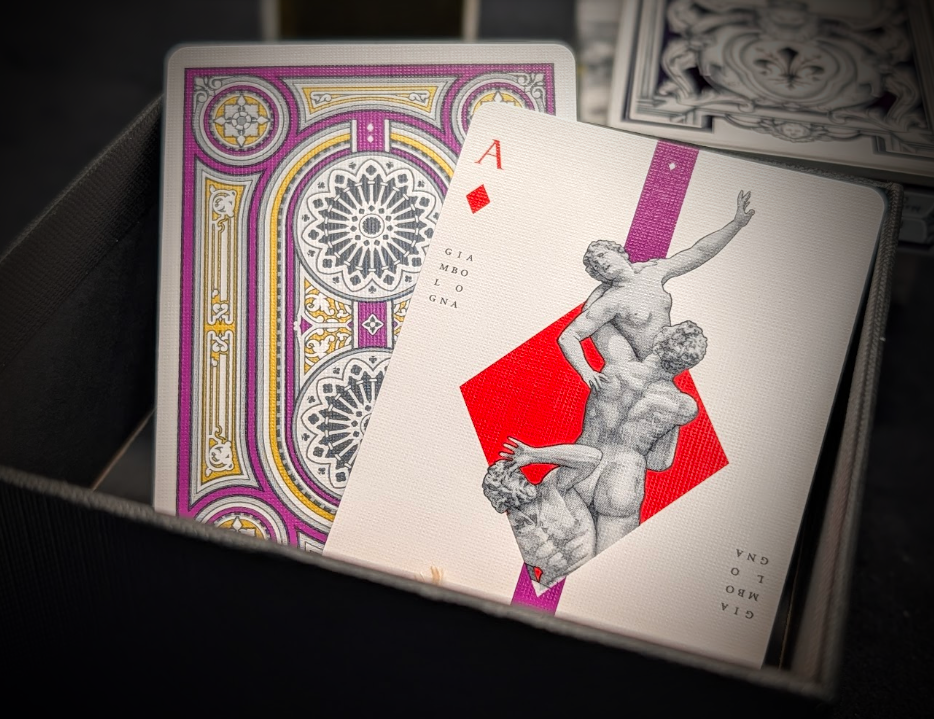
Ace of Diamonds: Giambologna's masterpiece The Rape of the Sabine Women. Red diamond pips interweave with purple lines, perfectly capturing the spiral upward dynamic tension of the sculpture.
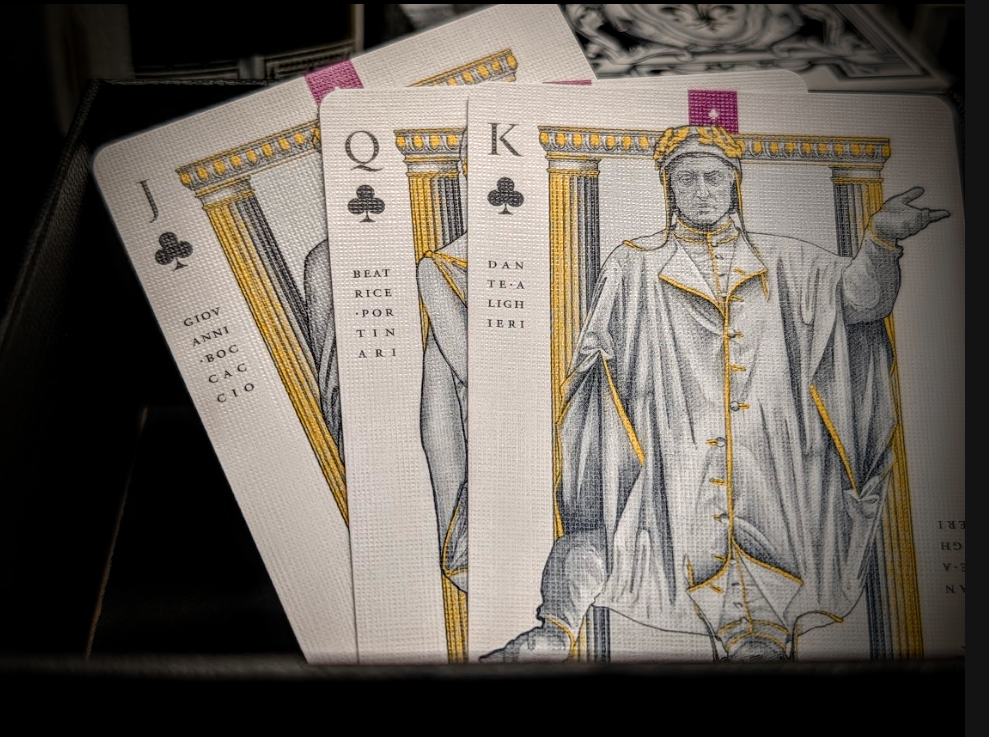
King of Clubs: The poet Dante. With a solemn expression, he points into the distance, with a striking touch of gold appearing on his laurel wreath, making him appear both sacred and scholarly.
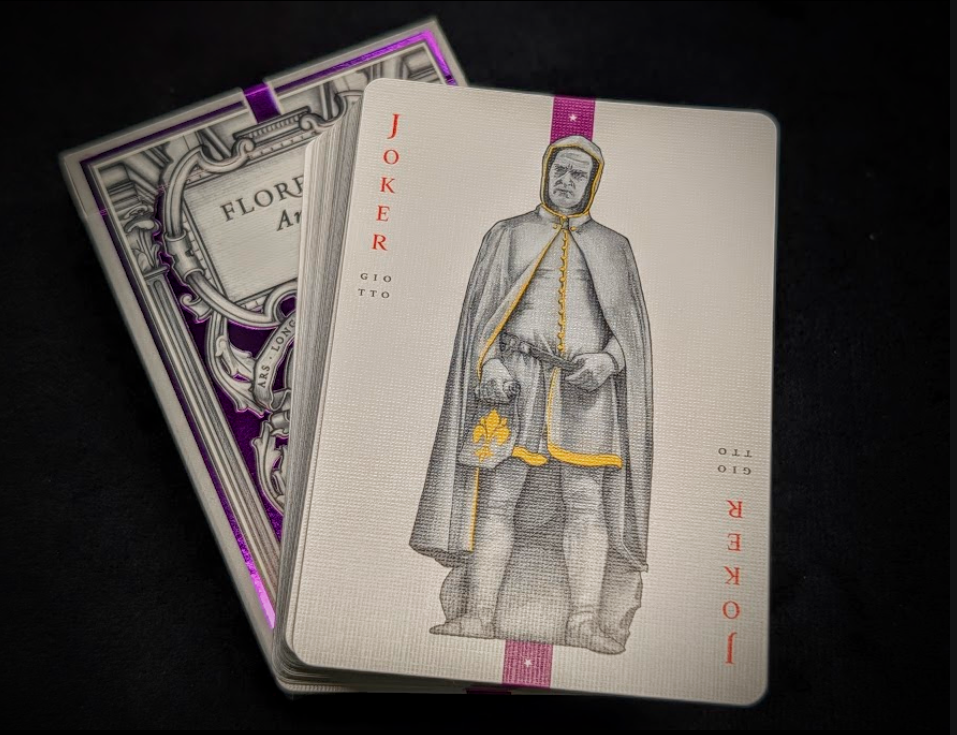
Joker: Giotto, here, holds a scroll. Is it his perfect circle within?
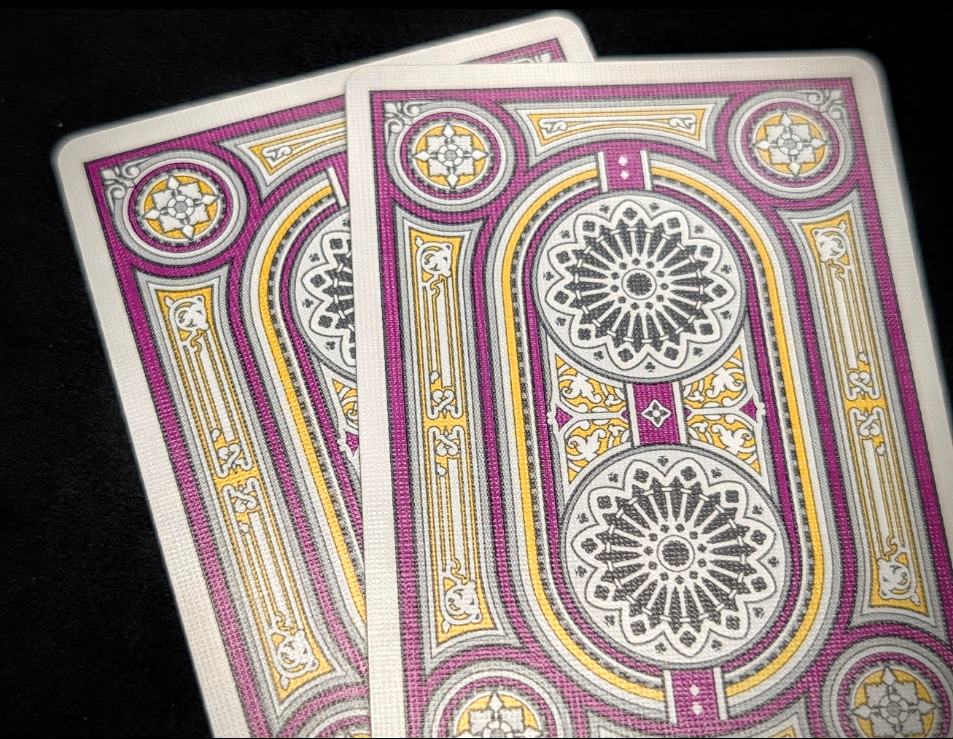
The Antica card back directly references the iconic rose window of the Florence Cathedral. Complex geometric lines unfold layer by layer against a purple background, building an architectural sense of stability, appearing like a fine tapestry.
Nova: A New Window Reflecting the Present: When a Neon Glow Illuminates David's Back
I particularly love Elettra's slightly provocative humor in Nova. She doesn't place the Renaissance masters on a pedestal; instead, she pulls them into the glow of modern neon lights.
The motto on the side of the tuck box changes from Antica's "Grace & Privilege" to "Cum Audacia & Patientia"—With Courage & Patience.
Designing something like this indeed requires courage. The original vertical purple axis disappears, replaced by a horizontally cutting neon yellow line. This light, like a laser scan, forcefully slices through the ancient sketch artwork. It even imbues the playing cards with a touch of modern cardistry flair.
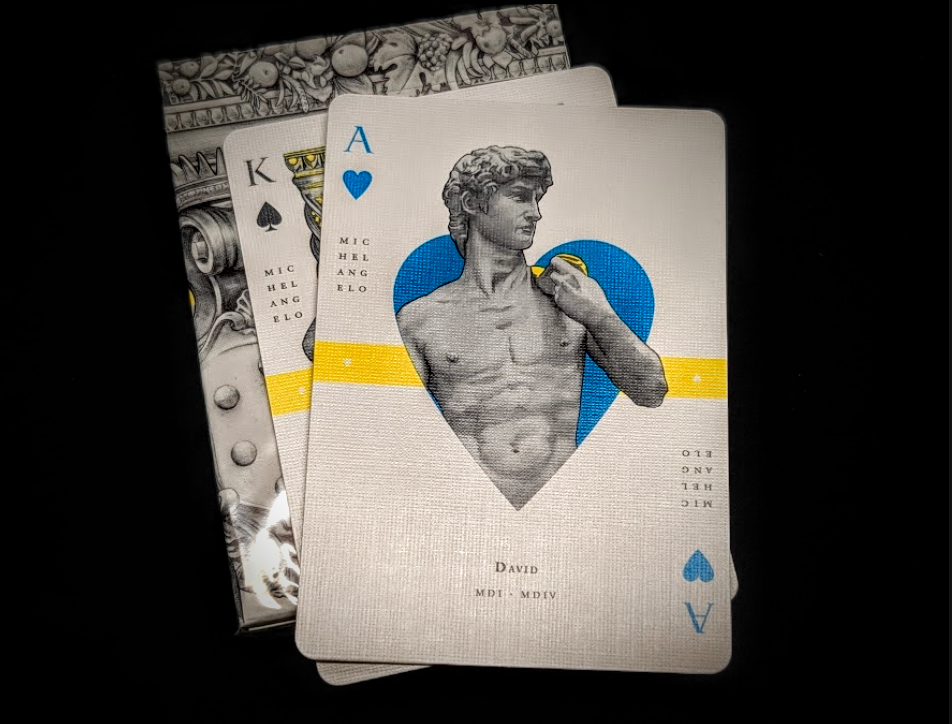
Look at that Ace of Hearts. Michelangelo's David, a classic we are all too familiar with. But in Nova, a massive, high-saturation blue heart appears behind him, combined with that neon yellow line, instantly giving the classical sculpture an Andy Warhol-esque Pop Art sensibility.
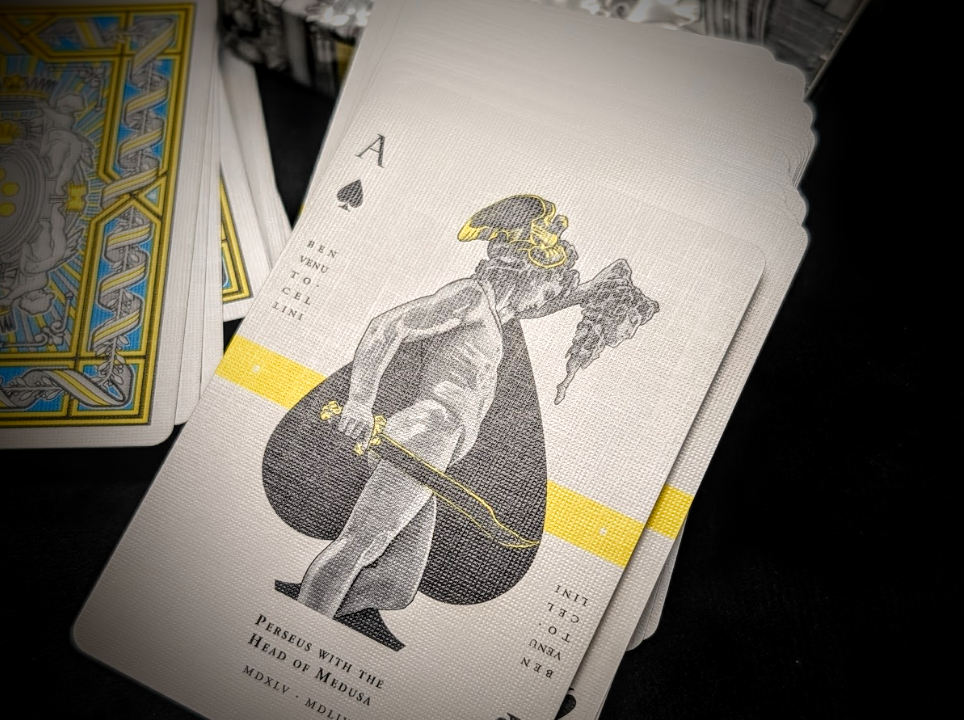
The Ace of Spades is equally spectacular. Perseus holds aloft Medusa's head, and a neon yellow horizontal bar forcefully traverses the image, like a modern laser scanning an ancient bronze, both destructive and reconstructive.
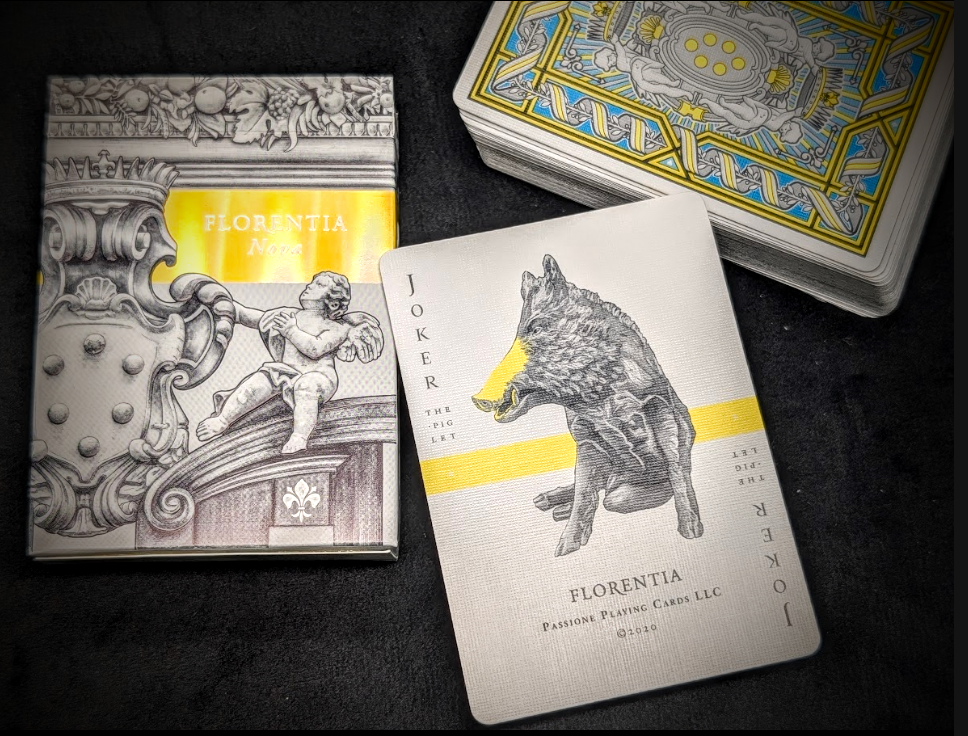
And then there's that Joker.
Anyone who has visited Florence knows the "Porcellino" wild boar fountain. Tourists say touching its nose brings good luck, so the bronze pig's nose is always polished bright. In Nova, Elettra directly paints the pig's nose bright yellow. This is an inside joke that only those who have been to the city can appreciate. She uses color to mark the traces left by countless hands, making it both commonplace and vibrant.
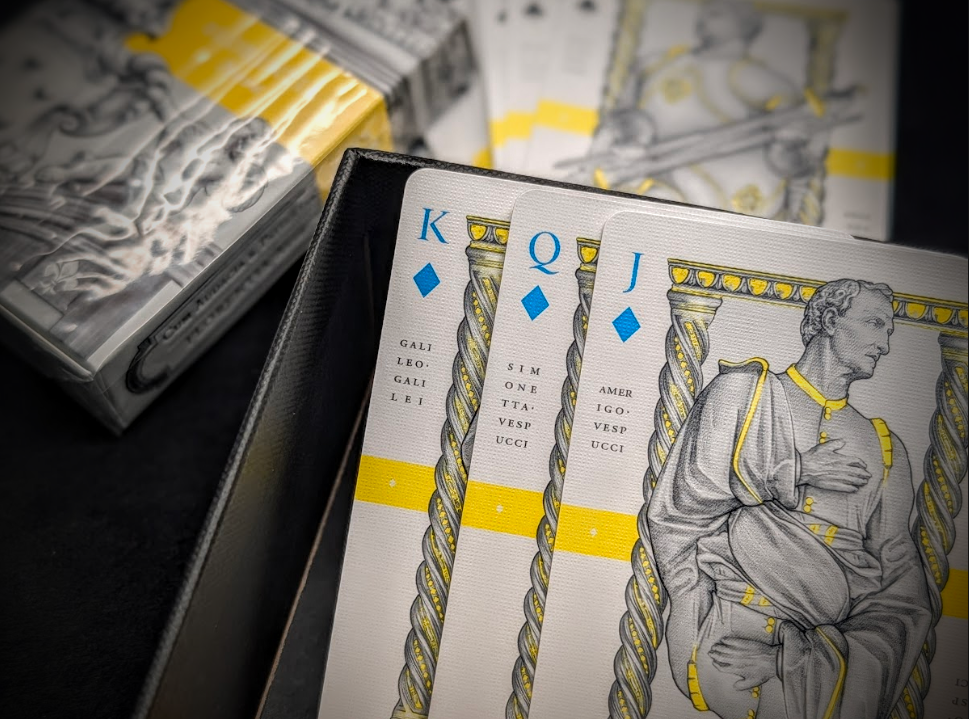
Even the figures on the court cards were not spared. Galileo's telescope, Amerigo Vespucci's robe—all are imbued with this vivid neon color. This invasion of color makes these historical figures look less like dry portraits and more like they've just stepped out of a cyberpunk-themed masquerade ball.
(This impactful visual contrast is only one-tenth visible in static images. To "handle" this neon-lit paper architecture up close, the "Digital Exhibition Hall" at the end of the article offers a higher-definition perspective.)
The Skeleton Beneath the Colors: An Architect's Structural Acumen Revealed in Black and White Prints
If we strip away the neon and packaging, what remains of this deck?
Art prints provide the answer.
In these limited-edition prints, we can see the designer's most unadorned fundamental skills. These artworks are also produced by Archivio Tipografico using letterpress printing techniques on Mohawk paper.
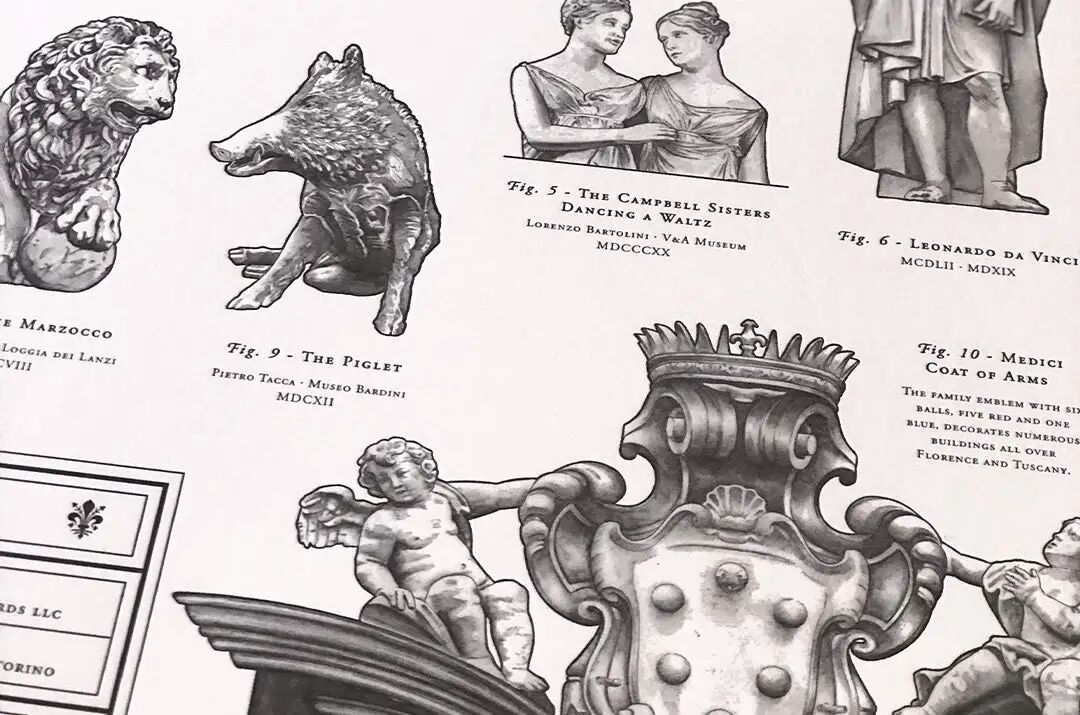
Without the enhancement of metallic foil, black and white lines must bear the entire responsibility of conveying texture. The curling mane of the Medici lion, the rough granular texture of the wild boar's skin, the gravitational drape of the Statue of Liberty's robe—all are rendered with impeccable clarity on the large-format prints.
This is an architect's sketching prowess. She understands structure, understands light and shadow, and, even more, understands how to use lines to construct volume.
Final Thoughts: Reaffirming the Weight of the Physical in the Pixel Age
The Passione brand is no more, just like the dynasties of Florence's history, ultimately encapsulated in the footnote of "Vita Brevis" (life is short).
But the Florentia deck, in a very physical way, affirms the latter part—"Ars Longa" (art is long).
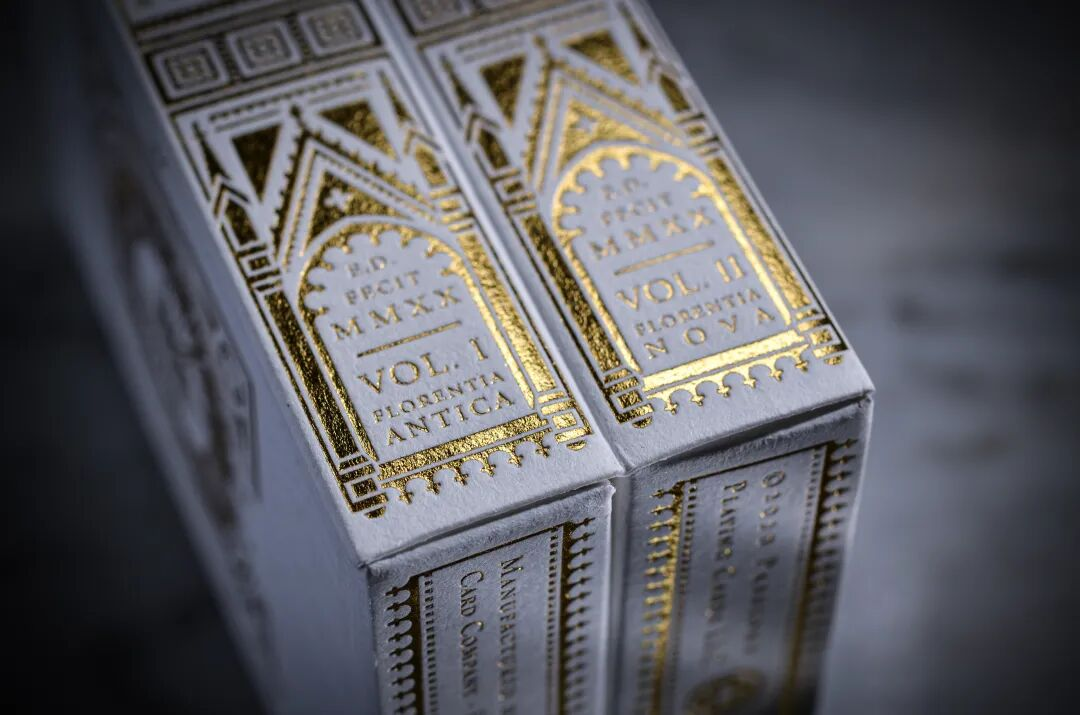
With its tactile rough cotton paper, deeply impressed debossing, and architectural drawings that can not only be seen but also felt, it leaves behind a weighty physical presence in this ephemeral pixel age. It reminds us that no matter the rise and fall of commerce, works meticulously designed and passionately refined will remain as hard as stone, resisting the erosion of time.
When you stand the Aeterna box on your desk, looking at the golden text on its spine, you possess not just two decks of cards, but a miniature Florence that only you can open.
So, which Florence do you prefer?
Is it the classical old wall (Antica), inscribed with Latin and adorned in solemn purple and gold? Or the rebellious modern window (Nova), reflecting Pop Art neon?
Text can describe Florentia's intricacies, but it cannot replace the "tactile sensation" of your fingertips and the visual impact. We have established a 24-hour "Digital Exhibition Hall" for you. Here, you can:
- Zoom in high definition to discern every neon line and sketch stroke;
- Interact in 3D, rotating and examining the cotton paper tuck box that resembles an architectural blueprint;
- Experience dynamic displays, feeling the aesthetic play of light and shadow as the cards move.
Click the card below to enter the exhibition hall immediately and begin your immersive appreciation experience.