Welcome to Hotel Für Elise: Whose Soul Lingers at the End of the Infinite Mirror?
The scent of aged perfume and rust in the air will alert you, even before your eyes, that this hotel, christened 'Für Elise,' has been arrested by time's minute hand for far too long.
The Anti-Faro brand possesses a compulsive addiction to storytelling. Their latest Kickstarter release, Hotel Für Elise, once again shatters the physical boundaries of paper and box.
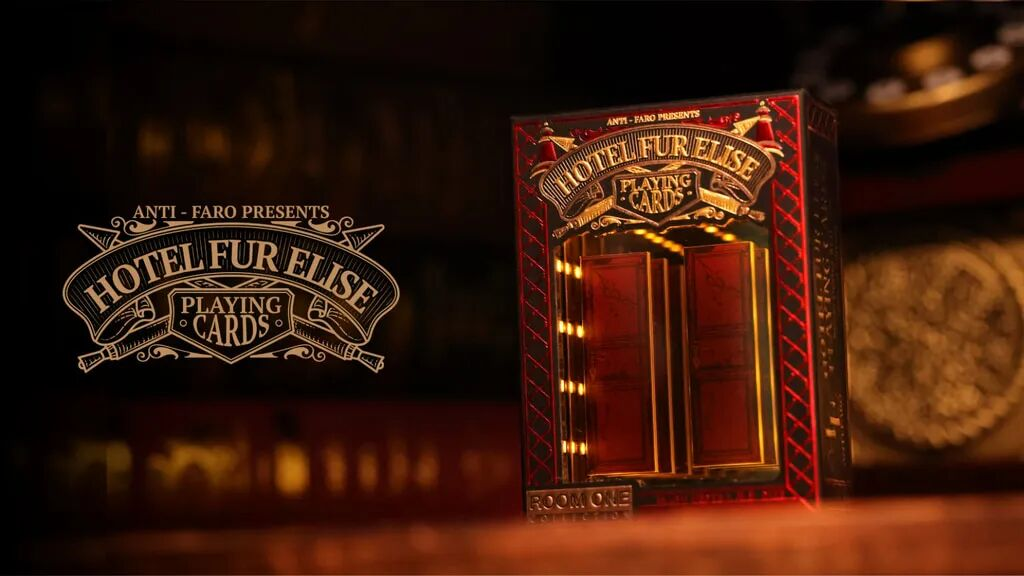
It simulates a mysterious catastrophe that occurred in the early twentieth century. Once a lavish playground for the elite, the entire edifice was violently ripped from the fabric of reality when the fateful incident struck.
The Entrance: The Elevator That Plunges You into the Abyss
Upon acquiring this deck, the first encounter is with its façade.
The Special Edition features a profoundly immersive infinite mirror tuck box, undoubtedly the deck's most striking visual centerpiece. Unlike conventional tuck boxes that merely play with material textures, this one embeds an LED array within its structural body.
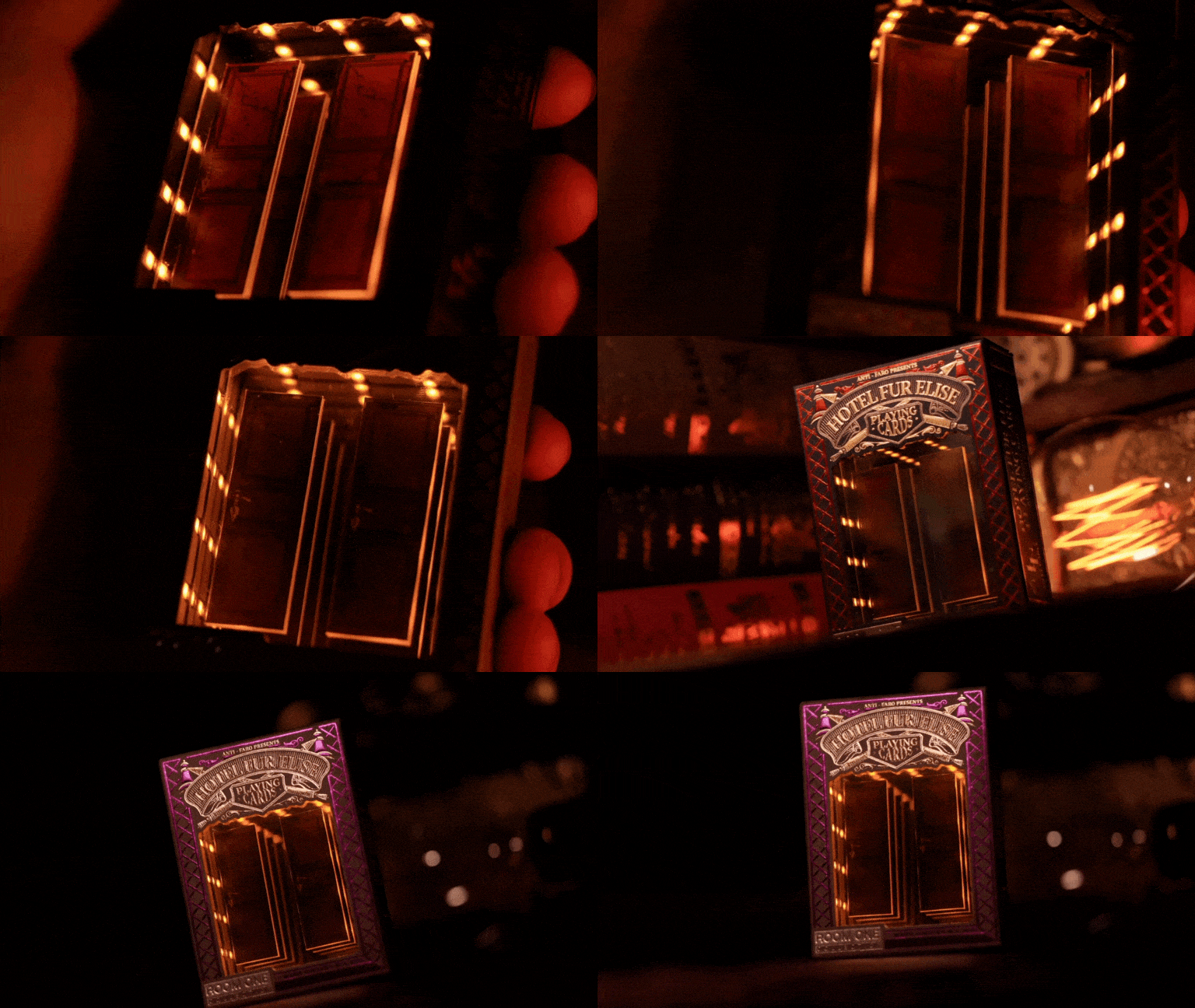
Pressing a concealed button ignites an infinite reflection of light between the mirrors, refracting a seemingly endless hotel corridor within the confined tuck box. This playful subversion of geometric space, with a visual depth far exceeding its physical thickness, instantly draws the player into that warped spacetime.
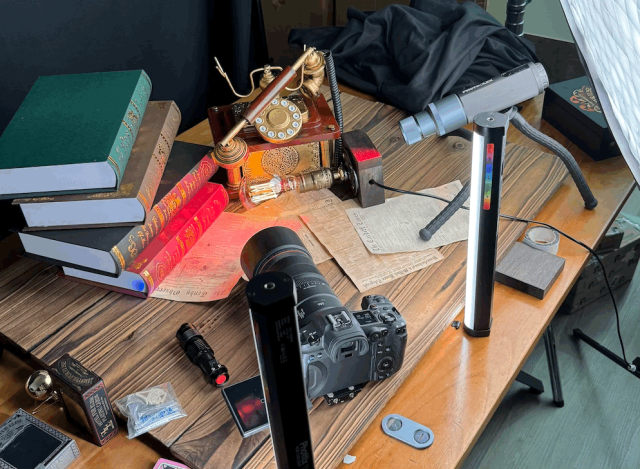
Given the extraordinary reflectivity of the tuck box, the designers confessed that photographing this deck for promotional materials posed immense challenges. To prevent any unwanted elements from appearing in the frame, the photography team had to meticulously drape the entire shooting space in black cloth, capturing those profound mirrored moments only under extreme conditions.
However, for a device so heavily reliant on power, collectors inevitably experience battery anxiety. Drawing from the experience of Tanuki Garden Tour, another title under Room One's Bloom brand, batteries suffered power loss during long-haul transport due to magnet interference and proved difficult to replace.
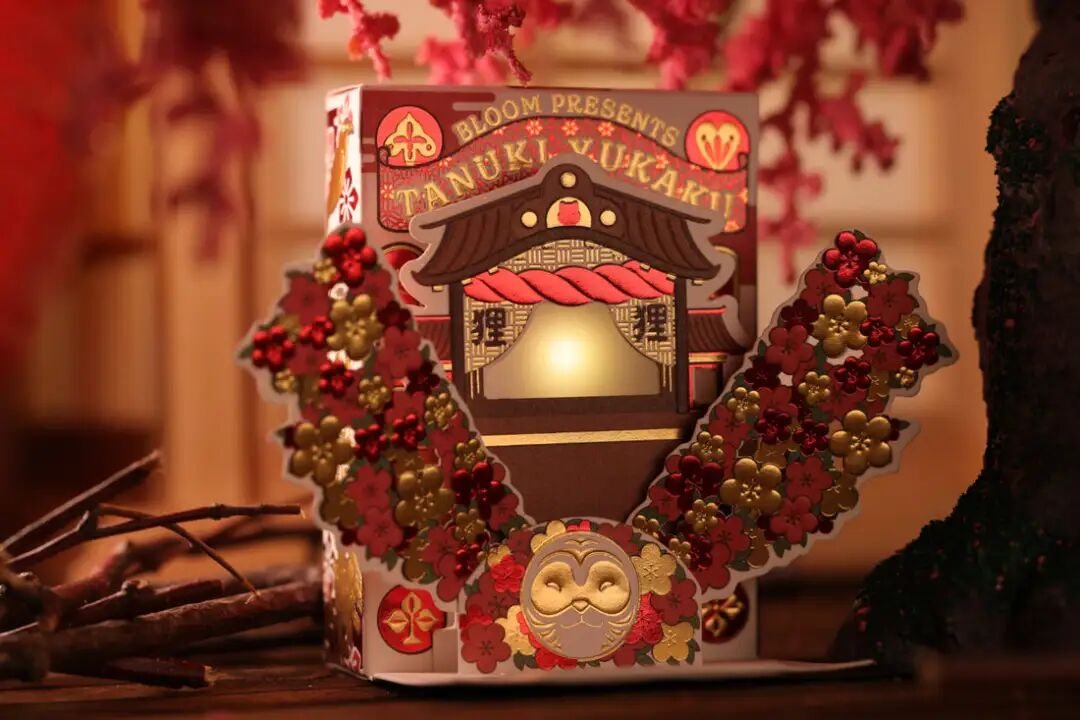
For Tanuki Garden Tour, a dead battery merely meant the loss of a lighting effect, which didn't significantly detract from the overall presentation. But for Hotel Für Elise, the illumination directly determines the success or failure of the mirrored corridor. We trust the team, having learned from past lessons, will offer a more robust battery solution this time.
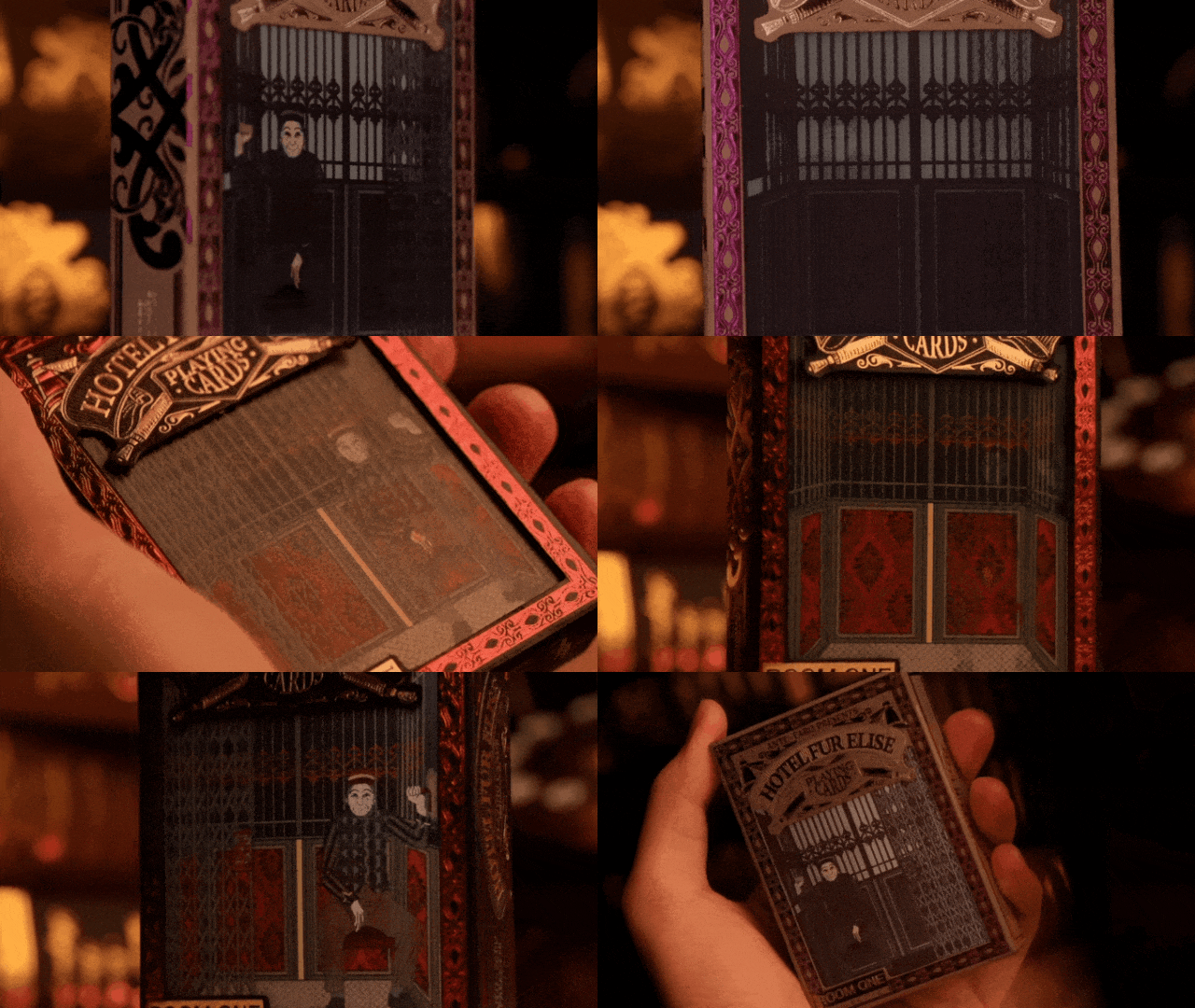
The Standard Edition, conversely, opts for lenticular printing, a choice more attuned to supernatural intuition. As the tuck box tilts, a bellhop greets you with an eerie, hollow smile, his gaze perpetually following the observer, his hand forever resting on the elevator's control lever. This 'frame-dropping' visual effect precisely captures the flickering power and lingering specters of an antiquated hotel.
The Card Backs: The Unceasing Malfunctioning Hand
While the tuck box serves as the entrance, the card backs represent the hotel's still-beating heart. All four versions across the series share a single core design: an Art Nouveau-inspired elevator floor indicator from the late 19th century. The dial oscillates between B and 6, yet this is far more than mere decoration.
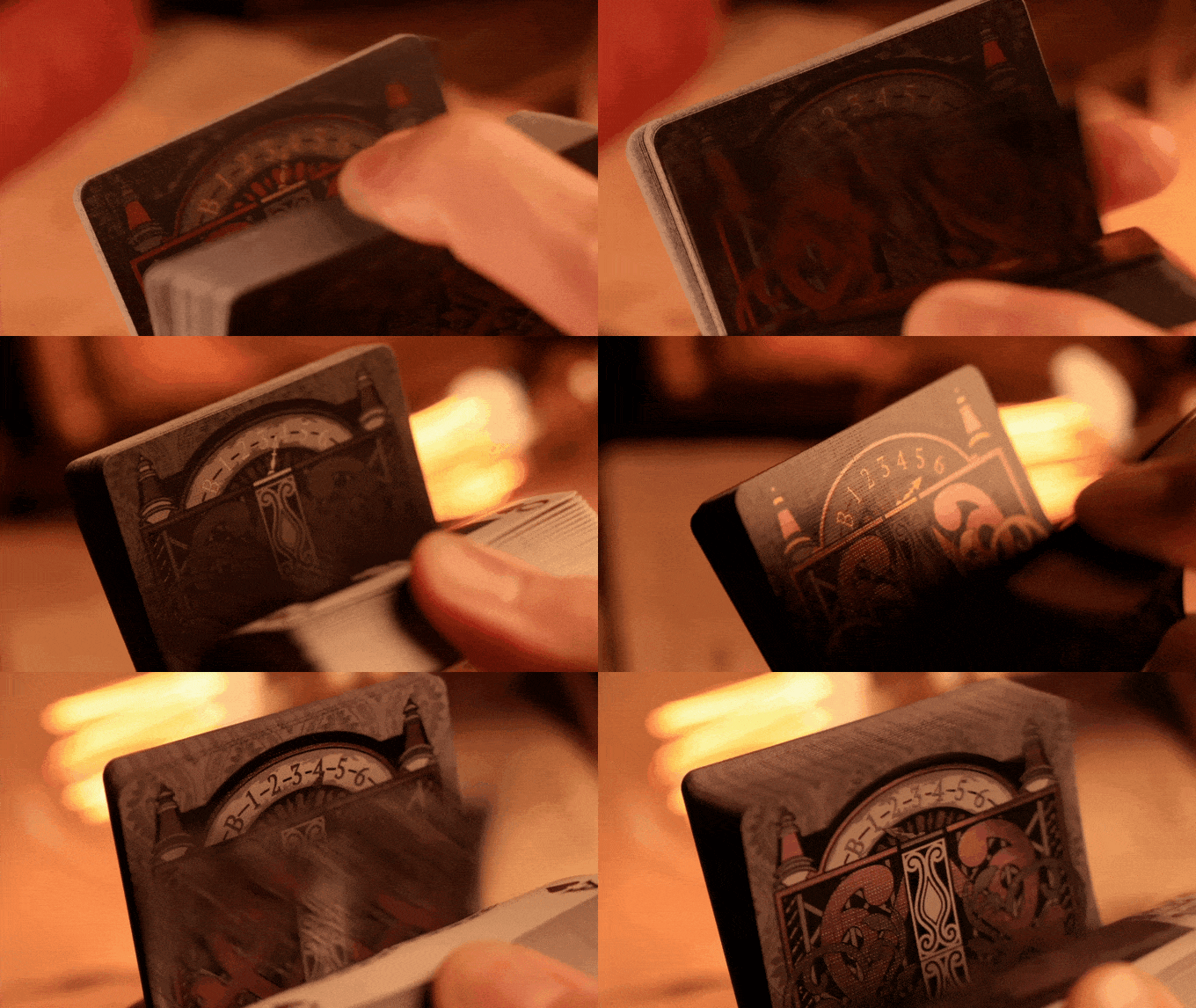
When the cards are quickly flipped or fanned in hand, the normally elegant dial instantly morphs into a spectral hand, twitching and flickering between non-existent floors, as if the elevator is struggling, trapped in a void dimension. This dynamic narrative of mechanical failure perfectly encapsulates the morbid, elegant shiver that pervades the hotel.
Wandering Through: A Corridor of Room Numbers
Once you step through the elevator entrance of the mirrored tuck box, the subsequent space is taken over by the pip cards.
The forty pip cards are designed as forty guest room doors, collectively assembling a chaotic, distorted corridor with a disorienting perspective. In the Special Edition, the room numbers feature metallic cold foil.
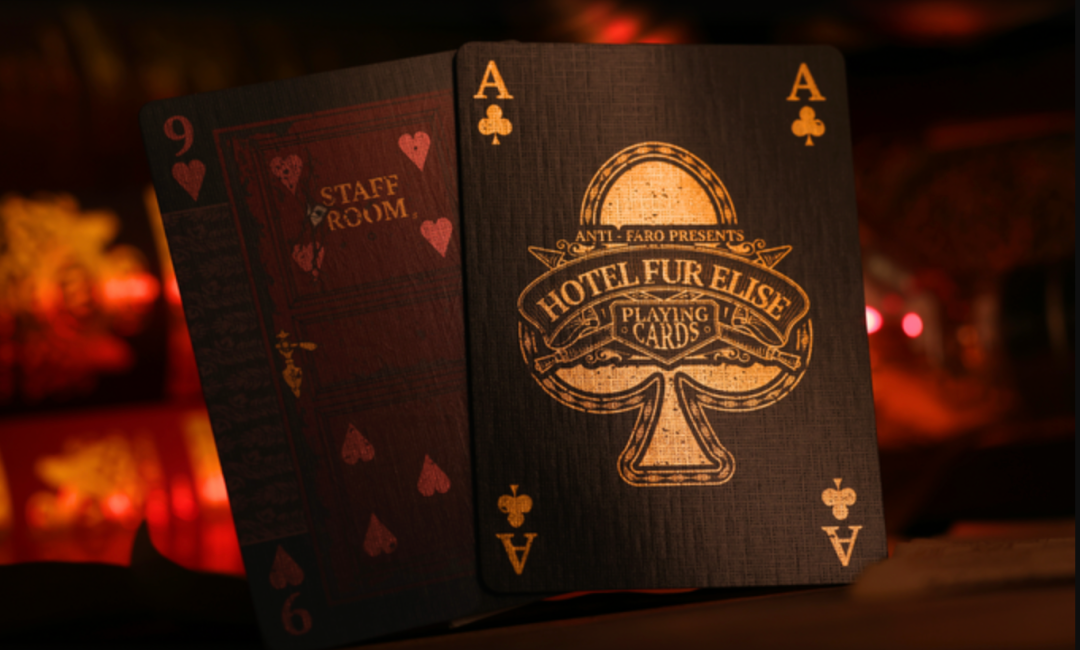
While this design fully immerses the player in the narrative, integrating the pips into the subtle details of the room doors inevitably sacrifices some legibility, possibly requiring a closer look when sorting the deck.
The cards are divided into a Right-Handed Edition (Mano Destra) and a Left-Handed Edition (Mano Sinistra). 'Right' often symbolizes strength, order, or worldly power. Here, it manifests the raw, tragic power of the hotel's destruction, like a smoldering dark fire, through a rich palette of black, red, and gold.
Sinistra, with its Latin roots meaning 'inauspicious' or 'evil,' is also the etymological source of the English word 'sinister.' The Left-Handed Edition employs a stark combination of purple, white, and silver, precisely capturing an ethereal, morbid, and ineffable ghostly atmosphere.
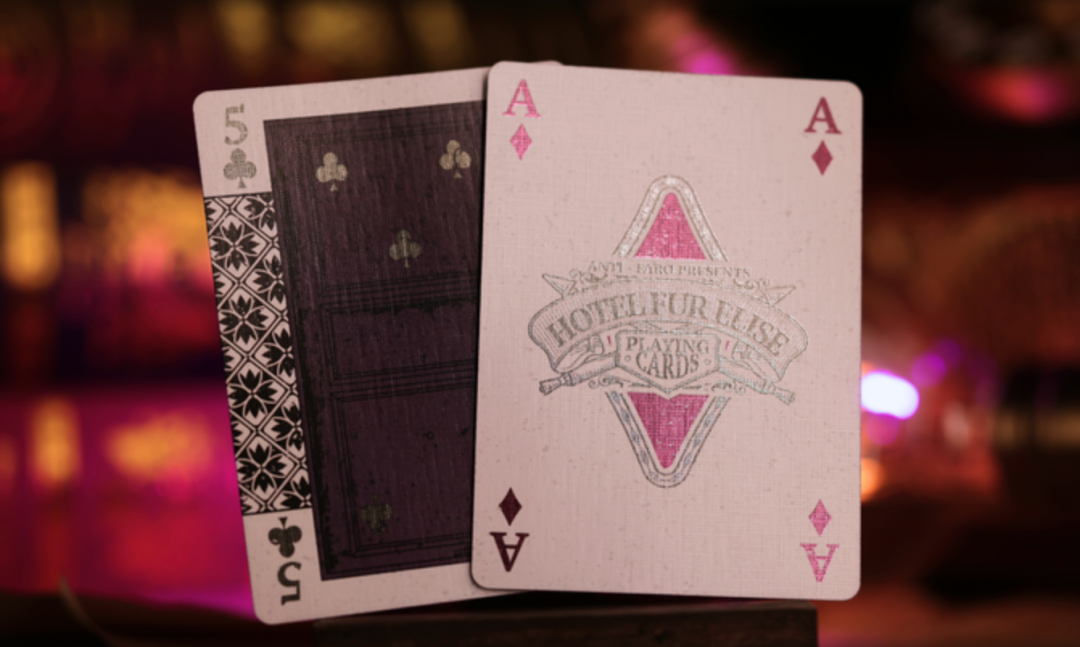
If you follow the corridor to its logical conclusion, you arrive at the court cards (JQK). Here, the designers leverage a common motif in playing card design: the keyhole.
While the keyhole is indeed a fairly common trope in playing card design, most works tend to treat it as an isolated template. In Hotel Für Elise, however, it integrates seamlessly with the hotel corridor setting, aligning perfectly with a voyeuristic narrative logic.
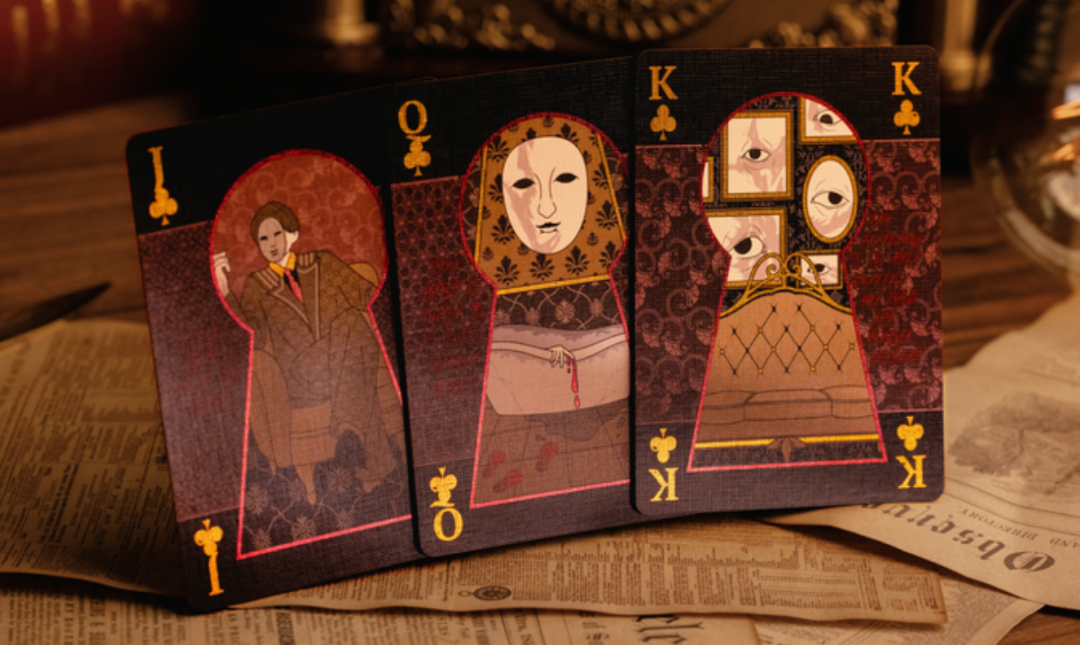
The Special Edition court cards feature a one-way design, locking your perspective within the keyhole on the door. As an intruder, you peer through the keyhole, witnessing the guests' final moments—elegant attire interwoven with sudden violence, all framed within the narrow aperture. This voyeuristic narrative angle perfectly captures the suspense, making each card a miniature crime scene.
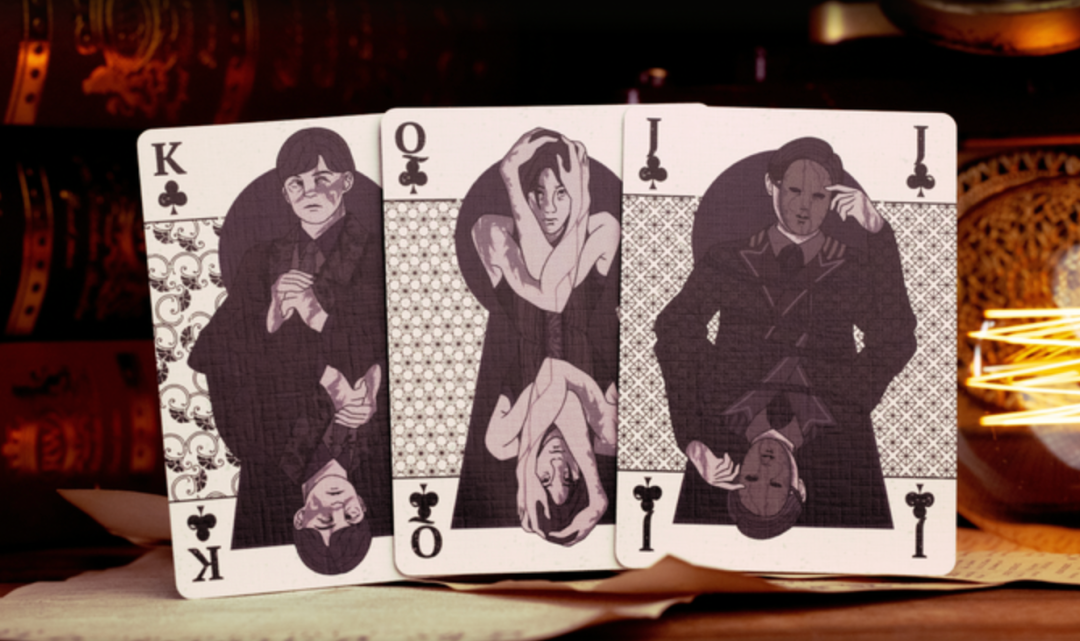
The Standard Edition, catering to players, retains standard two-way portraits, depicting the residents before their spectral transformation.
Redemption: The Liberation of Souls
The most intriguing gameplay is hidden within the inner world. According to the lore, the guests of this deck perished in an unrecorded tragedy, permanently trapped in the perpetual loop of the mirrored corridor.
To liberate them, you require two special artifacts, available exclusively in the Special Edition:
- Hands Joined: You must possess both the 'Left-Handed' and 'Right-Handed' Special Editions simultaneously. The password is split into two halves, and only when their logic converges will the truth be revealed.
- UV Spirit Vision: Beneath each door of the Special Edition, hidden graffiti and bloodstains are visible only under UV light. These are the desperate cries for help or fragmented passcodes forcibly etched by the guests in their final moments.
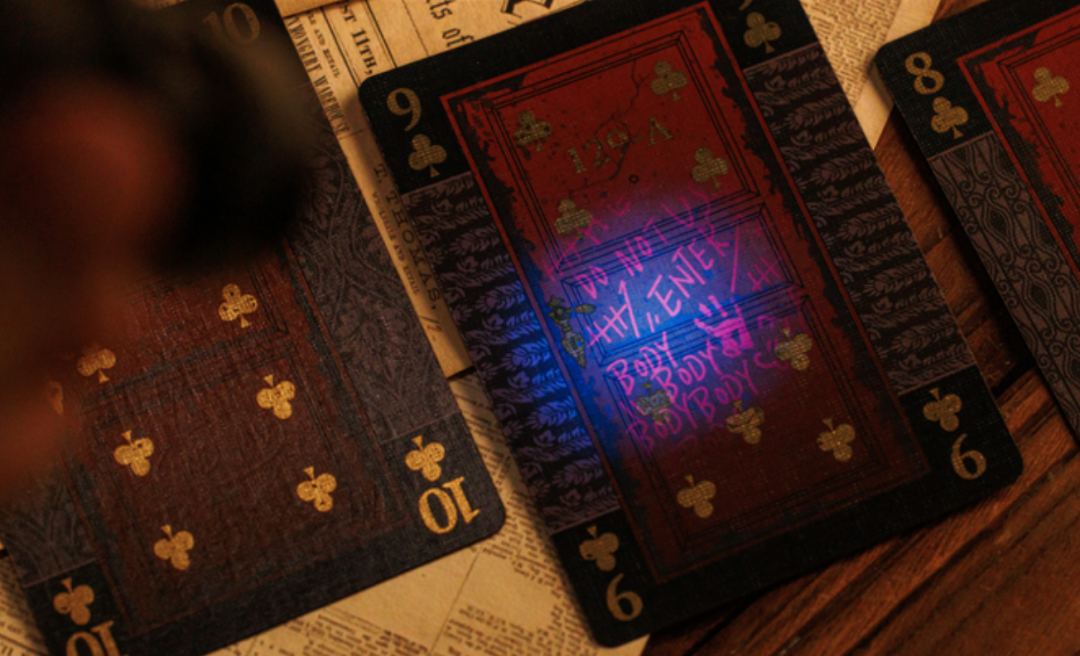
This constitutes the core puzzle game laid out by the designers: 'Set the Lost Souls Free.' When you decipher all the room number coordinates, confirm the identities of the afflicted through the keyholes, and align all the passcodes, you will have achieved a temporal redemption.
Theoretically, you only need two Special Editions to complete the puzzle. However, for a more efficient solve, the Standard Edition can also offer considerable assistance.
Conclusion: A Daring Architectural Experiment
Hotel Für Elise successfully melds the physical marvel of infinite mirrors with the planar narrative of a corridor of room doors. Even if one were to acquire it solely for the tuck box, its presence on any collector's shelf would be undeniably potent.
Currently crowdfunding on Kickstarter.
| Edition | Price | Key Features |
|---|---|---|
| Standard Edition | $14 | Lenticular tuck box, two-way portraits |
| Special Edition | $30 | LED mirror tuck box, cold foil card faces, includes UV puzzle clues |
| Two-Deck Set | $56 | One red and one purple Special Edition, essential for puzzle solvers |
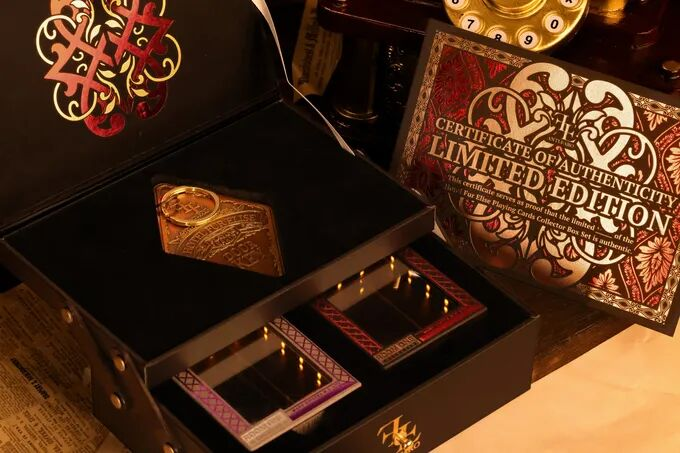
| Collector's Set | $84 | Four decks (Special + Standard), accompanying metal coin, collector's box |
From LED mirrors to lenticular printing, Room One is actively endeavoring to transform the humble tuck box into a miniature interactive device.
This begs the question: Do you believe this extreme hardware escalation represents the next frontier in playing card artistry, or an overloaded design that strays from the fundamental essence of paper?