When Magic Has Gender: Why Wizards Build Grand Halls While Witches Hold Secret Covens
"Witch"—throughout history, this very word has been imbued with too many complex meanings. It's not just an identity, but a narrative, a complete trajectory from misunderstanding and fear to ultimate judgment, laid down by a masculine order against an undefinable feminine power.
Consider for a moment: in the fantasy stories we know, has magic subtly divided along gender lines?
Male magic-users are always the wise "Wizards," constructing academies, councils, and towers, acting as guardians of order and inheritors of knowledge. Female spellcasters, on the other hand, are often "Witches," operating outside mainstream society, their power linked to nature, intuition, emotion, and even chaos—mysterious, uncontrollable, and even dangerous.
Why?
A crowdfunded playing card set called Magick & Witches materializes this ancient, subconscious proposition in an unprecedented, tangible way.
The creators behind this work are FRIS Cards, the Italian design team known for building a complete fantasy universe with Spirit Cards and Secrets of the Ocean.
The Wizards' Halls: Order, Rules, and Grand Narratives
First, let's look at the Magick deck. It perfectly encapsulates that male-dominated, orderly world of magic. Its art style features the exquisite detail and gravitas of classical engravings, with rigorous lines and symmetrical compositions, exuding an undeniable sense of authority.
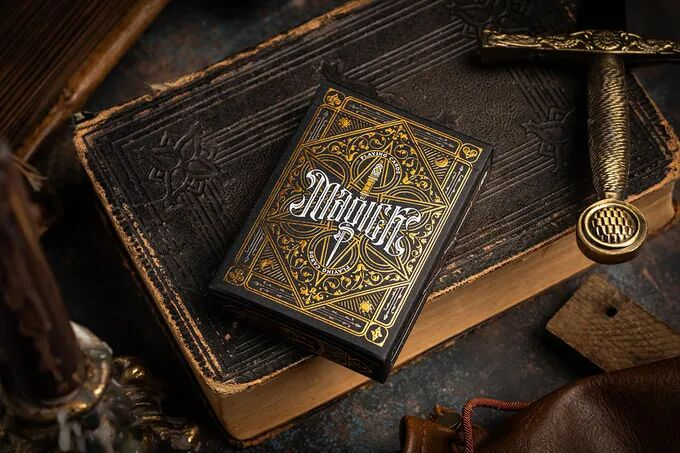
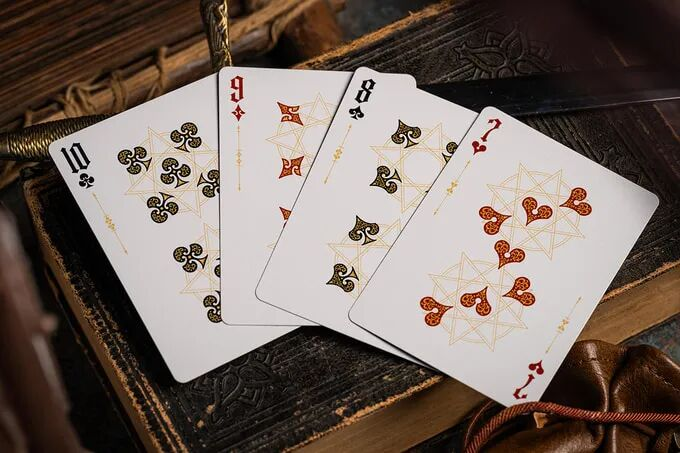
This sense of order is first reflected in its rigorous world-building. The four suits represent the four elements: Water (Hearts), Wind (Diamonds), Fire (Spades), and Earth (Clubs), and are clearly divided into two major factions: Light and Dark.
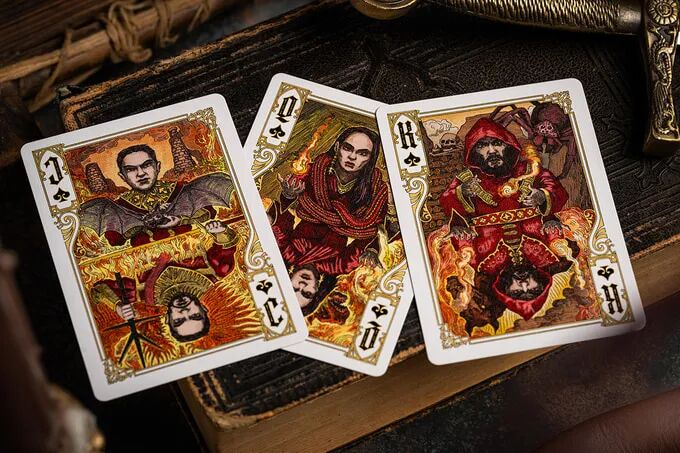
The characters on the court cards each serve a specific role within this grand power structure. For example, Merlin, King of Hearts, is the "Ocean Guardian" by day, guiding sailors, and by night summons sea dragons to stir up colossal waves. Klavdija, Queen of Spades, drives venomous snakes by day, and by night summons Cerberus to guard her purgatory.
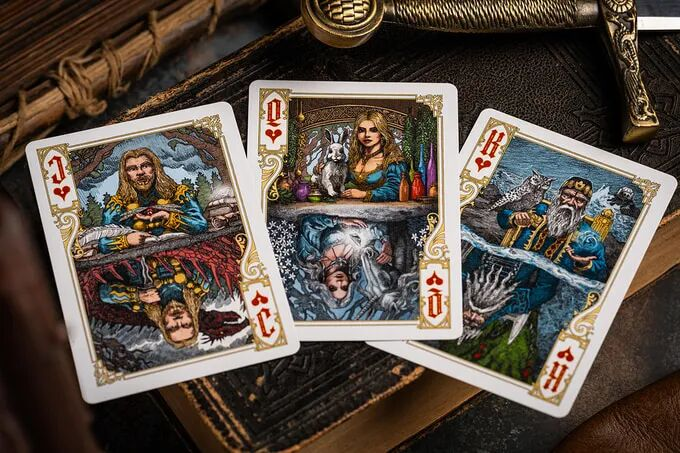
The designers conceived "day and night" familiars for each character, which itself is a manifestation of rules—power can be tamed, understood, and categorized.
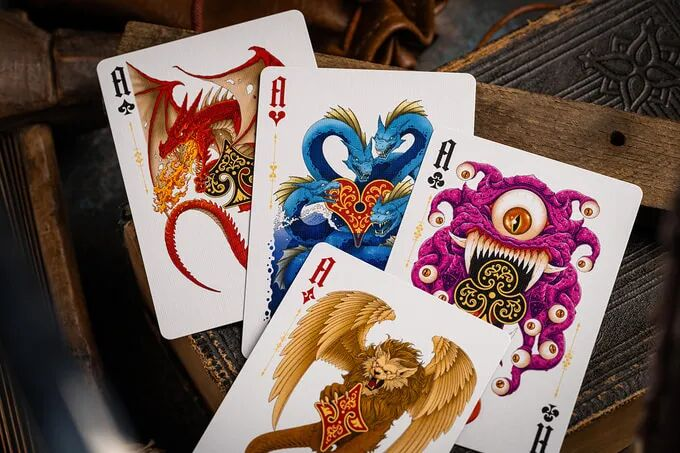
The Ace cards depict four highly aggressive legendary "monsters": Dragon, Hydra, Chimera, and Eye Tyrant. They represent external threats to be conquered, challenges on the path of expanding order.
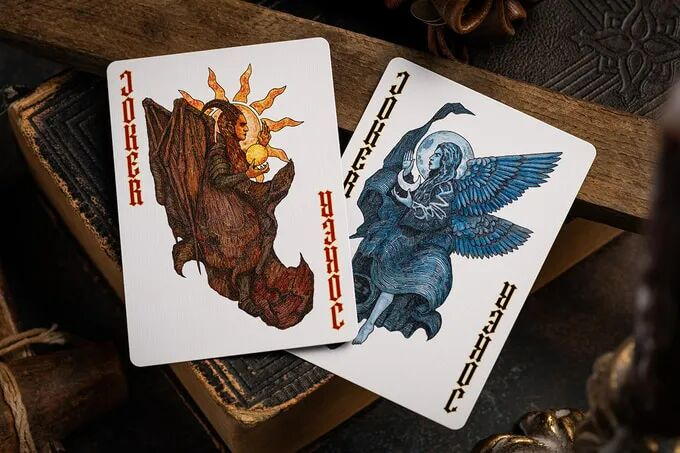
The Joker cards, meanwhile, portray the eternal struggle between Felinor, the Light Mage, and Nera, the Dark Witch—a grand narrative concerning the fate of the world, an ultimate clash of ideologies.
The entire deck, from art style to story, tells us a tale of "construction." It is a codex of power, a sanctuary of order.
The Witches' Coven: Nature, Wildness, and the Awakening of Life
When we open the Witches deck, a completely different world unfolds. According to the lore, these are individuals ostracized by the "Wizards'" grand halls, who chose to form their own secret gatherings. This premise itself is imbued with rebellion.
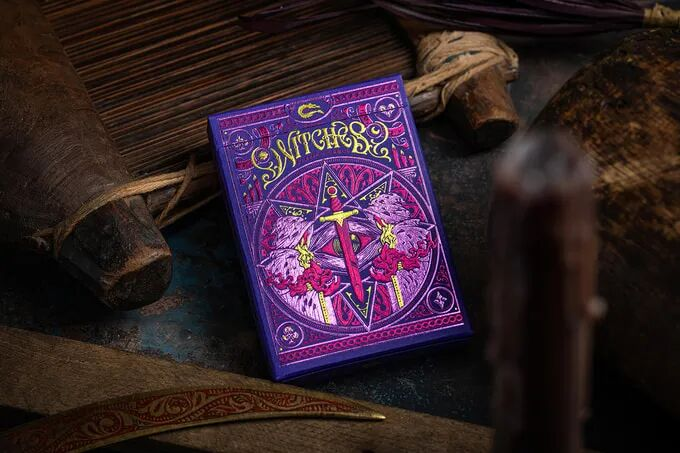
The art style of this deck is also distinctly different, adopting a more fluid and vibrant watercolor approach, with more elegant and spontaneous lines.
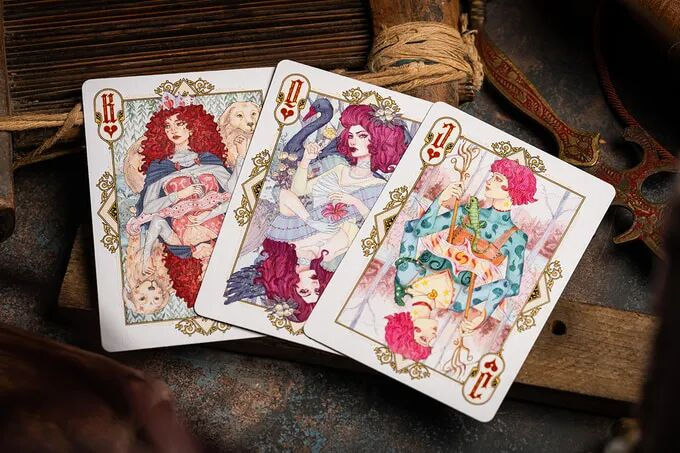
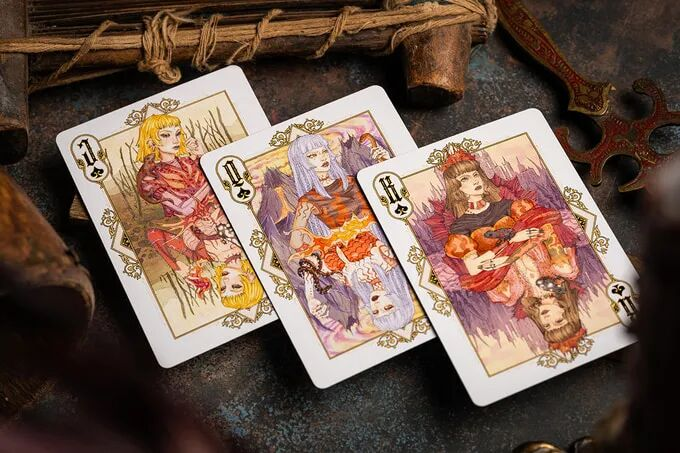
All court card characters are female (including the Kings), and their power no longer stems from cold rules but from a deep connection with nature. For example, Agane, King of Hearts, known as the "Mother of Floods," is always accompanied by her loyal sheepdog. Nialena, Queen of Diamonds, can weave heatwave-like illusions, her familiar an elegant butterfly. These animal "familiars" are more like extensions of their souls, partners rather than tools.
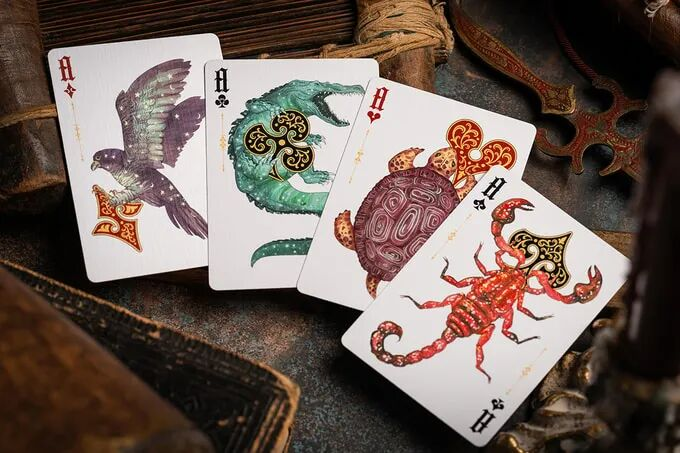
Their Ace cards are no longer monsters to be conquered, but "beasts" representing primal forces—a giant turtle bearing the Spring of Life, a falcon commanding the realm of wind, a colossal scorpion born from lava. This is an older, more primordial power, coexisting with the world.
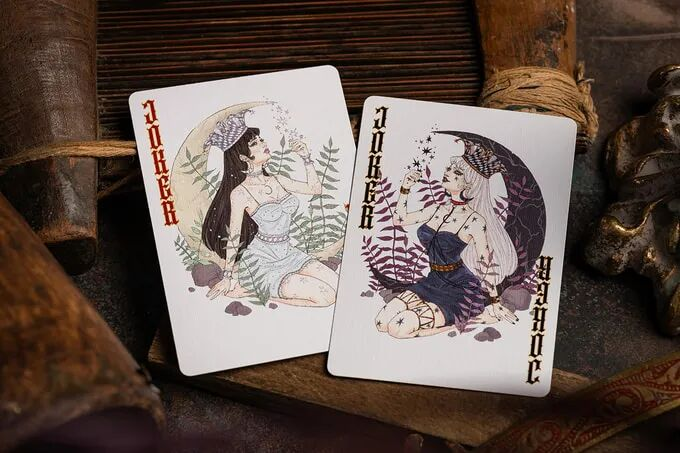
The Joker cards feature two mysterious Moon Goddesses, Herae (White Moon) and Klaviath (Black Moon), symbolizing intuition, cycles, and untold hidden knowledge. In contrast to the external conflict depicted by the Wizard Jokers, the Witches' power is clearly oriented towards the internal and mysticism.
This deck has no grand external enemies, nor the heavy burden of saving the world. What it reveals is an inward, self-exploratory power—a vibrant life force that, after being suppressed, reawakens in wildness and nature.
A Set of Decks: A Clash of Worldviews
Placing these two decks side-by-side, we see far more than just a simple difference in art style.
The Magick deck is patriarchal, logical, and outwardly conquering. It tells you that power is for constructing order and ruling the world. The Witches deck is maternal, intuitive, and inwardly exploring. It tells you that power is for self-awareness and experiencing life.
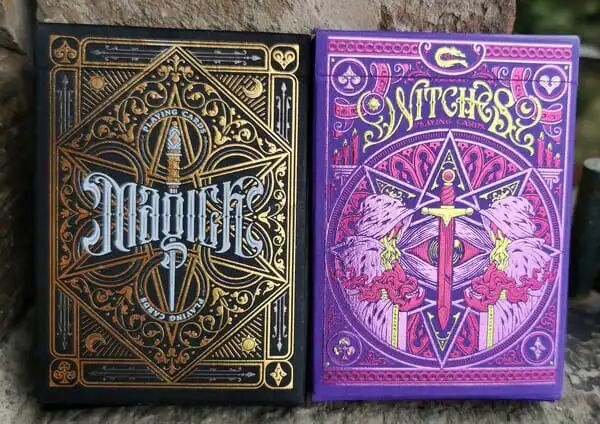
The most successful aspect of this set is that it refrains from judging these two worldviews. It merely juxtaposes them, allowing us to feel the tension between them. It artfully materializes the gender narratives that have long existed in myth and reality—male power changes the world, while female power nurtures life. The former is penned into epics, while the latter is often dismissed as heresy.
And today, this Witches deck is, in itself, an act of revenge. It allows female characters, who are so often relegated to supporting roles, villains, or mere embellishments, to proudly become the masters of their own stories.
Beyond the Art: Production and Editions
Beyond its profound concept, let's turn to the playing cards themselves. As a collectible item, its physical specifications are impressive and clearly show great care.
Core Specs
- Printer: KingStar Playing Card Co.
- Tuck Box: Produced by the venerable Italian printer Boschiero & Newton using premium European art paper, featuring embossing and various hot foil stamping techniques.
- Stock: German black core paper, Linen Finish.
- Features: Both card backs and faces are adorned with gold cold foil—one of the project's core craft highlights.
Edition Overview
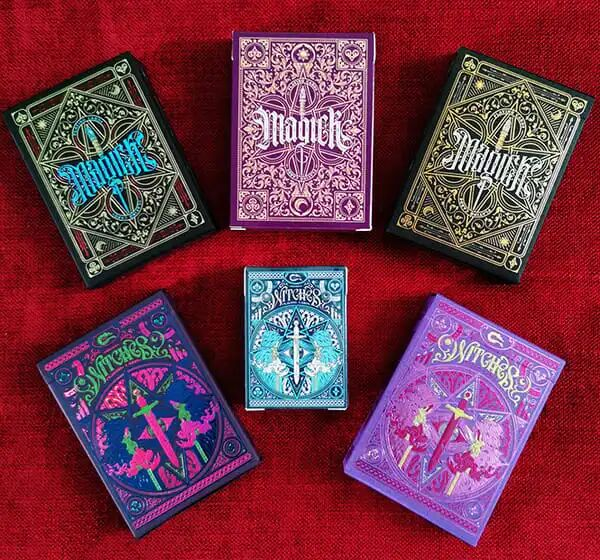
The project features numerous editions; here's a breakdown of the core differences:
- Standard Editions
- Magick Standard: Primarily black and gold color scheme.
- Witches Standard: Primarily purple and pink color scheme.
- Gilded Limited Editions: Each features a specially designed tuck box and is limited to 300 copies.
- Magick - Transcendental: Features iridescent blue gilding.
- Witches - Aradia: Features iridescent purple gilding.
- Special Editions
- Magick - Grimoire: A Kickstarter exclusive edition. The card faces are a black and white monochrome style, accented only with gold, creating the texture of an ancient tome.
- Witches - Sibylla Mini: A mini-deck size, featuring an entirely new blue-green color palette.
So, in this confrontation of order and vitality, whose shadow do you see?
Will you choose to be the architect of grand rules, or embrace that repressed yet vibrantly growing wild power? Which life do you aspire to?