When the Creator of "Hope" Vanished: NPCCD 2020 and its Unfinished Allegory
October 17th. For newcomers to the playing card scene, this might seem like an ordinary day. Yet, for collectors worldwide, it was once a festive occasion – National Playing Cards Collection Day (NPCCD). And the NPCCD series of decks, designed annually by the event's patron, Alexander Chin, was always the most anticipated offering of this grand celebration. However, as this date rolls around again, my heart carries a newfound complexity. That five-year-long spectacle, along with the brilliant designer behind it, seems to have permanently paused in 2020. The Hindsight series he left us that year transformed from an annual deck into something… far heavier. Every time I take it out, it feels like I'm gazing upon a monument.
2020: A Miniaturized Shrine of an Era
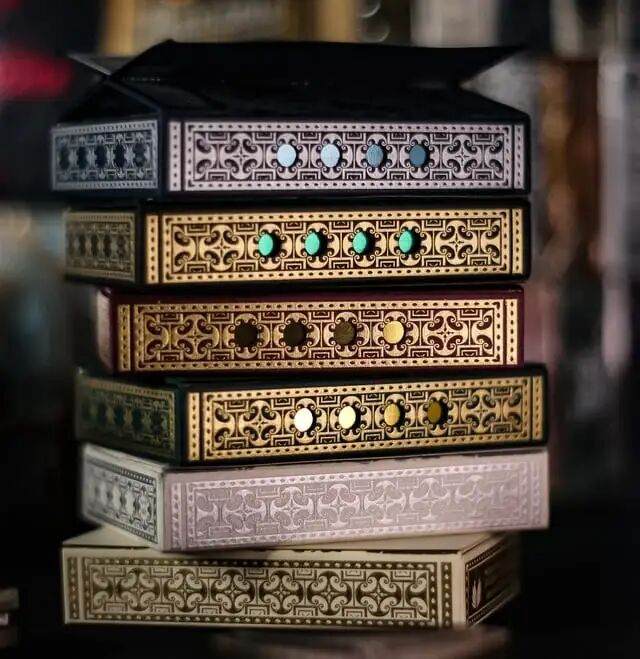
Let's rewind to October 17th, 2020. That was a year, I believe, no one will ever forget – filled with unease, anxiety, and isolation. Yet, Alex Chin chose to infuse the grand emotions of that entire era into a set of playing cards. The five "calamities" that swept the globe that year were embodied in five distinct decks, borrowing the allegory of Pandora's Box from ancient Greek mythology, forming this annual magnum opus titled Hindsight. As someone whose WeChat profile picture is even a Seasons Playing Card, I am clearly a long-time devotee of Alex's work. I'm deeply impressed by his design philosophy, which seamlessly integrates narrative, structure, and craftsmanship. This time, the powerful resonance between the theme and reality meant I ordered almost sight unseen. But it wasn't until I received the set that I realized I had still underestimated its gravitas. The first layer of impact came from the packaging. Alex completely abandoned the traditional slipcase tuck box, instead creating an entirely new and unique structure.
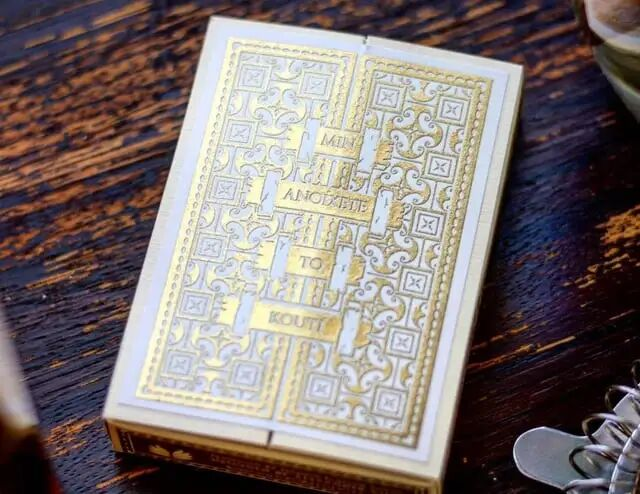
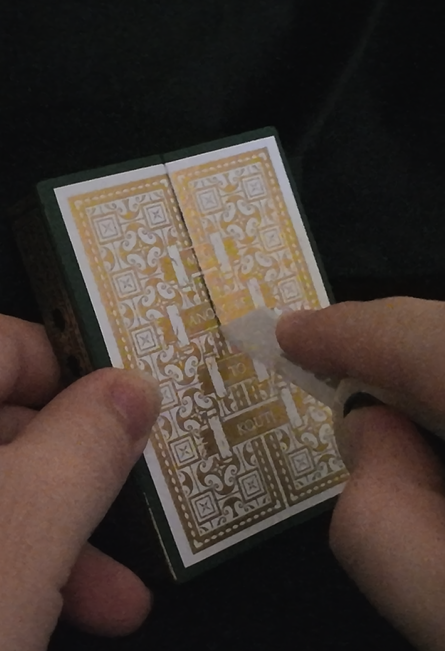
Firstly, it's a prison, a tightly sealed box of evils. The entire front of the tuck box is covered by a complete intaglio-engraved seal, on which a warning is clearly written in Greek: "Min anoixete to kouti" – DO NOT OPEN THIS BOX. To retrieve the cards, you must personally use a letter opener to break this seal. This ceremonial cut instantly transforms you from an observer into a participant, directly releasing the calamities. In that moment, this deck reveals its true nature as a miniature Pandora's Box. (I wonder how many fellow collectors were deterred by this warning and couldn't bear to open it? Don't worry, I'll show you.)
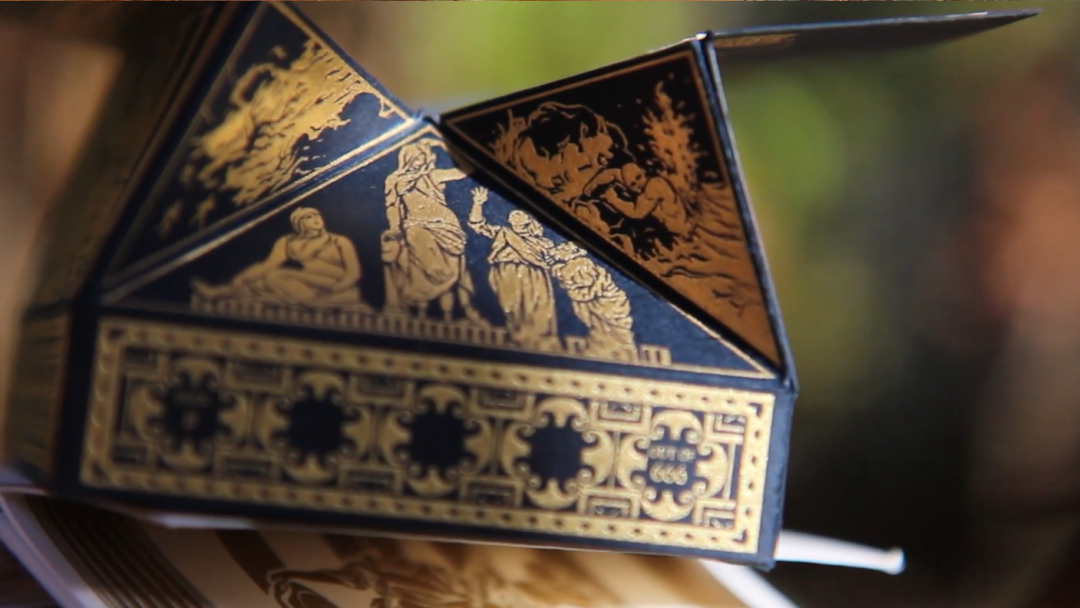
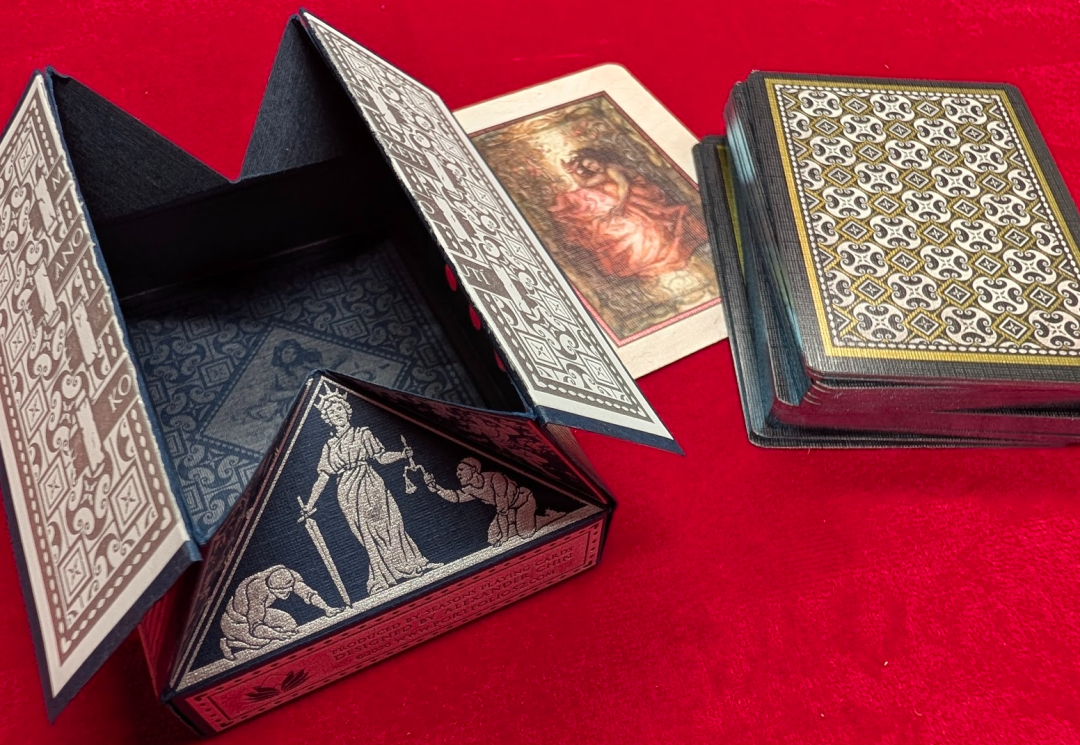
It's also a shrine. This is a deformable outer shell that can be manually unfolded. When you gently lift the lid, the entire box opens its four walls slowly before you, like a shrine. The sensation of your fingertips tracing the paper's texture, that precise yet substantial feel, truly gives the illusion of opening a treasure chest. While the card retrieval isn't the most convenient during this unboxing process, in terms of artistry and thematic consistency, it far surpasses the backpack-style tuck cases popular in recent years.
Overture in Relief: A Poignant Pun
At the top of the shrine, a line is hot foil stamped: "HINDSIGHT IS 2020".
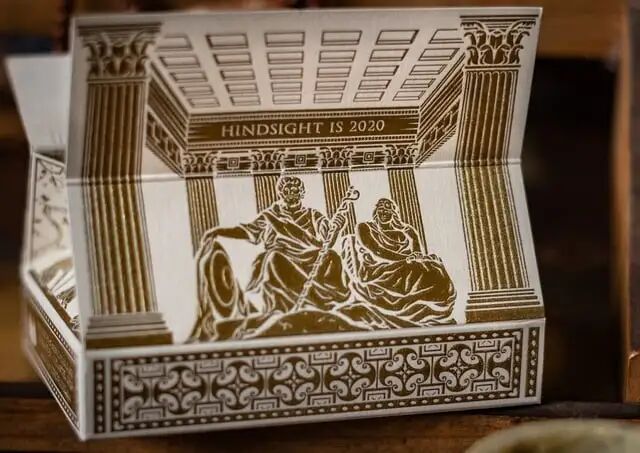
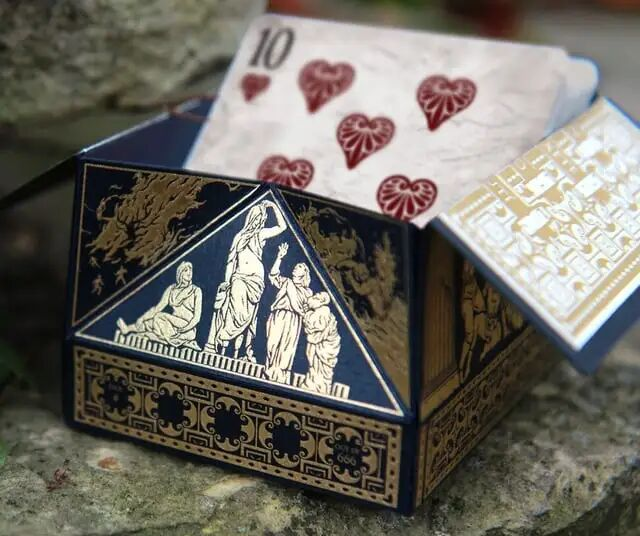
At first, this phrase puzzled me, and it took a while for it to click. There's an English idiom, "Hindsight is 20/20," meaning to be wise after the event. "20/20" actually refers to perfect vision. Here, it's cleverly replaced with the year "2020," instantly imbuing this ancient proverb with a completely new, contemporary meaning. The four walls of the tuck box feature a series of embossed illustrations: from the gods creating Pandora, to her opening the box, and countless "evil spirits" swarming forth. These reliefs simply tell the ancient allegory of Pandora, establishing the deck's fundamental story framework.
A Symphony of Order and Chaos: A Duet of Card Backs and Faces
Drawing out the playing cards, the design ingenuity shifts to microscopic artistic expression. All card back patterns are based on authentic Roman textile motifs. This is a highly symmetrical, infinitely repeating geometric pattern, imbued with the aesthetic beauty and sense of order found in classical architecture.

All card faces, meanwhile, employ a "fresco" style, a mural technique popular in 14th-century Italy, primarily for its durability. One can see the card face backgrounds are filled with weathered mottling and cracks, as if they were fragments unearthed from the ruins of ancient Pompeii.
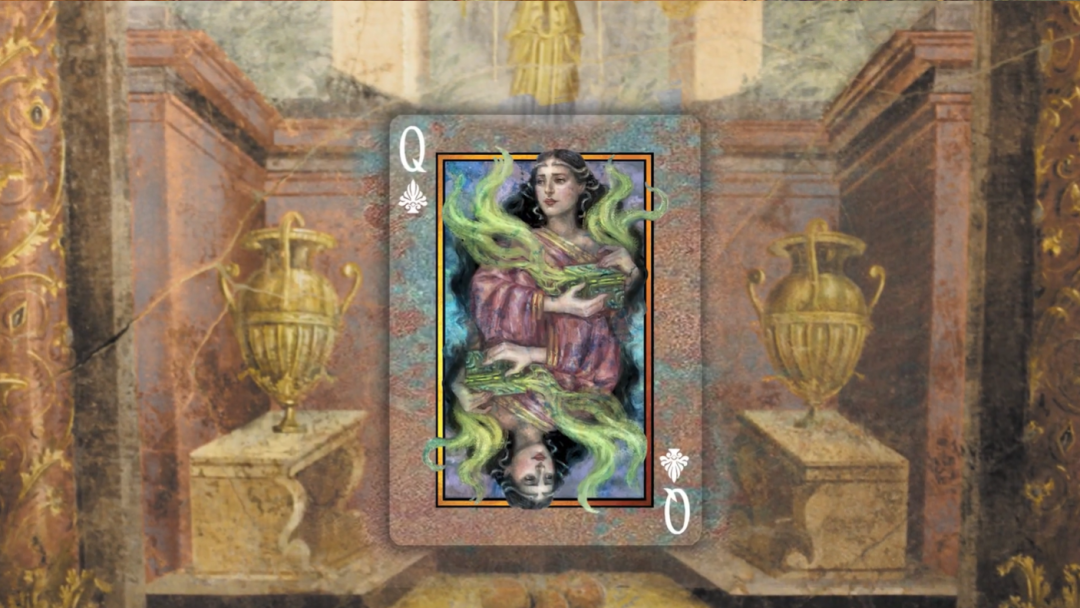
This stark contrast between the card backs and faces imbues the entire deck with intense drama. Each flip of a card feels like a journey, instantly plunging from divine, eternal order into human, ephemeral ruins.
The Five Evils: A Museum of Myth on Paper
The main component of this deck set is five decks representing the "Evil Spirits." They are five "characters" with independent souls, a precise sketch of the global plight of 2020.
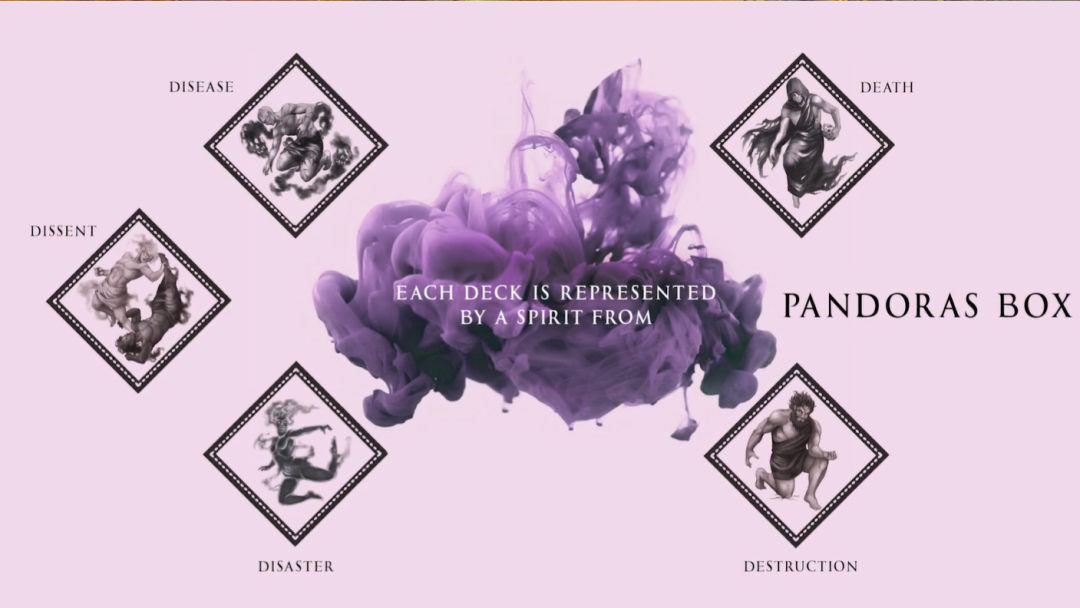
- DISEASE: The most direct, hitting the core – the pandemic sweeping the globe.
- DISSENT: Under the pandemic, global political polarization, social fragmentation, and constant protests emerged. Alex specifically designed this deck as a "left-handed deck," functionally embodying its "non-conformist" core. Not only are the pips in the top right corner, but even the court card illustrations are symmetrical.
- DISASTER: The economic standstill and social disorder brought by the pandemic, which was itself a global catastrophe.
- DESTRUCTION: This symbolizes a more complete breakdown – the destruction of old ways of life and interpersonal trust.
- DEATH: The heaviest endpoint, a direct lament for the millions of lives lost globally that year.
These five "Evil Spirits" are intricately linked, forming a complete picture of 2020: starting with "Disease," leading to "Disaster" and "Dissent," ultimately resulting in widespread "Destruction" and "Death."
The Court Cards: A Mythological Museum on Paper
The twelve court cards are not randomly chosen Greek deities, like ARK's Apollo and Artemis, but are carefully designed with an interconnected storyline. Alex didn't explicitly state this, and it was only during a discussion with a friend that I suddenly discovered the hidden clues. They form a "mythological museum on paper" that you can hold in your hand, profoundly interpreting the eternal conflict between divinity and humanity behind the release of the "Evil Spirits." Alex invited Kristina Carroll to illustrate these portraits, resulting in a significant departure from Alex's usual style.
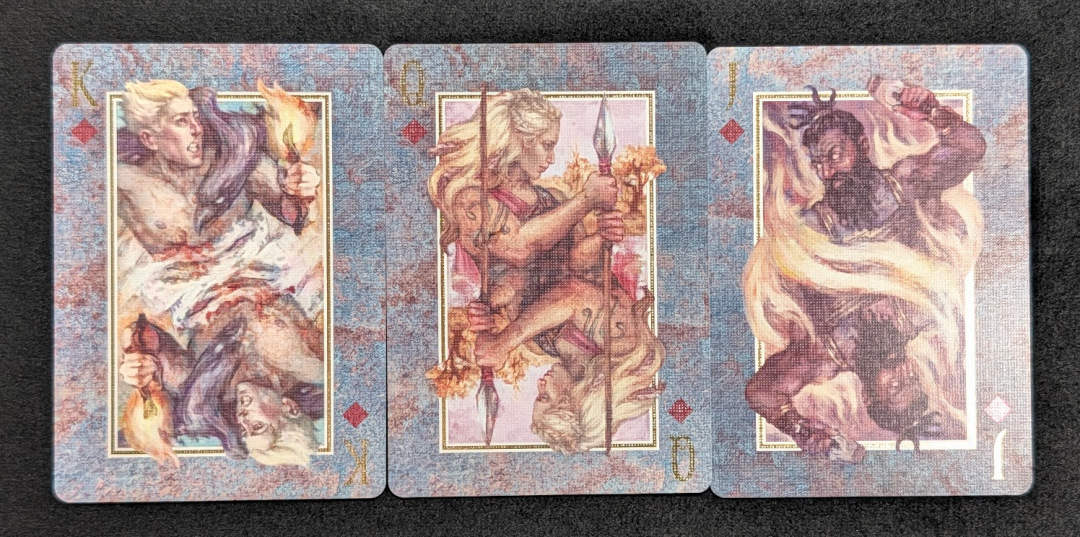
Diamonds ♦️ mark the beginning of the story, a tale of stolen fire and creation. Prometheus (♦️K) holds a torch aloft in one hand while enduring the eagle's pecking. He crafted human bodies from clay, while Athena (♦️Q) bestowed upon them souls, and later gave Pandora the characteristic of "ignorance." Hephaestus (♦️J), the god of fire, sculpted the first woman on Earth from clay: Pandora.
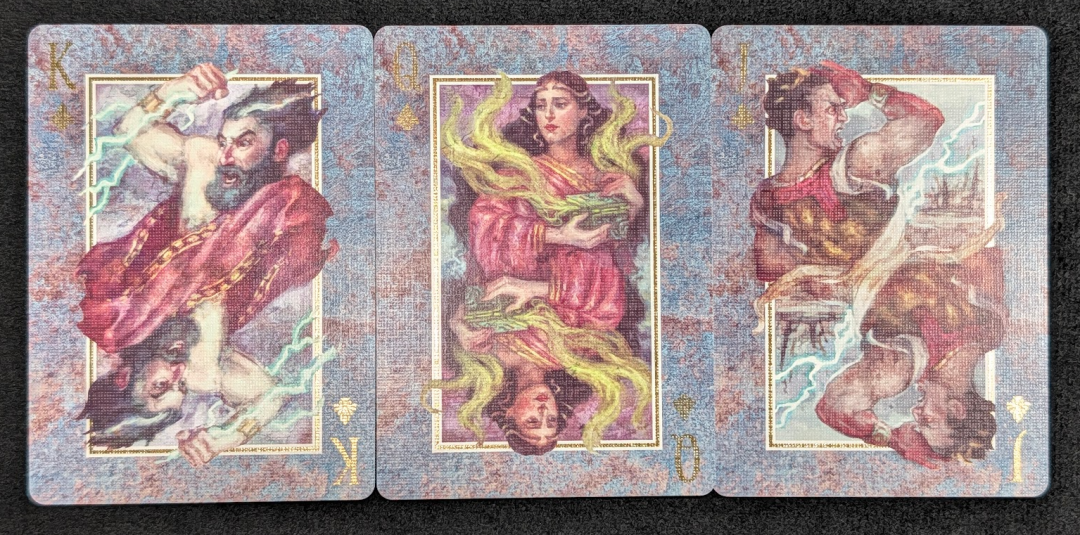
Spades ♠️ represent the chain of divine retribution. Zeus (♠️K) sits enthroned, wielding thunderbolts, the orchestrator of the entire tragedy, solely to exact revenge on Prometheus. Pandora (♠️Q) holds the magic box, a tool forged by the gods to unleash calamities. Hermes (♠️J) was tasked with teaching Pandora language and delivering her to the mortal realm.
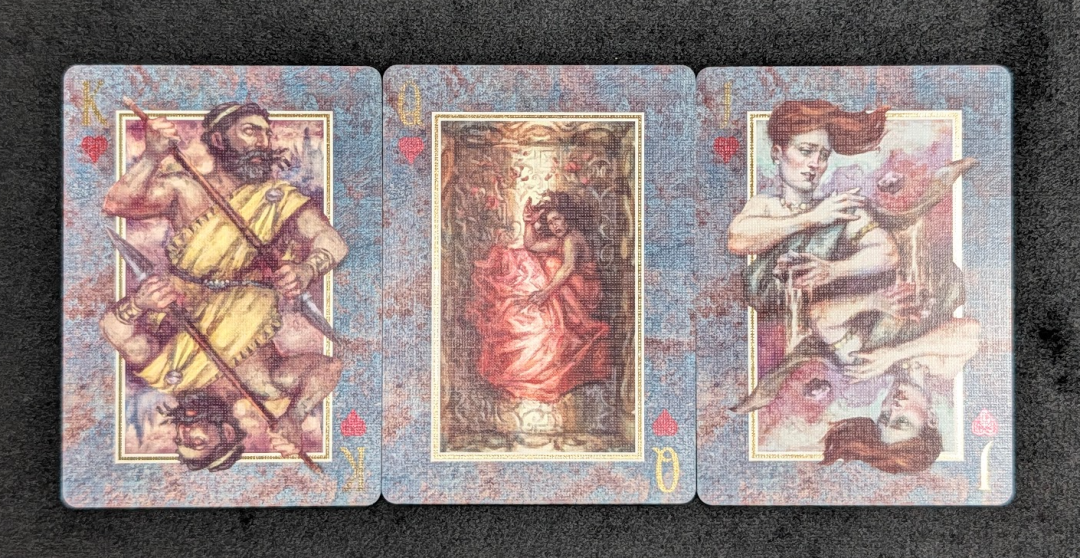
Hearts ♥️ embody human destiny. Epimetheus (♥️K), Prometheus's brother and the namesake of the deck's title, Hindsight, accepted Pandora as his wife. The innocent Pandora, merely an executor of the tragedy, opened the box, releasing the calamities, leaving only Elpis (♥️Q) confined within the Box of Evils, becoming humanity's last glimmer of light. Alex placed the Queen of Hearts at the very bottom of the deck. When you take out all the cards, she is the last one you see, perfectly replicating the mythological order. Later, when Zeus destroyed humanity with a great flood, only Pyrrha (♥️J), daughter of Epimetheus and Pandora, and her husband survived. She cast stones over her shoulder, which transformed into new women.
Clubs ♣️ tell a story of perception and consequence. Apollo (♣️K), the god of prophecy, had already foreseen the future, standing in stark contrast to Epimetheus, the embodiment of hindsight. Metameleia (♣️Q), Epimetheus's daughter, is drowned in a sea of regret. And Sisyphus (♣️J) endlessly pushes his boulder uphill, enduring eternal toil and punishment. "Foresight" was ignored, "regret" is useless; all that remains is an eternal, inescapable price.
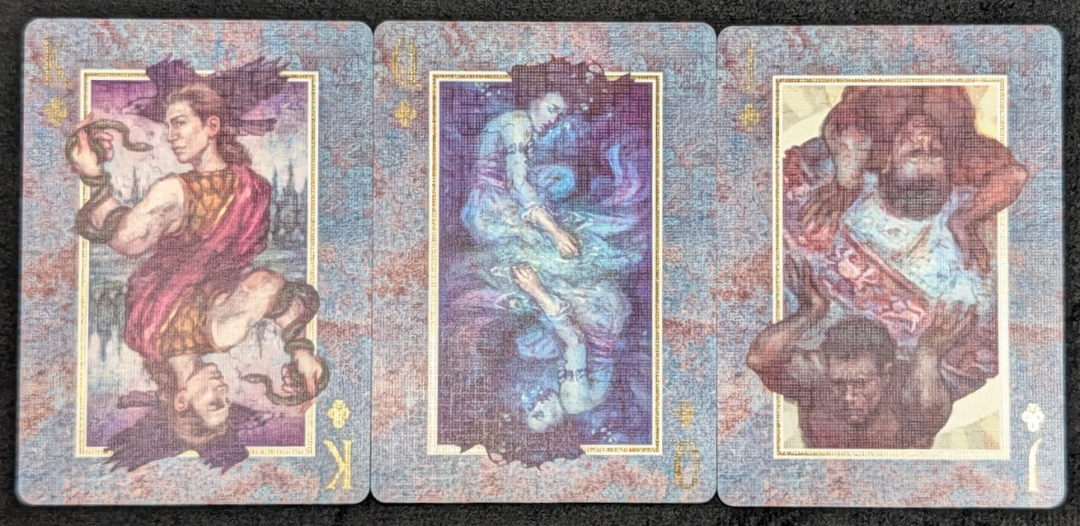
They tell us that the chaos unleashed from Pandora's Box has its roots deeply embedded in the gods' power, jealousy, and retribution, and in mortals' ignorance, arrogance, and fate.
The Joker's Allegory: Human Fragility and Nature's Vengeance
The two Jokers depict a battle between a soaring eagle and a snake. This is a common image in ancient Greece, symbolizing order, divinity, and light triumphing over chaos, the primitive, and darkness. Here, however, one Joker shows the snake binding the eagle, while the other shows the eagle pinning down the snake.
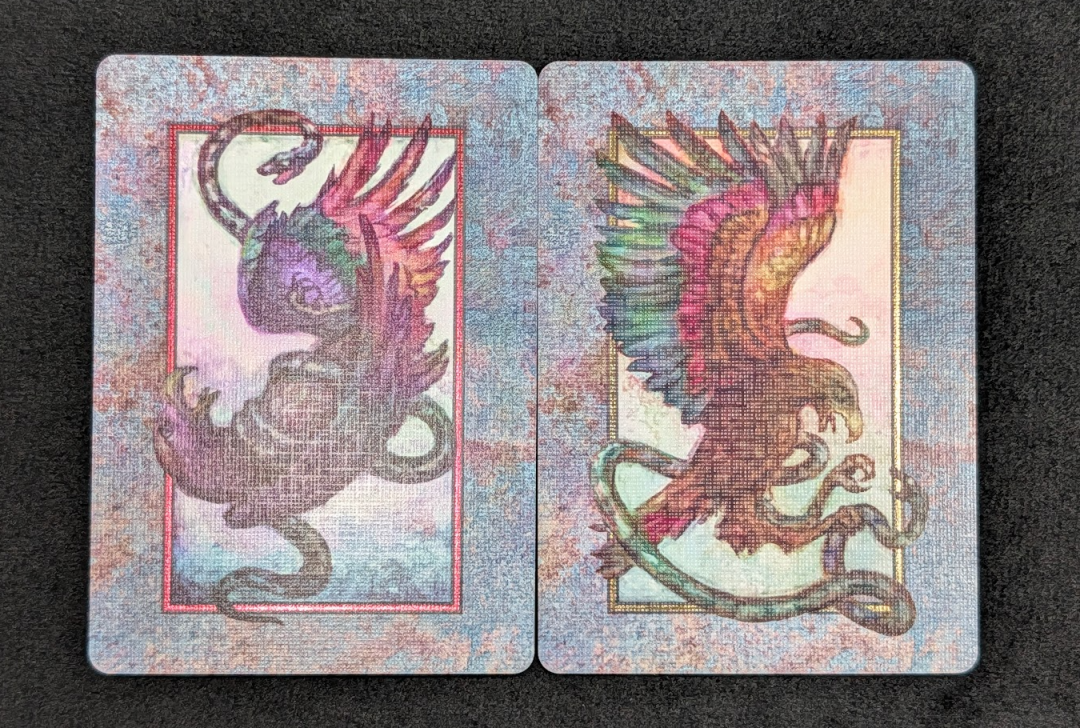
To me, this is 2020. The Joker with the triumphant eagle represents us before the pandemic. That eagle is human civilization, technology, the globalized system. We were so proud, thinking we had tamed nature, that this "eagle" controlled everything. The Joker with the triumphant snake, however, is the pandemic itself. That snake is nature, the invisible virus. A primal force that effortlessly shredded our proud "eagle." These two Jokers, in an almost cruel way, remind us: before absolute natural forces, how fragile human order is. This is no longer a myth; it's a reality each of us experienced firsthand.
Paradoxical Conclusion
"Released" Hope
Beyond the five Evils, during the 52+J online gathering that year, Alex released a six-deck set, which included a unique "Hope" deck. This Hope deck was even hand-gilded by Alex himself (hence, the tactile feel isn't ideal). In the original myth, hope was the only thing left at the bottom of the box, the only thing that didn't escape. This is, in itself, a somewhat pessimistic ending – hope persists, but it is confined. Alex's release of the Hope deck might have been his attempt, as a creator, to transcend and re-imagine the original myth. He didn't want the story to end on that ambiguous note.
He transformed the concept of "Hope" into a tangible deck of playing cards that you and I can touch and handle. It's as if he's saying: hope shouldn't passively remain at the bottom of a box; it's something we need to actively seek out and hold onto.
The Unfinished Allegory: My Own Hopes
However, reality is often stranger than fiction. In 2021, for the first time in five years, the annual NPCCD deck was absent; in 2022, he announced a new "Blind Tiger" series and claimed he would complete the 2021 NPCCD edition, but ultimately failed to deliver. Since 2023, this talented designer has chosen to vanish from public view. He ceased all social media updates, the NPCCD website shut down, and he has been unheard from since.
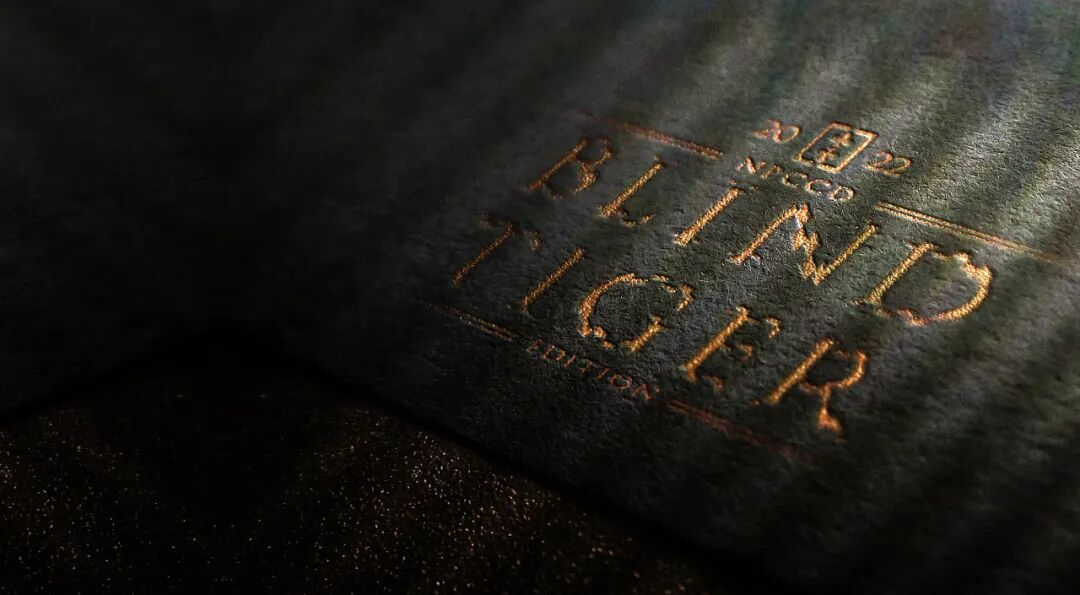
This annual playing card extravaganza, along with its mastermind, abruptly ended amidst controversy and silence. Today, as I once again take out this Hindsight set, its meaning acquires an additional layer. It encapsulates our collective memory of 2020 and has become a poignant punctuation mark in Alex Chin's design career. The allegory of "Hope" he conveyed now appears incredibly fragile, even ironic, due to his subsequent choices. When the creator of Pandora's Box himself becomes a mystery, where exactly does the "hope" left at the bottom of the box, yet personally released by him, lead? We cannot know. But this Hindsight series, together with the story behind it, will undoubtedly leave a heavy and unique mark on playing card collecting history.
Despite this reality, I still choose to believe that the 2020 Hindsight is not the true end of NPCCD. Just as Pandora's Box, though it unleashed calamities, ultimately left behind hope. Let us, like this deck he designed, always hold hope in our hands, awaiting the day Alex returns. This hope is not merely a belief; it is materialized in the cards we hold, in every detail Alex poured into them.