A Tuck Box as a Fan? Bloom Unveils Strange Tales Through a Japanese Lens
"With painted faces, they flatter and fawn; the world's ways are ghostly. A morbid craving for the abnormal, universally mirrored."
— Strange Tales from a Chinese Studio
Just yesterday, September 6th, at midnight, coinciding with China's traditional Ghost Festival (Zhongyuan Festival), Bloom—a playing card brand renowned for its themes drawn from traditional Japanese stories—chose this auspicious moment of the "Night Parade of One Hundred Demons" to quietly open the doors to Strange Tales from a Chinese Studio, the pinnacle of classical Chinese supernatural fiction.
This deliberately chosen timing undoubtedly adds another layer of thoughtful intent to this much-discussed "cross-cultural" creation.
Those familiar with Bloom know it as a Room One brand specializing in "Wafuu" (Japanese style) aesthetics. From their pioneering Hyakki Yakō (Night Parade of One Hundred Demons), depicting bizarre and fantastical ghost parades, to Fox's Wedding and Urashima Tarō, which recount folk legends, their iconic Japanese illustration style has long been deeply ingrained in people's minds.
For a brand so deeply rooted in Japanese culture to suddenly pivot and interpret a masterpiece of classical Chinese supernatural fiction is, in itself, full of intrigue. Is this a bold cultural foray, or a stylistic mismatch that won't adapt well? Driven by this curiosity, let us delve into these Strange Tales playing cards to find out.
A Step Beyond Tanuki Yukaku
Before delving deeper into the art style, it must be acknowledged that Bloom has shown considerable sincerity and ingenuity in the physical structure of these cards.
Open and Close: Like Unfurling a Scroll, Like Reading a Fan
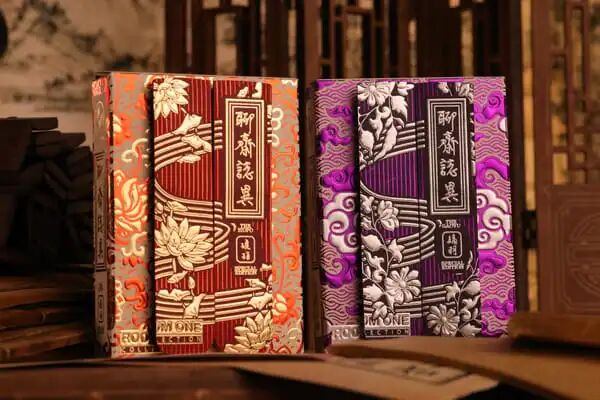
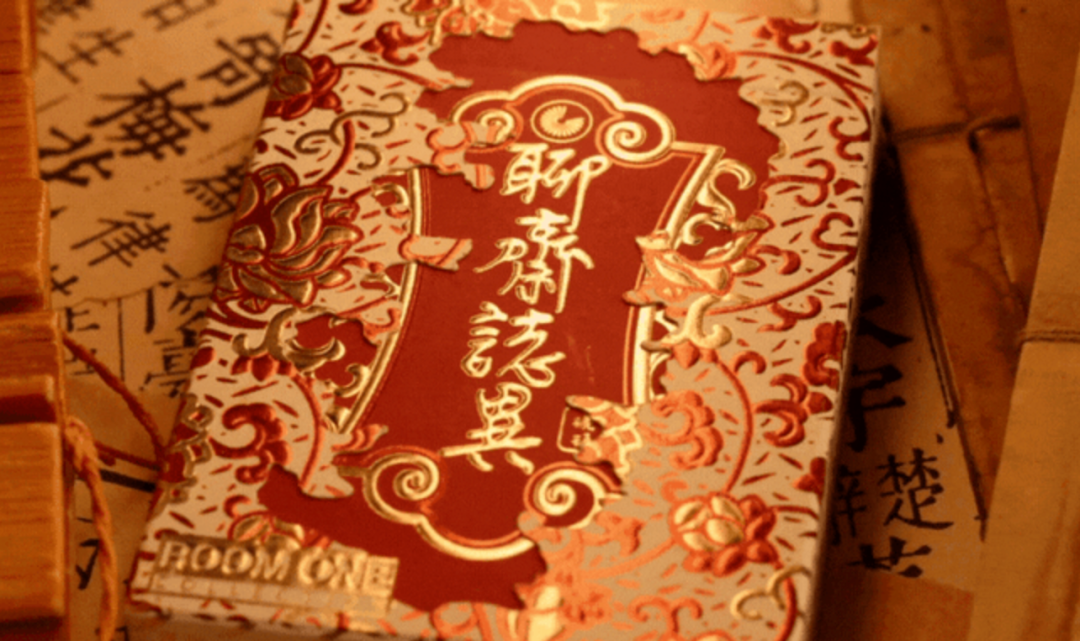
These Strange Tales playing cards come in two distinct tuck box structures. The Standard Edition features a "thread-bound book" design, mimicking the binding of ancient texts, conveying a simple, scholarly, literary atmosphere.
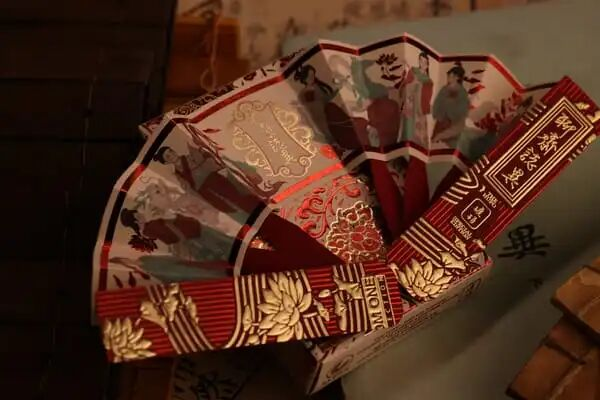
The Special Edition, however, boasts the project's most distinctive feature: the "folding fan" tuck box. In fact, this exploration of tuck box structures first appeared in Bloom's previous work, Tanuki Yukaku. Its multi-layered "push-door" mechanism already showcased the designer's ingenuity in the unboxing experience.
When closed, it is an elegant folding fan; gently opened, the entire tuck box unfolds, transforming into a complete fan surface. This "paper fan" tuck box undoubtedly takes this concept to a higher level, integrating structure and theme even more exquisitely. Every act of retrieving or storing the cards is imbued with a sense of ritual.
A Glimpse Through Millennia: The Revolving Gate of Reincarnation
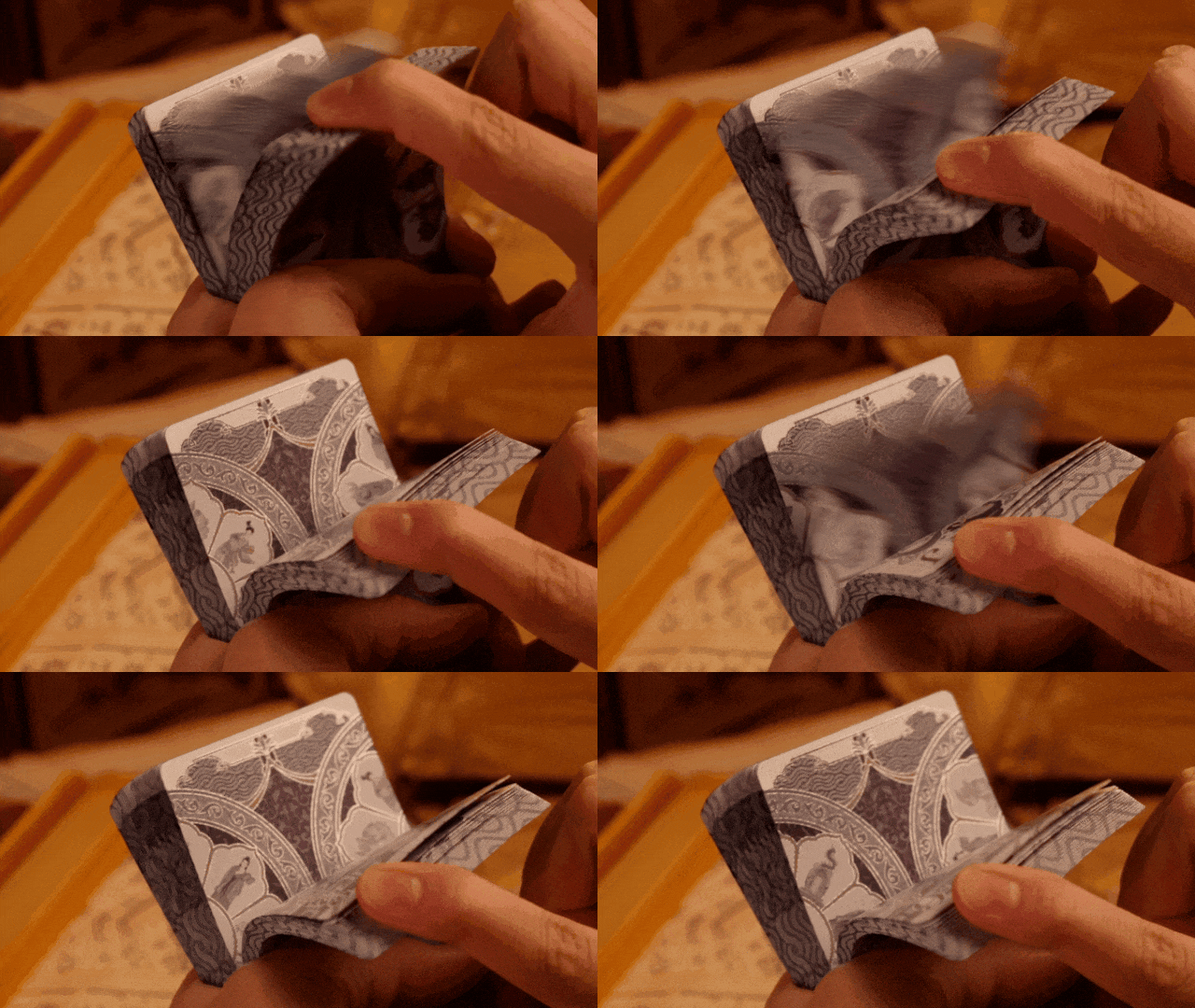
The card back design also conceals a profound mystery. The designer combines traditional Chinese window lattices with the Dharma wheel, symbolizing reincarnation, and through a flip-book animation effect, creates a dynamic illusion of a "vortex."
Every Step a Scene: A Connectable Illustrated Garden
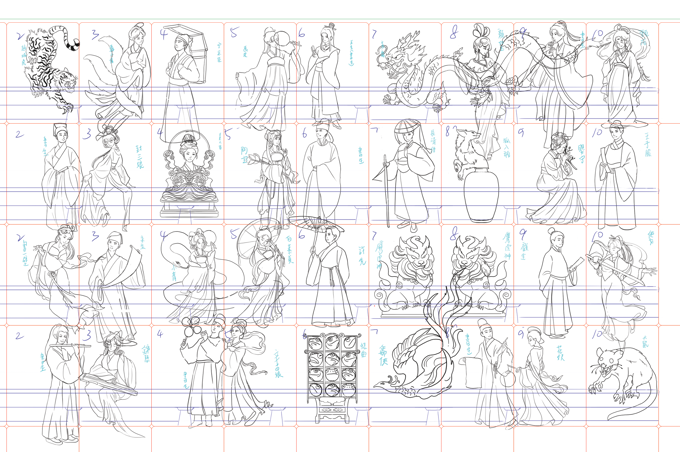
Bloom has reinterpreted their highly acclaimed connectable panorama gameplay from previous works, giving it a new rendition in Strange Tales. The 52 number cards can be arranged in sequence to form a complete "Liaozhai Garden Scroll," offering immense visual appeal.
Amber Warms the Human Realm, Striped Feathers Reflect the Netherworld
This Strange Tales deck is released in four distinct versions. Their names, rich in ancient meaning, derive from archaic color appellations:
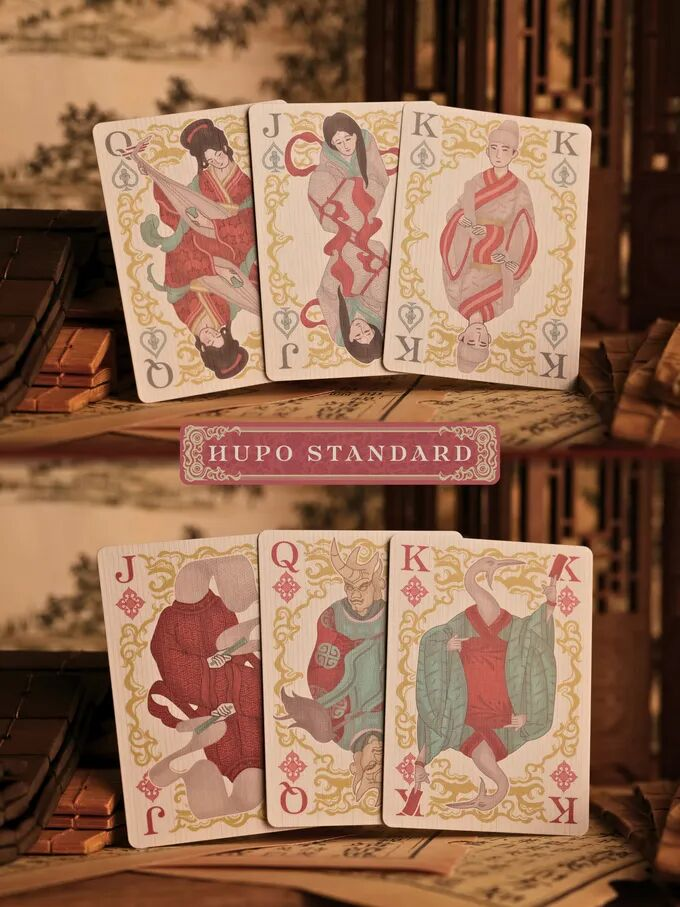
- HUPO (琥珀 - Amber): Predominantly golden and warm hues (red, orange), symbolizing the warm, human side of the tales.
- GAOYU (縞⽻ - Striped Feather): Predominantly silver and cool hues (purple, grey), more extensively representing the cold, ghostly side of the tales.
Each color scheme is further divided into a Standard Edition and a Special Edition. The Special Edition employs sophisticated cold foil stamping on both the front and back of the cards, resulting in a sheen and opulence far surpassing the Standard Edition. Additionally, there's a Collector's Box Set (one of each of the four decks + merchandise) and a Half-Brick (two of each Standard + one of each Special + merchandise).
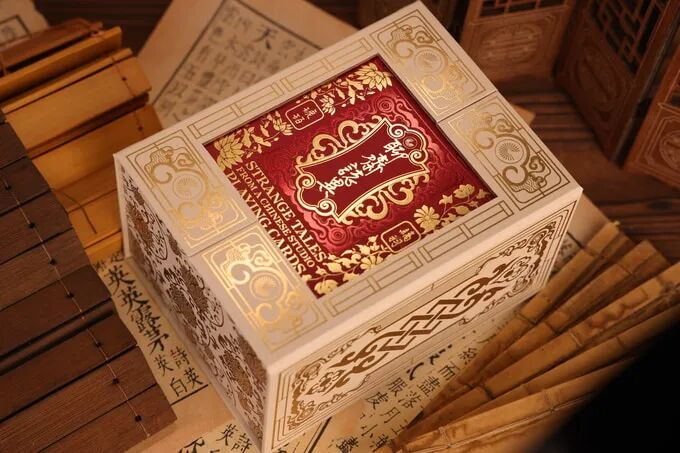
The Standard Edition is priced at 88 RMB per deck, while the Special Edition is 132 RMB per deck. Acquiring the full Collector's Box Set of four decks costs only 460 RMB, with domestic SF Express shipping at reasonable postage.
However, the Uncut sheets are quite expensive, priced at 366 RMB per sheet. Furthermore, Room One typically uses a 5x11 layout, requiring custom framing specifications.
A "Homecoming" Stylistic Experiment
Surprises and Challenges of the Homecoming
For a brand that has established its distinct identity through Japanese-style design language, choosing to return to a Chinese-style core theme is, in itself, a significant challenge. This not only requires stepping out of their most comfortable creative zone but also facing the scrutiny of countless collectors familiar with the Strange Tales text. From the deliberate choice of the Ghost Festival for its release, Bloom has clearly made ample preparations for this homecoming journey. This is not a superficial cultural foray.
An Unanticipated "Shared Theme" Project
It's worth noting that ARK, another formidable player based in the Pearl River Delta, also has a Strange Tales deck planned for this year. Bloom's preemptive release lends an extra layer of intrigue to this unexpected "shared theme" project, which will undoubtedly elevate the expectations and scrutiny collectors have for Bloom's homecoming work.
A Hidden Concern in the Details: The Conflict of Animation, Borderless Design, and Edge Printing
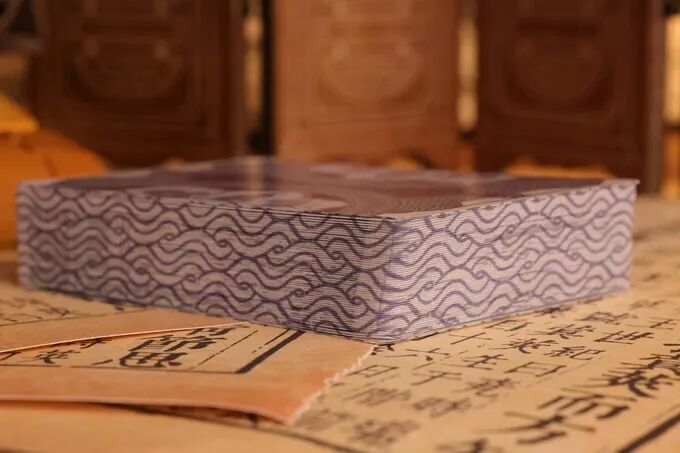
While appreciating the overall design, I also noticed a detail that could potentially lead to conflict. From the promotional images and descriptions, this deck simultaneously features three design elements: a borderless card back, a flip-book animation effect, and edge printing. The simultaneous presence of these three could easily interfere with each other. The additional patterns from the edge printing might be disrupted by the borderless, animated card backs, making the overall visual appearance cluttered. How the final product will balance the relationship between these three elements and avoid visual conflict will severely test the production process's quality control capabilities, and will be worth careful examination once we have the physical decks in hand.
Can a "Japanese Style" Art Approach Effectively Tell "Chinese Style" Ghost Stories?
This is the most critical and debatable aspect of this project. The art style of Strange Tales is consistent with previous works like Hyakki Yakō, bearing a strong modern Japanese illustration style.
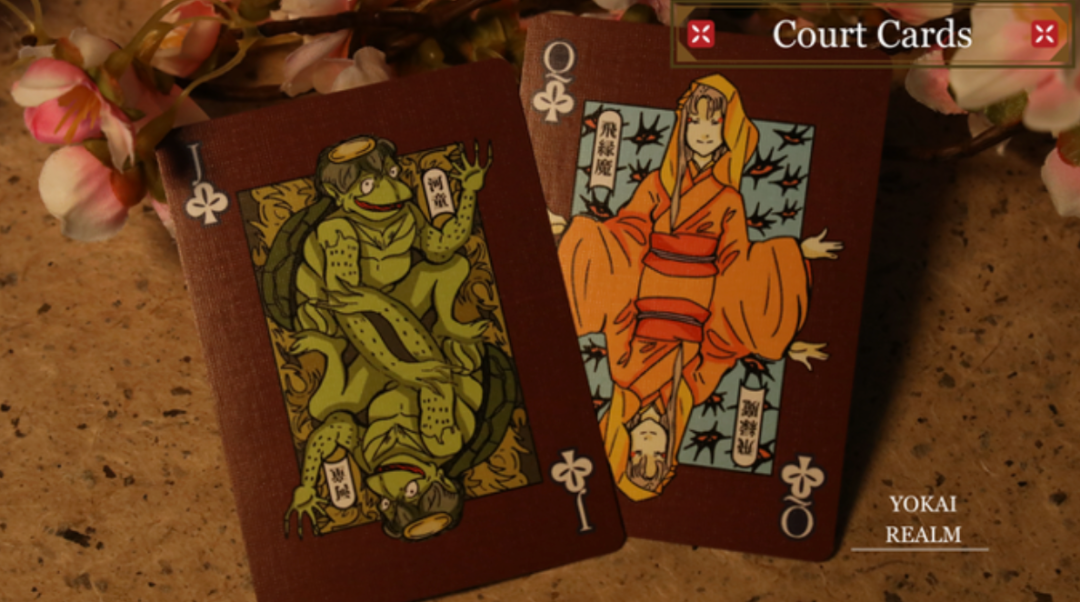
The advantages of this style are clear: it's fashionable, refined, and aligns with contemporary aesthetics. But a question arises: the essence of Strange Tales lies in its complex interplay of "ghostly aura" and "human warmth." Bloom's overly "clean" and "aesthetically pleasing" art style might be more than sufficient in conveying "human warmth," but will it lack impact when expressing "ghostly aura," thereby undermining the original's subtle and restrained sense of horror?
This might be a trade-off between two desirable but conflicting aspects. It eschews imitation of traditional ink wash or woodblock print styles, thus avoiding a stale feel. But at the same time, it has opted for a more universally commercial art style, which will inevitably spark debate regarding its "authenticity."