
Zoo·52: 54 Blind Box Backs and the Human Cage Reversal
As the blind box phenomenon transitioned from a niche delight to an all-consuming commercial tidal wave, I must confess, I've developed a degree of blind box fatigue.
The playing card scene is no exception. This year, any discussion of playing card blind boxes inevitably circles back to Len's awe-inspiring Room 52x52 from six months prior. That deck masterfully crafted an enigma of unknown spaces, featuring 54 distinct door-themed card backs.
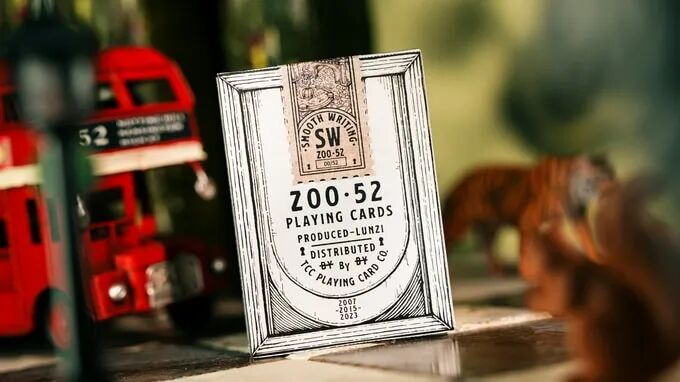
Just last night, Smooth Writing, in collaboration with TCC, unveiled the next chapter in this series: Zoo·52.
This time, the theme pivoted from cold, inanimate architecture to vibrant, living creatures. 54 decks, each with a unique animal-themed card back, collectively form a veritable menagerie on paper. Candidly, my initial reaction upon hearing of 54 blind box variants was, "Oh? Not again?"
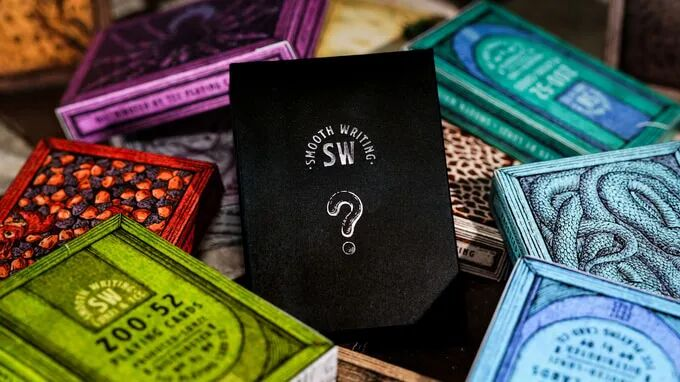
These reservations, however, quickly dissipated once I delved deeper into the project's design. I soon realized that the true merit of Zoo·52 perhaps lies beyond the blind box gimmick altogether.
The True Focus Is Not the Card Backs: A Brilliant Reversal and Mind-Boggling Undertaking
In my estimation, the design of Zoo·52 transcends the realm of mere re-themed blind boxes. It is, in fact, a work of art where concept, detail, and sheer workload have been executed to their absolute fullest.
The project's cleverest design isn't the bewildering array of 54 animal-themed card backs; rather, it's found in the 12 court cards.
Unlike traditional playing cards, where human courts reign supreme, Zoo·52 employs a bitingly satirical cage design. Every single Jack, Queen, and King, without exception, is depicted imprisoned behind zoo bars.
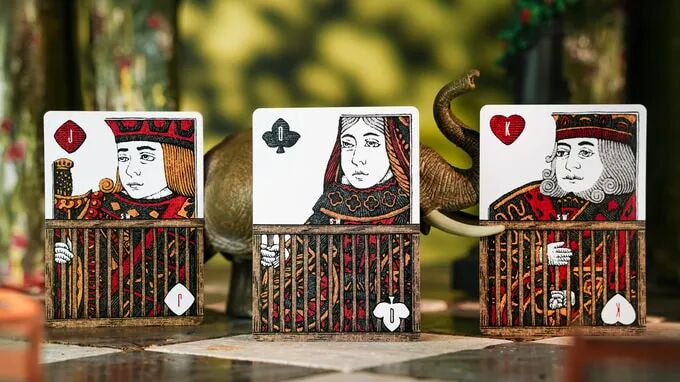
This design immediately subverts the entire zoo theme. Instead of the conventional "humans observing animals," it plays out as a profound role-reversal narrative: the 54 animals are the liberated visitors, while we, the players—alongside these court figures—become the spectacle, the observed.
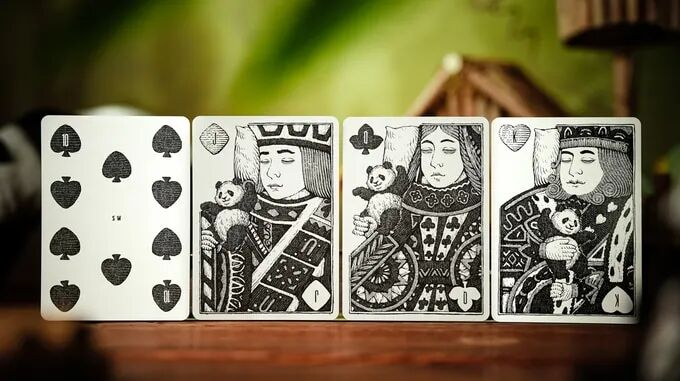
Naturally, this cage motif isn't universal. The Panda 52 edition, which debuted prematurely at the 2025 China Cardistry Convention and currently rests in my hands, presents a decidedly gentler aspect.
The court cards of Panda 52 forgo the bars entirely; instead, adorable pandas are depicted charmingly lounging on sleeping human figures. This imbues the Panda edition with a more harmonious character, akin to a family-friendly panda sanctuary. Conversely, the "caged human" design found in the other 54 blind box variants evokes a far more caustic "wildlife" exhibit.
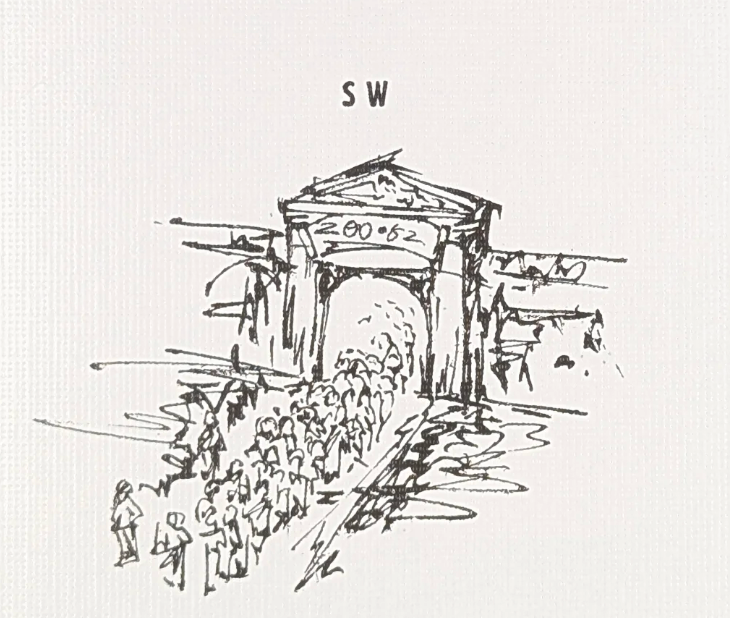
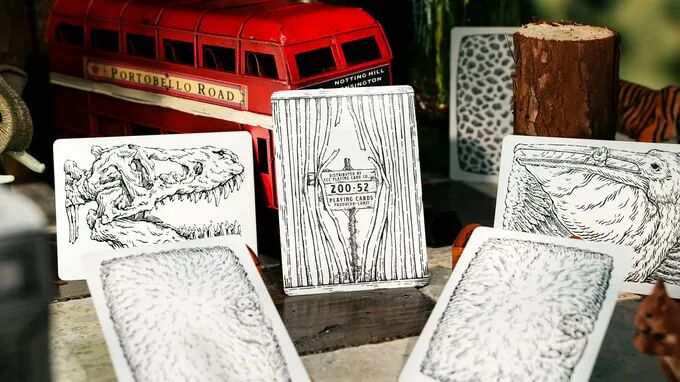
The ingenious touches in Panda 52 extend further. Among its extra cards, one features a sketch depicting a queue of people entering a zoo gate. Intriguingly, this card's back is not a panda, but rather a giraffe. This acts as a subtle Easter egg within the advance release, using a guest-starring card back to foreshadow the much grander animal world of the entire Zoo·52 series.
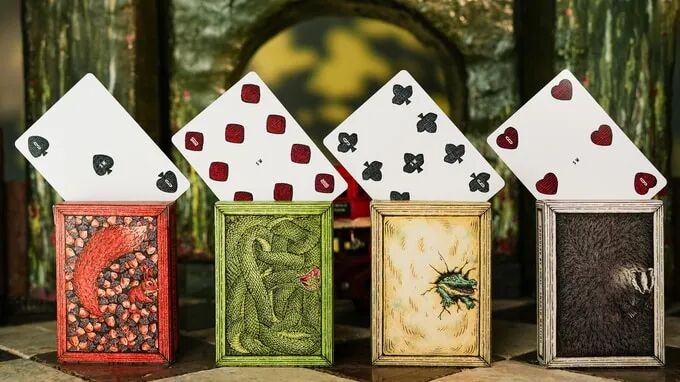
Furthermore, I noted a crucial detail: each of the 54 animal-themed decks within the blind box series boasts a bespoke, individually designed Ace of Spades.
Consider the implications of this.
The preceding Room 52x52 was an impressive achievement, yet its focus was primarily on 54 card back designs, with the face cards remaining largely consistent. For Zoo·52, however, Len has single-handedly illustrated 54 unique combinations of card back, tuck box, and Ace of Spades.
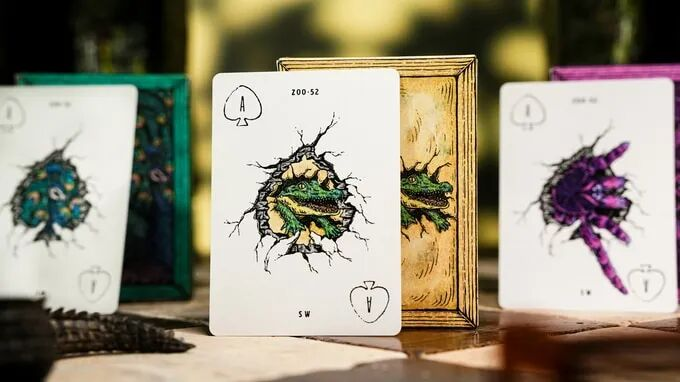
This laborious, often unappreciated dedication has transformed what could have been a simple blind box gimmick into a mammoth design project. This, to me, is the most daunting aspect of Zoo·52.
Blind Box or Collection: When Passion Meets Intense Pressure
Let's revisit the blind box phenomenon.
In all fairness, I contend that Zoo·52 fundamentally differs from conventional blind boxes. It feels more like a complete artistic project packaged within a blind box paradigm. These 54 card backs are akin to 54 facets of a cohesive artistic vision. Len's intention is to convey a unified artistic worldview, with the blind box serving merely as the distribution method, not the core concept itself.
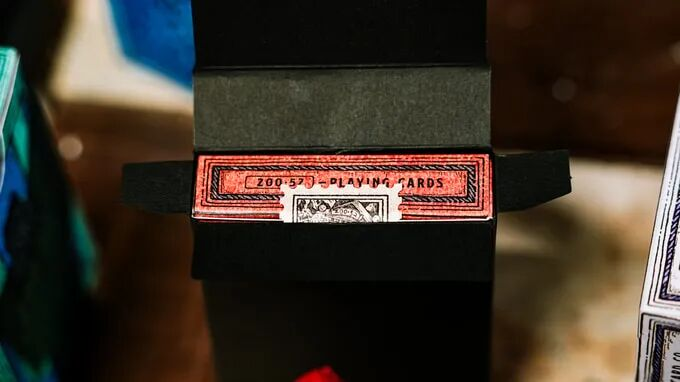
However, the crux of the issue lies precisely here: when an artistic endeavor adopts a blind box distribution model, it inevitably introduces inherent contradictions and immense pressure for collectors.
Ostensibly, it offers greater accessibility for appreciative collectors:
This time, the "Color Collection Set" is available for individual purchase. It's no longer tied to half-brick acquisitions (the previous iteration was limited to 300 units and mandated a half-brick purchase). A crowdfunding price of $18 secures all 54 animal card backs in a single acquisition.
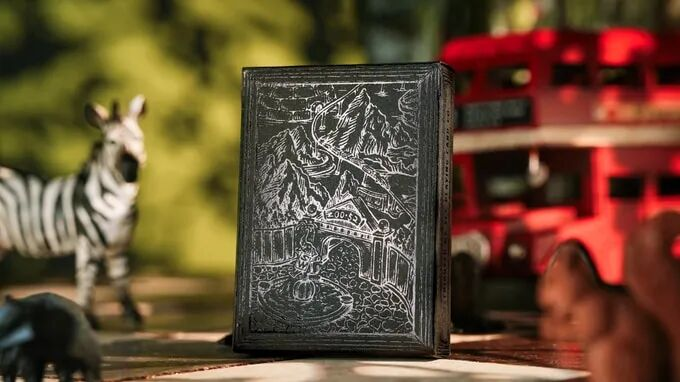
Concurrently, the limited run for the Color Collection Set has expanded from 300 to 1000 decks. This makes it more readily available, reverting to a more accessible product, and allowing a greater number of enthusiasts to handle and appreciate this artistic endeavor.
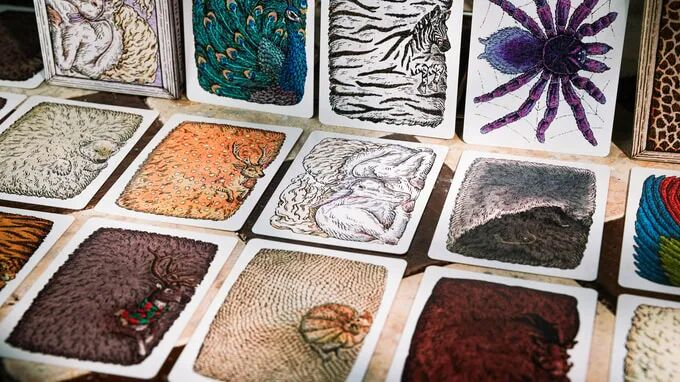
Yet, at its core, it intensifies the pressure manifold for completionist collectors.
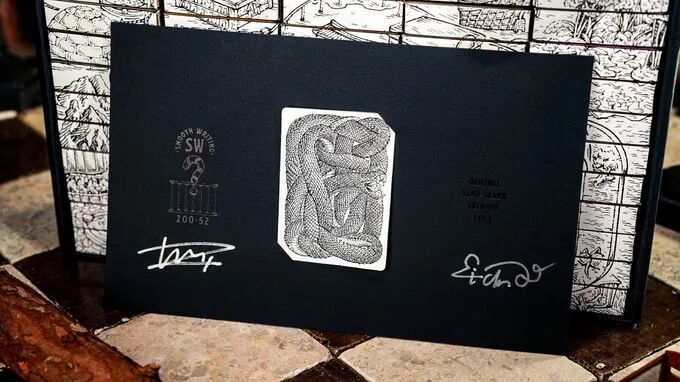
Pressure source one: The absolute exclusivity of the All-in set. This time, the All-in set ($495) introduces an interlocking puzzle motif on the tuck box tops, combined with matching serial numbers and hand-signed original artwork. These elements create a stark divergence in the collecting experience between an All-in purchase and individual acquisitions. It effectively declares that piecemeal acquisition cannot replicate the holistic collecting experience.
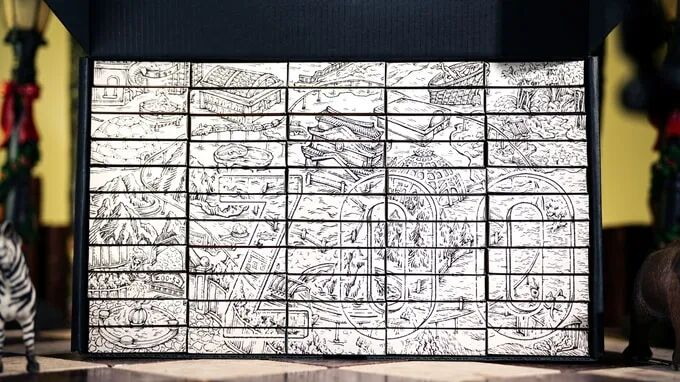
Even graver is the ambiguity surrounding the quantity of All-in sets. Room 52x52 explicitly stated a run of only 10 sets. For Zoo·52, however, the numbers are ambiguous and escalating—15 sets were offered on Kickstarter, and Len himself alluded to "possibly 20 sets" on Instagram, with an estimated 3-5 sets allocated for the domestic market. A higher number of All-in sets means a larger proportion of the blind box editions (each limited to a mere 52 decks) are effectively withheld by the creators. This shifts the possibility for individual collectors to complete a full set from exceedingly slim to utterly unattainable.
Pressure source two: Aesthetic fatigue from 52 variants. While 52 is indeed a significant number in playing card lore, poker decks, despite their designer toy appeal, differ fundamentally from actual designer toys. The latter allows for myriad variations in sculpt, material, and accessories, whereas the core medium of playing cards remains, at its heart, two-dimensional artwork. When 54 distinct variants are confined to the same fixed, hand-drawn stylistic framework, the inherent distinctiveness between them inevitably diminishes.
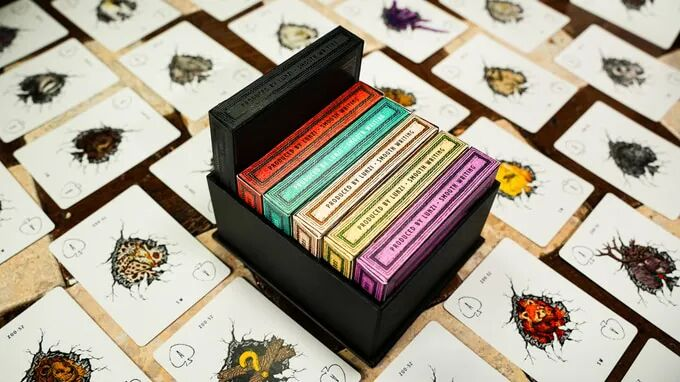
Pressure source three: A release frequency of two sets per year. Room 52x52 was launched merely six months ago; two major blind box releases within a single year is simply untenable. Collecting originates from a genuine appreciation for art, with blind boxes merely serving as an intriguing acquisition method. However, when the sheer volume of blind boxes reaches a certain scale, this intense pressure can potentially eclipse the joy intrinsically linked to the art itself.
My unwavering hope is that we acquire decks out of genuine appreciation, not driven by the anxiety of incomplete collections, for the latter is ultimately unsustainable.
I will, of course, invest in Zoo·52 for its creative ingenuity, but I also earnestly wish that, moving forward, this series might consider curtailing the number of variants—perhaps limiting each series to 12 designs, or segmenting the 52 designs into four seasonal releases, with 13 variants per season. Concurrently, perhaps a pathway could be offered for piecemeal collectors to attain an experience comparable to the official complete set (e.g., by providing a standalone print of the full interlocking artwork).
Ultimately, the most successful model is one that fosters sustained and joyful collecting.